
The Castle
ARCHITECTURE
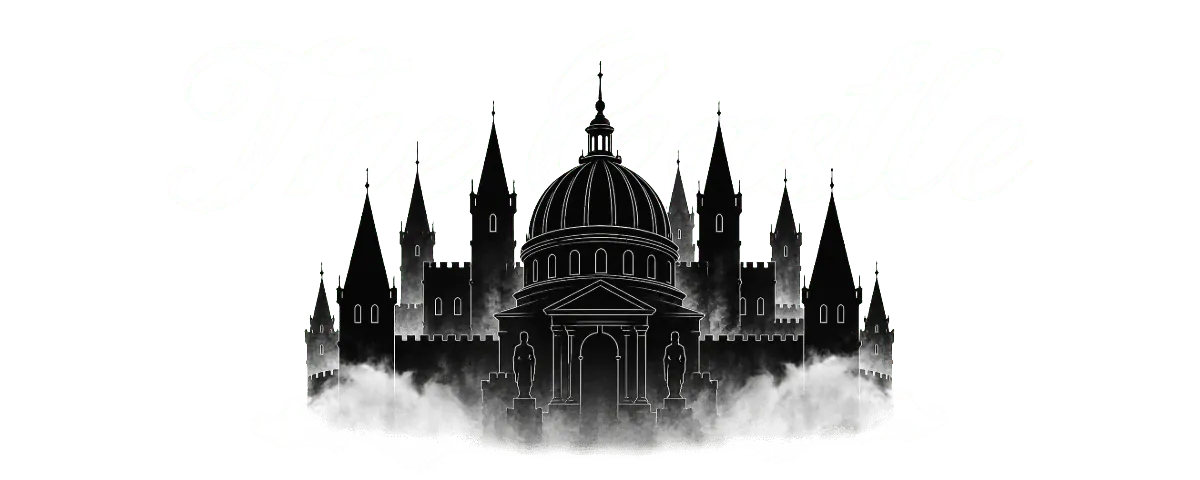
Ilvermorny castle is situated at the peak of Mount Greylock, Massachusetts, a misty mountainous region known for its rich history and dense wilderness. To unsuspecting No-Majs, the school is concealed in an impenetrable fog; attempts to enter it are futile, as No-Majs will find themselves wandering in circles until they are back where they started. Non-magical technology such as GPS devices will be of no help either, as they conveniently lose signal or go haywire upon breaking the mist.
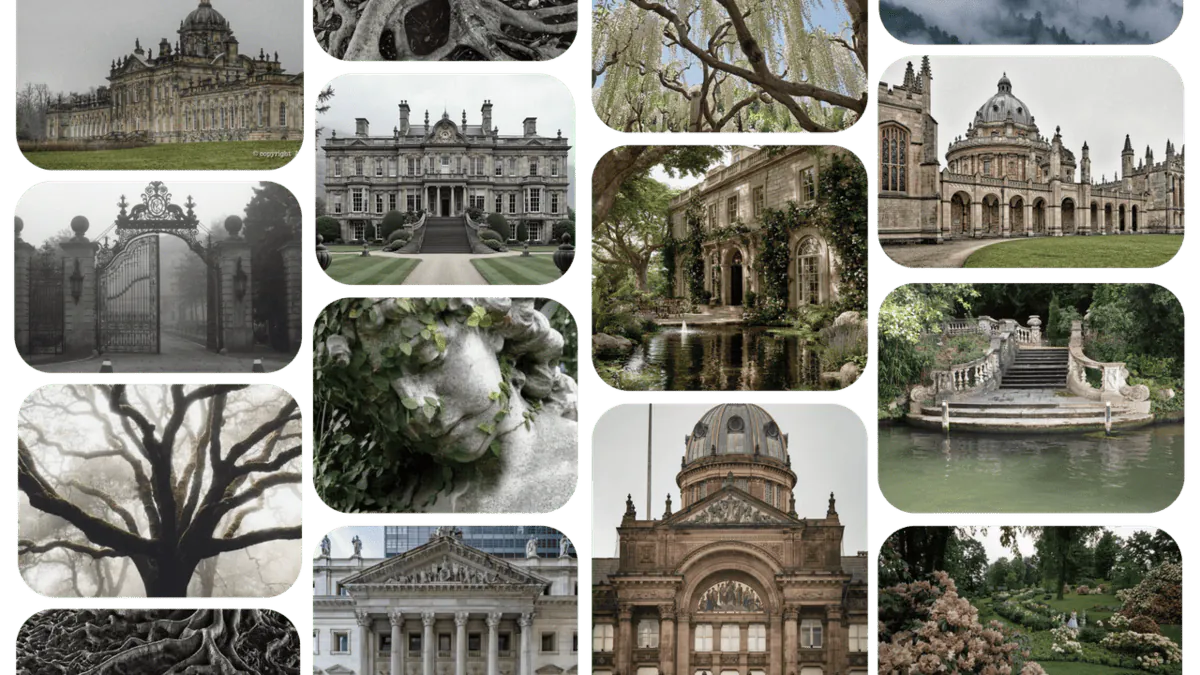
Despite the castle’s dominating heights today, Ilvermorny Castle had the humblest of beginnings. Once Isolt Sayre and James Steward’s quaint little granite-stone cottage, the school developed over time to accommodate its growing student and staff population. The institution was born in 1627, expanding in size well into the late 1700s, resulting in an amalgamation of architectural styles. In a way, the school’s eclectic appearance symbolises the young beginnings of America and how it evolved as settlers and natives came together to influence the style of the building. The castle can hardly be called such a thing, as medieval castles were largely endemic to Europe. Instead, Ilvermorny took inspiration from Restoration style mansions and chateaus, soon incorporating the iconic Federal look American institutions are so well-known for. The dome building at the very centre of Ilvermorny features aspects of Greek Revival styles, with pristine marble columns holding up its roof. The school is truly a calico of sorts, incorporating red brick, granite, limestone and marble in a striking dance of colour across its towers and turrets.
Some of Ilvermorny’s most distinctive iconography greets you as you approach its iron gates. Firstly, an ornate Gordian Knot lays forged in gold upon the front door, creating its handles. To your left and right, you will also be welcomed by enormous marble statues of Sayre and Steward, lovingly decorated with ribbons and flowers from students paying their respects. The buildings themselves are covered in protective creeping ivy, an ode to an old Appalachian superstition, as well as the scent of burning lavender and rosemary. Above the door, eagle-eyed students will spot a horseshoe hammered into the wall.
The grandeur of the school is enriched by the trees, shrubbery and flowers that decorate its perimeter. Often you will find evergreen mayflowers showering the lawns even outside of the spring-time, a symbol of the state of Massachusetts closely associated with Isolt Sayre herself. In the months of March to May, the gardens bloom with daffodils, tulips and Arnold Arboretum lilacs. In the summer, hydrangeas and dahlias appear in great numbers. Finally, in the fall, Ilvermorny is in peak dahlia season with chrysanthemums as far as the eye can see.
A particularly unique feature of the school is that amongst the ivy and unassuming mundane plants, magic takes root in the very bricks and foundations of the castle. The Snakewood tree, infamous as the offspring of a wand once belonging to Salazar Slytherin and Isolt Sayre, sits in a special grove, nestled in a quad amongst the school buildings. Its roots spread deep into the ground, engulfing the mountainside and the castle upon it. In a few places, you may find roots breaking through walls and weaving itself amongst tiles. Around these areas, some report experiencing strange influences on their spellcasting – some say the roots subdue the effect of spells, while others claim it has explosive effects on spell output. Possibly the most common occurrence around these ‘leylines’ of sorts is hearing faint whispers of conversations past. Love confessions, arguments and lessons can be retold by these wicked little branches; I advise being careful what you say around them.
HALLS
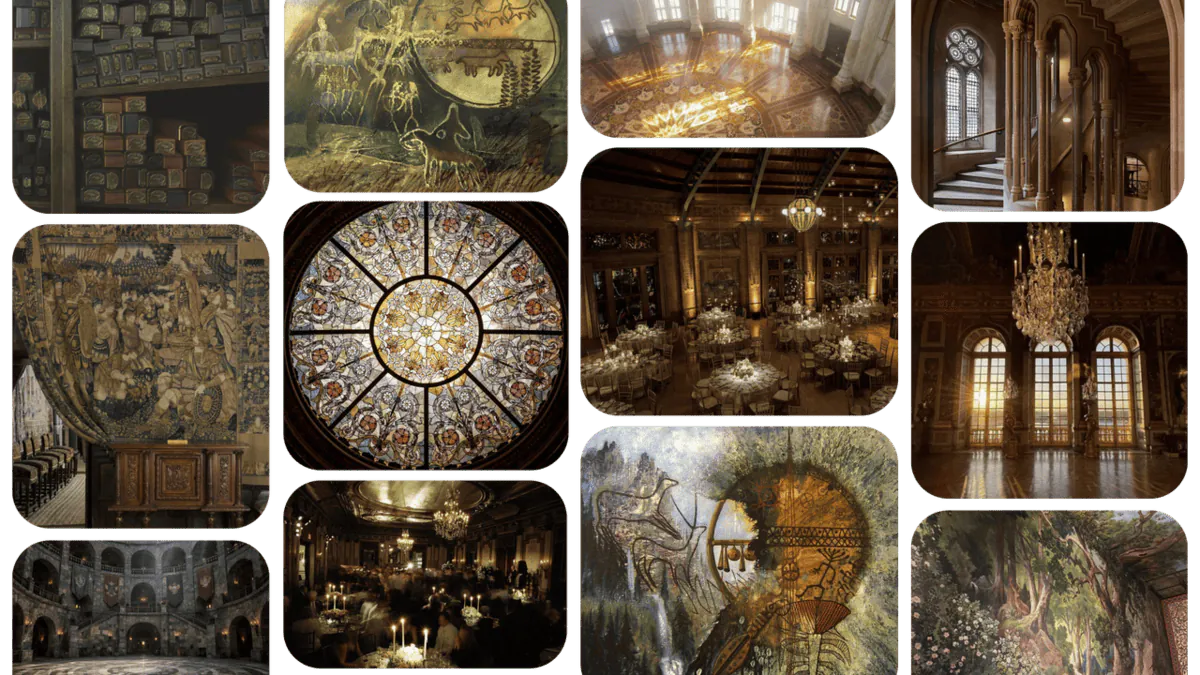
Upon entry, you will step foot into the Grand Chamber, a circular hallway with its distinctive dome-shaped ceiling. The panels of the roof can be charmed out of the way, revealing an intricate stained-glass cupola skylight to view the stars above. Whilst looking, you will also find a wooden viewing gallery in the upper perimeter of the Chamber, where curious students often frequent to peer at visitors down below. It is in this imposing room that the school’s prized Gordian Knot Ceremony takes place. From an aerial view, you would notice the mosaic tile floor also forms a knot of this kind, noted in Greek mythology to represent a seemingly impossible problem solved through a decisive or creative solution. Four wooden statues of each of the house mascots stand boldly surveying those who enter the castle, as if assessing their worth. A Thunderbird, Wampus, Pukwudgie warrior and a Horned Serpent lay stationary, striking fearsome poses. On either side of these statues are two doors, leading to two more sacred areas of the school.
Through the door on the left, you will find the Dining Hall, where Ilvermorny students will attend for meals and assemblies. The walls feature a panoramic mural of the legend of Ilvermorny’s birth, in a beautiful hand-painted explosion of vibrance. The hall is occupied with a huge number of round wooden tables, each surrounded by six chairs and adorned with a vase of flowers, napkins, plates and cutleries. Students enjoy their meals crossing between tables to speak to friends, always intermingling and creating new connections regardless of house or year. The faculty are seated at the head of the hall around a crescent table on a slightly elevated stage. This area is often used for speeches delivered from a lectern, choral performances and even assemblies put on by the students themselves.
If you take the door on the right, you will instead find the Wand Hall. Its heaven-reaching walls and high ceilings are impressive enough – but what really steals the show are the shelves that cover the place wall-to-wall. Each little cubby contains stacks of boxes, neatly arranged and gilded in signature Ilvermorny red, blue and gold. These boxes contain wands, hand-forged in-house at the school. Besides this, the room lays empty, save for a podium on a small stage at the centre, and rows of chairs in layers of circles around it. Here, many Ilvermorny students would receive their very first wand at the Wand Choosing. Though it is now perfectly legal for budding wizards to own their own wands prior to their induction, it remains a beloved tradition from MACUSA’s stricter days to wait until arriving at school to receive your first.
COMMON ROOMS & DORMS
If you take a detour from the Dining Hall, you will find a corridor decorated with more dancing murals, this time of the house mascots chasing and flying around one another until you reach two doors. Behind them are the common room areas for students of all ages. The door on the left bears the crest of a Pukwudgie, encircled by a Horned Serpent, while on the right, the door is emblazoned with a Wampus
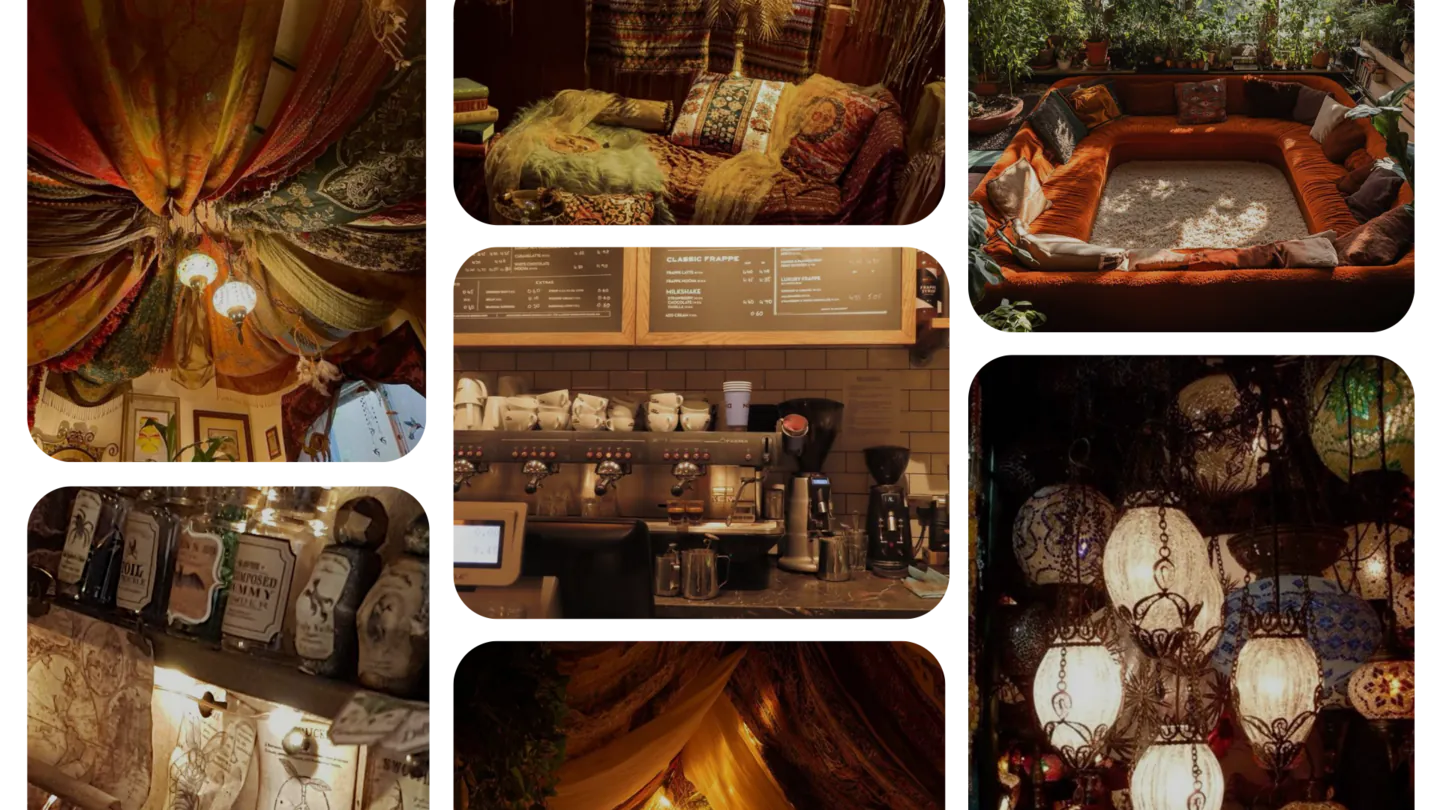
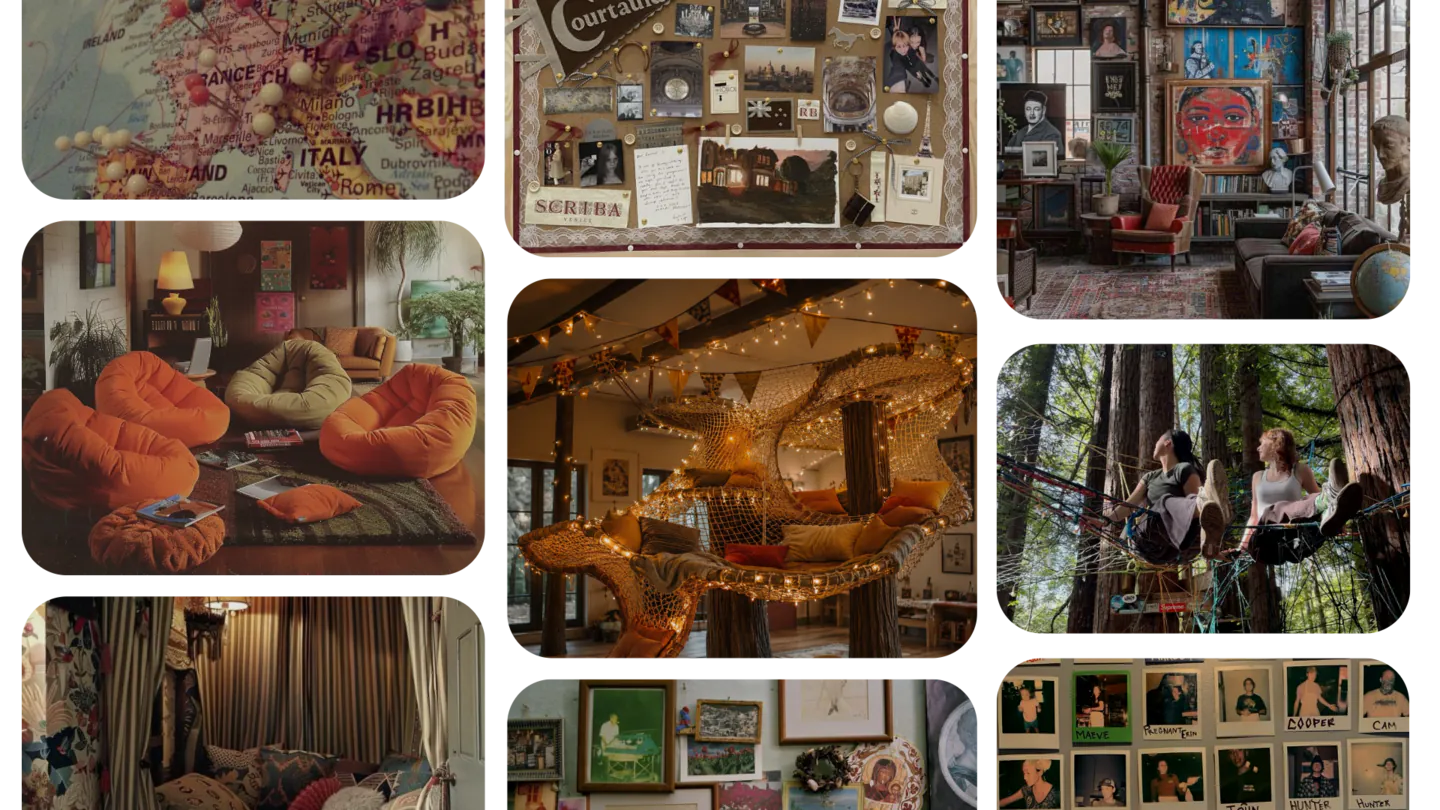
The Pukwudgie-Horned Serpent common room is an apt reflection of the houses’ ideals, offering a peaceful oasis for quiet conversation and relaxation. The centre of the room features a round conversation pit – the central circle being sunken into the floor with seating around the perimeter. The pit is filled with cushions and woven blankets, with a table at the centre for books, tea and snacks. The walls of the common room are decked out with bookshelves, filled with novels that tend to talk back. On these shelves, you can also find herbs, salves and potions, gathered by budding Pukwudgie healers; their candles and incense utilise some herbal magic, immediately soothing any who enter. In the corner of the room, you will find an enchanted bar with an interesting catch. Rather than serving alcoholic beverages, the station is enchanted to self-serve tea, juice, hot chocolate and coffee at the student’s request. Mugs float down from shelves on their own while an invisible hand of magic pours perfect latte foam art every time. The overall atmosphere of the room is hazy and comfortable, decorated in soft, warm colours. Draped from the ceiling, chiffon scarves form a tent-like roof in a burst of oranges and golds, while lanterns hang from above like stars floating down to grace the earth. At certain hours of the day, this room serves as a quiet area for students wanting to escape the hubbub of the rest of the castle. Students are usually very respectful of this rule; even the rowdiest of kids will find themselves wandering into the conversation pit for a moment of reprieve. During exam season, the room is especially popular, flooded with students of all houses helping one another out.
If, however, you are looking for a more social space, the door on the right holds what you seek. The Thunderbird-Wampus common room contrasts its sister-room with its bustling atmosphere and ceaseless conversation. Here, you will find students preparing for sports matches, intensely playing boardgames and lost in rapt debate. The centre of the room features an enchanted bonfire – it does not give off heat except in the cold winter months, but instead can be used to illustrate stories as they are told. The embers and flames love to add dramatic effect to idle chatter, changing colour and flourishing at the right moments. Dotted around the fireplace are a wide mismatched array of pillows, armchairs and beanbags, strewn haphazardly around as students tend to rearrange them when gathering with friends. For students with more adventurous spirits, keeping both feet on the ground can be a challenge. If you look up, you will find a rope net forming a second floor to the common room, strewn with blankets, hammocks and plush toys. To reach it, one must climb up a one of the rope ladders - or for the less athletic, find a magical solution. It is best to keep your wits about you in this area, as the students enjoy using the net as a jungle gym (or rather a trampoline). As for the walls, the Thunderbird-Wampus common room is home to an enormous collection of polaroids and framed photos, lovingly displayed across all four walls. The younger students tend to marvel at it during their first few days, excitedly pointing out famous witches and wizards who came before them. Students also enjoy the lofty storm windows, offering the best view of the mountainside. Finally, opposite the entrance, a large corkboard takes up a great portion of the wall. On it are numerous posters and pamphlets for events going on around school, the occasional plea to help someone find their missing belongings, tallies of which house is currently leading the Cup and class timetables. This room is the social epicentre of the school in many, many ways.
From these common rooms are the girls and boys dorms, which were separated by house. These were off limits to other houses as well as the opposite sex. Those that attempt to enter the wrong dorm are greeted with an invisible barrier that sounds an airhorn when breached. The dorm rooms themselves are fonts of unlimited creativity; students are encouraged to decorate them however they like. The only requirement is that they must share their dorm with at least one other student – a simple provision to encourage some healthy socialisation amongst housemates.
WAND FORGE
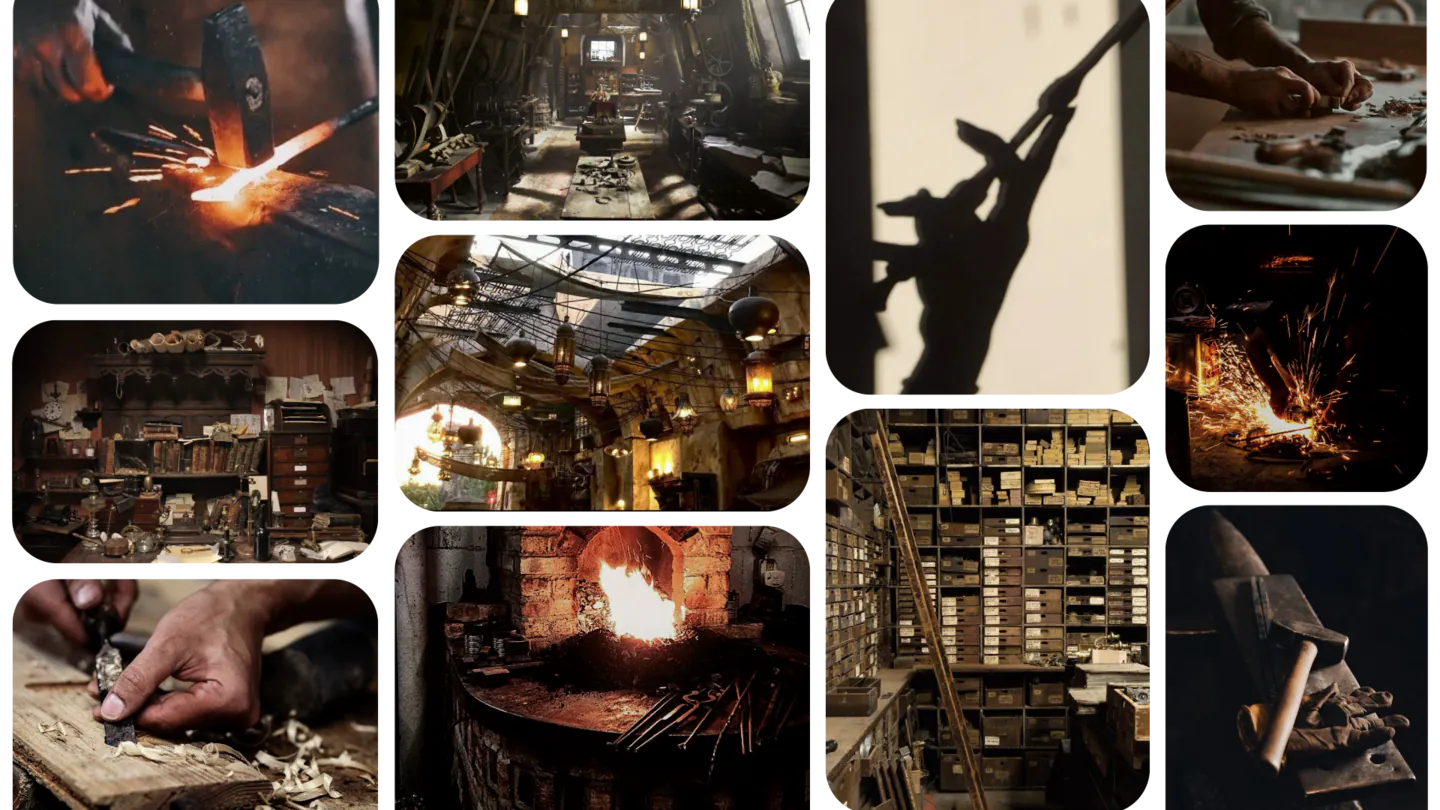
Taking a few steps back, let’s return to the Wand Hall. Off of this ceremonious building is a winding corridor that seems to stretch for miles. Many students and professors will take this route to their respective classrooms, never bothering to make it all the way to its dead-end. However, at the finish-line, you will find an imposing wood and cast-iron door, shut with an elaborate lattice of locking mechanisms. The iron unfurls like ferns over the entrance, and when opened with the correct passcode, they shrivel away as if shying from the light. Attempting to break in is futile, as the security system in place is truly impeccable; rumours spread as to what happens if you were to attempt it. Some say a chute opens up beneath your feet straight to the Headmaster’s Office. Others wager your prying hands are in for a worse punishment. As the doors open, you will immediately be hit with the smell of pine and a wave of heat. Inexplicably, the atmosphere seems denser, as if magic weighs heavier in the air here. This is Ilvermorny’s coveted Wand Forge, where esteemed craftsmen work tirelessly to whittle and imbue wands to bestow upon new students.
The workspace looks like an old blacksmithery, with staff wearing thick dragon-hide gloves and goggles, picking up volatile cores with safety utensils. The work they do is deeply fascinating to many of the students who wonder how the school possibly stocks the Wand Hall. Annually, a lucky select few students are permitted to shadow the wandmakers as they prepare for a new intake of first years. Some say that work experience in this forgery would have you set for life in the business of wandmaking. After all, the North American craft was born in Ilvermorny, by Sayre and Steward themselves. As Isolt Sayre travelled from Ireland, to England, to the States, magical society had not developed far enough to have established wand shops, apothecaries and more. The resourceful woman set up shop in her very own school and, with the help of her partner, they made wands for their children and their students ever since. Ilvermorny and Koldovstoretz together hold this esteemed reputation for artisan wandmaking, even entering into friendly business with one another. The forests of Russia are ideal for felling timber, while North America is home to a slew of unique and powerful magical creatures. The schools have recently been in conversation regarding an exchange programme for those students wishing to embrace this tradition and refine their skills abroad.
This unique history comes with some lovely school traditions. One’s wand is often regarded as an extension of oneself, and so many Ilvermornians choose to carve into their wands, embellishing them to better represent their owners. Older students may have important dates or tallies of achievements scored into their wands, while first years will receive theirs, pristine and untouched.
PUKWUDGIE TAVERN & NETWORKS
The Pukwudgies employed at Ilvermorny are a curious bunch. Despite their grouchy and reluctant temperament, as well as their obvious disdain towards humans, they keep the castle running of their own free will. Every day, they dutifully return to their posts as security and general staff of the institution, stubbornly denying any sentimental connection to the place. During their breaks and at the end of the day, many seemingly vanish into thin air. Magizoological research states that wizards do not fully comprehend the full extent of the Pukwudgies’ powers, though they are extremely potent and powerful. In Native American folklore, they are said to wield the ability to appear and disappear at will, to grow and shrink in size, and even to transform into animals such as porcupines. Now, all of this is neither here nor there, but one thing I can tell you, is that these creatures use their powers to access a whole parallel side to Ilvermorny Castle.
The Pukwudgie Networks, colloquially so-called by students and staff alike, are an intricate tunnel space leading to almost every notable area of the school. Pukwudgies are able to travel from one end of the castle to the other in a few minutes, bypassing all of the foot traffic humans must tolerate. Though no such map exists, some say the entire network forms an image of a squirrel. These beings are known to pop up around the school in the most peculiar places, from behind paintings to falling out of fireplaces. Now, if a human were to find their way into these networks, they would be forced to crawl on their knees and forearms, given the small stature of the Pukwudgie staff. Admittedly, there is no way to enter them, besides bribing a security guard while in a particularly good mood, or with the clever use of very difficult magic – either shrinking down to Pukwdugie size, or managing to Apparate between walls. Let’s just say, no pesky first or second years will be making their way into these tunnels without a lot of studying.
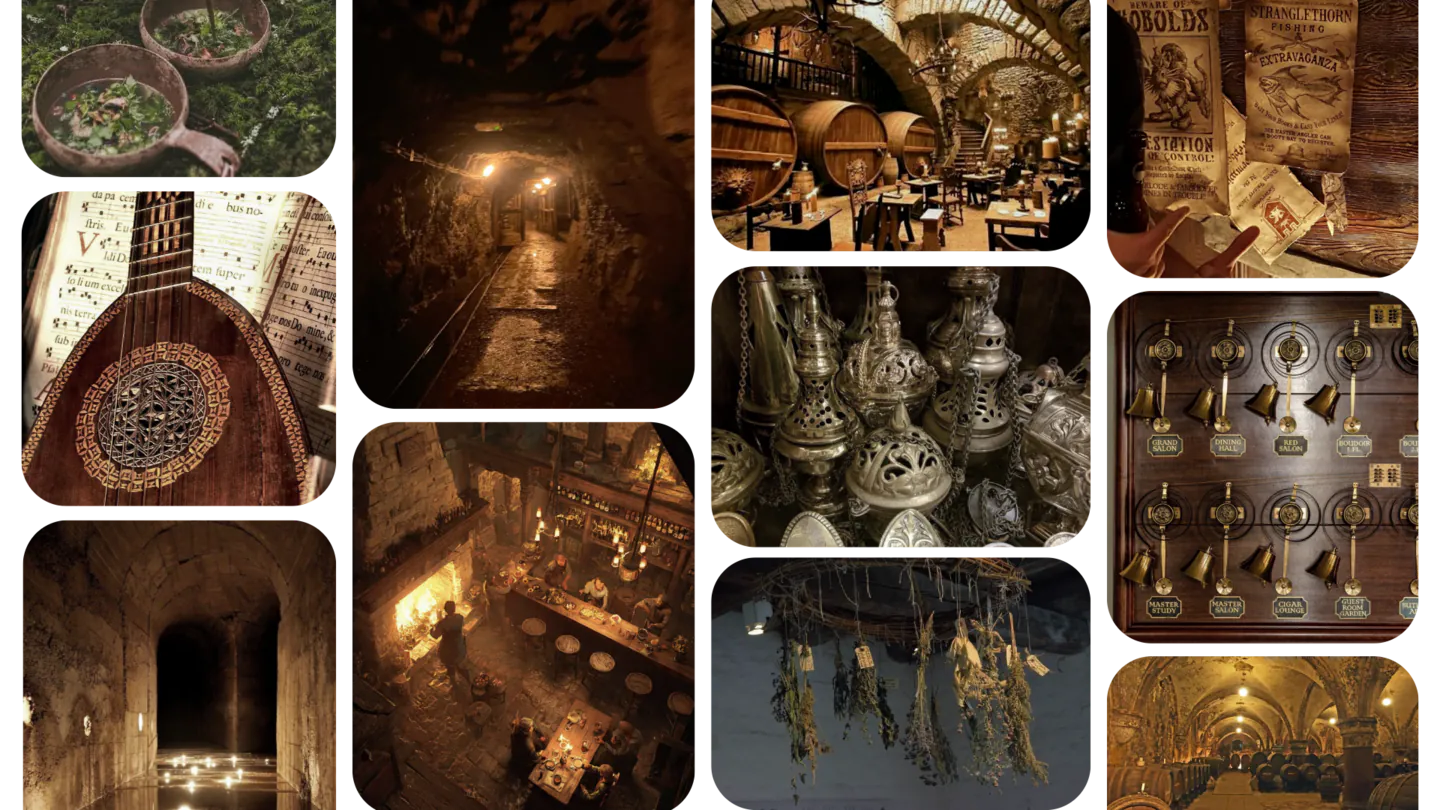
All of these tunnels eventually lead back to one place – the Pukwudgie Tavern. This vast inn serves as the recreational staff quarters for the Pukwudgies, undisturbed by irksome human children (and adults.) There is only one entrance, which is near impossible to stumble upon by accident. Disguised as an abandoned storage cupboard, boarded up with decaying planks, the door only reveals itself when knocked upon correctly, accompanied with a Pukwudgie folksong. If approached by an unwelcome human, the tunnels will seem to loop endlessly, until leading the intruder back to the public toilets.
The room is dimly lit by iron lanterns and candles, with low ceilings and rustic hand-made furniture carved from wood and stone. The air carries a penetrating scent of rosemary, thyme and gunpowder, and the faint sound of students’ chatter can be heard metres above. The walls are decorated with woven tapestries and wards made from sticks, herbs and twine, hung side-by-side with practical well-loved tools. Here, the hearth has burned for centuries, maintained by the older staff. Above the mantel, there is a system of bells, each connected to the dozens of rooms in the castle. When something is amiss, or needs fixing, the bell will give a polite ring until answered.
During their down time, the Pukwudgies are a raucous lot. Ilvermorny students learn very early on in their education that they have their own grumpy way of communicating, whether it be insulting one another affectionately or refusing kindness despite secretly treasuring it. The taverns are an amalgamation of this – alive with bickering and complaining about the children, folk music and gambling that no human would dare partake in. Possibly the most enviable thing about this place was the food. Thick mountain stews, smoked fish, root vegetables and strong berry ciders were part and parcel to the Pukwudgies’ diet. It was not fancy, but it was certainly fulfilling.
Once in a blue moon, a young student may find themselves in need of help from the staff, wandering the halls aimlessly, hoping for help to find them. If the student is particularly young and particularly helpless, a Pukwudgie may take pity on them and lead them back to the Tavern, offering to fix what has been broken and fill up their little belly before sending them back to bed. After all, if you need anything done whatsoever, you are almost always better off asking one of these fortitudinous beings than a professor.
Lore and graphics by Arkady Piecyk/Valour Argentum