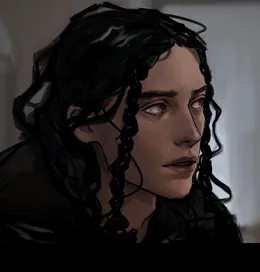
save me
TW: this solo contains a depiction of psychosis, grief, suicidal ideation/hallucinatory commands related to suicide, and mentions of self harm. Please make sure you are in a safe space of mind before proceeding.
Tell me when the fuck is it all gonna end / voices in my head telling me I’m gonna end up dead.
The cruel winds of the Isle of Skye whipped across his cheeks, scarf flapping wildly in its gales as he desperately clung onto its ends. Eyes drawn far towards the distance with the frenziedly swaying pine trees behind him he navigated through the wind with his face downcast, an arm swung over where his hood ended and the tender, pallid skin began. In a disparaging attempt, he pulled up his collar and down his sleeves, fingers rattling in the gloves that only covered his palms. Biting down on his tongue as his teeth chattered, he let out a sharp curse word, the sole sound of the double fricative ringing in the mountains. The lone traveller’s jaw ground sharply, and he hissed as foully as the drafts that threatened to tear him apart. Each step was intentional as he ventured forward, unbelievably burdened as he reached the familiar gates. The island had changed since his mother’s passing.
This place once home now grew to be his nemesis.
The thought hit Archer Duncan bitterly. The lands he now traversed through were the same he had frolicked upon as a child. What was now his hostile enemy was once his greatest friend. Winters of the Isle had never lacked intensity, yet the driving sleet that once fell with passion now pounded on him with hatred, as if he was a traitor to their sacred land. Then he could have shrugged on a puffer jacket and made snow angels — today there was no need for this game of make-believe; he was a fallen attempting to justify a return to heaven. But the coats had never been his armour; it was the mother bird who always extended one feathered wing to pull him in close and protect his trembling little body.
He wasn’t little anymore, yet he still trembled.
It was true Archer’s hand shook as he retrieved the key from the depths of his pockets, tucked in as far as it would go for the irrational fear of misplacing it. And it was true that shaking was not entirely from the wet cold. He fumbled, and it must have been an odd scene. A boy, too long-limbed, too ungainly, standing in front of a lifeless manor in clothes too thin for the weather so cold it burned, looking as if he was about to break in. It took several attempts to fit the key inside its keyhole, jabbing it in all the wrong directions as his hand tremoured violently. Eventually, he brought up his non-dominant right onto his left and with all the little willpower left in him, allowed for no other result than success. Somewhere, in its rusted cogs, something clicked, and just like that, the gates swung open.
It was with unsettling certainty how Archer still knew where everything was. The field was where he had once played fetch with his coonhound, the trees were where he had once climbed and fallen down from, the sky was where he had once dreamt of ascending. Now it only pounded down at him. There, the centrepiece of his childhood, was the august oak, stood grandly towards the west of the property. Its branches were now bare in the wintertime. He had spent countless hours sat under them, yet now it looked as if it was heaving its last breaths. The door to the house that was his childhood mansion stood directly facing Archer, small, thin frame towered over by the dancing shadows of the manor, the handle beckoning him to face a past he no longer deigned to admit. But, what immediately drew Archer’s eye was the tombstone stood to the east, neglected.
The figure of the boy, clad in dark colours and all unsteady, knelt down before his mother’s grave, knees clanking on the iced ground of the Scottish landscape. His movements were not the languid ones of usual times, no fluidity in those duellist’s limbs, but jerky, sudden. Bitting back a grimace as his kneecaps screamed against the hard stone of the ground, he turned his eyes up towards the sky, in a movement that almost looked like he was praying. Stringing his hands together, he lowered his eyes once more and stared.
His eyes bore into the tombstone.
Marguerite Duncan
1988 - 2024
That even the weariest river
Winds somewhere safe to sea
1988 - 2024
That even the weariest river
Winds somewhere safe to sea
The poetry stung as much as the bitter winds, and the dates even more. The thirty six years of his mother’s life, reduced to eight curse numbers, as if all that mattered was the year she entered this world and the year she left it, all too soon and all too young. She had been ripped away from him like how laundry hanging out on the roofs gets ripped away by the wind, without warning or dignity. Glaring at the words beneath the dates as if he could eat it off the stone, the epigraph of his mother’s notes and heart carved forever into a rock. A quote Archer had always cradled turned to be foreshadowing, a poem on the inevitability of death chiselled into the passed. The irony was not lost on him, how the poem depicted his non-existence gratitude for death’s permanence. He scoffed at the thought.
For the first few seconds, and perhaps for the first few minutes, Archer did nothing, said nothing. The chill of the stone crept up his trousers while his cheeks were tainted red from the cold. He pulled his scarf up to cover his lips and nose, yet it did nothing to help what was born out of guilt. It was his fault she had passed, yet he had dared to return. With his chin just above his chest, eyes averted from the site of his mother’s memorial, Archer lowered his head in shame.
Finally, words reached him, and although his words were raw and his throat was hoarse, he forced them out as if dispelling a demon.
“Maman,” he began, drawing in one sharp, stinging breath. The sole word hung in his mouth for a long, uncomfortable time. He had not said it in so long. Even in his dreams they had been hollow. He was uncertain what the one word meant anymore, what was once everything to him now was nothing at all. He paused for a long time on that sole title, tasting the emptiness of the word as its bitter flavour turned to stone between his lips. Knives punctured his heart at the word that once came so easily, swift and casual as the summertime breeze now laid upon his tongue as lead. Knelt with the stillness of a statue, the grimacing twist of his face was the only sign of his humanity. After sleepless nights pondering Archer Duncan found himself speechless before his mother’s grave, quiet as the dead herself. Eventually, he found nothing more to utter than one, hanging apology, “Je suis désolé. I'm sorry.”
It seemed to have tainted the very air around it with desolation. The heavy early morning fog settling over the Highlands, enveloping the scene of misery in a veil of shrouded ominousness, as if even the atmosphere itself was tearing up pre-weep. Glancing into the distant nothingness, Archer, however, found no tears in his eyes. He wrung his hands together forlornly, the action not at all bringing the peace of mind he hoped but adding on to his disparaging anxiety. Staring into the gravestone as if it would have answers Archer then lowered his fingers to cling desperately at the dirt where she was buried. When he found no further words he could have possibly said, Archer repeated the apology, now with more emphasis, “Je suis vraiment désolé. I'm so sorry.”
This was no mere manifestation of survivor’s guilt. There were so many things he could have done that day, and each one of them he did not do. His mind was trapped in a downward spiral of “if only”, each one more devastating than the last as they pounded on him rapid fire. He did not react fast enough, did not run fast enough, did not think fast enough. The psyche he had once prided himself on was no match for the raging flames that burned down the vacation villa, burned down his mother’s body, and burned down a boy’s sanity. A mother’s passing was her son’s own fault — how was anyone supposed to live with that?
He had expected himself to cry. To bawl. To howl. To make a fool out of himself against the unforgiving slopes of the mountain. He had expected the tears to come so easily, and had been waiting from the moment he had stepped foot on the isle to the moment he had knelt down in front of her grave. But he was too fucking tired. All day, every day, he was in agony; all day, every second, his life was devoured by pain. Even when he was happy he was so fucking sad, and the thought made him wand to dig his mother’s grave out and curse the world for ever taking her away. His hands closed in maliciously on the wet, rain-packed dirt of the isle, gripping onto them as if he could burn them away and reach his mother through his very rage, all consuming, never merciful. Not even a single tear slid down in his cheek — even if any did, they would have been burned on his canvas of the anger that crept through regret.
“I’m sorry,” he repeated, yet this time there was something more than remorse in his voice. It was not quite the sheer, white-hot fury that flashed in his eyes in those moments but something deeper: resentment. It was no wildfire in his heart but burned quietly, a silent loathing so strong he could no longer put into words. As each day passed, as fuel accumulated and the winds grew into wild beasts, that resentment only gathered, never dispelling, never content. It was always hungry, always wanted to eat up more of his life. He resented the world for taking away his mother, resented fate for staging the fire that replayed itself everyday in the form of hatred, so potent it threatened to devour his very being. Sour and bitter, he was not too far from resenting anything that walked this earth. And of course, Archer Duncan knew who he resented the most: himself.
“I’m so sorry,” he repeated.
Time and time again he apologised, still not satisfied with himself, never satisfied with himself. Time and time again he apologised, and somehow, each one was simultaneously weaker and stronger than the last, exhaustion seeping through what carried an increasing amount of hatred. Time and time again he apologised, with such fervency as if it were a mantra that could bring back the dead — bring back not only his mother, but he hoped, with all that was left of his crooked heart, himself. That day, two people had died: the woman that had given birth to a wondrous young boy, and said boy himself.
Then, as sudden as he had began, he stopped, the unfinished words catching in his throat. He coughed against the biting cold, but he knew there was something more than the chill. He had come with words prepared, after nights turning and tossing in his bed, yet none of them had he said. Instead, he had delved into a madman’s recital, a devil’s incantation. A brain that was meant to be rational was no longer making sense as he was plunged into the hypnosis of repetition. Finally, as a gust of glacial winter wind hit him, did he snap out of his trance, and blinking, only then did he realise what he was saying. He exhaled a breath, and as the cold caressed his bones and the sun the edges of the mountains, the fog finally lifted.
What was he apologising for? Who was he apologising to? And more importantly, who ought Archer Duncan be apologising to?
After all this time, perhaps he should have been apologising to himself instead.
“I’m sorry,” he said, beginning quietly before trailing off. Archer was, once more, at a loss for words. How could he have begun to recount the many times he had wronged his very self? His breath hitched, chest rising and falling without rhythm as if he had just collapsed after a run. His lips twitched unpleasantly, before his features settled into a subtle frown, barely a furrow of his brows. Then, straightening, he rose from his knelt position and squared his chest, as if he was about to own up to a mistake with integrity. Both he and his author knew that if he lacked anything, it was honour. Yet, face severe and unforgiving, he lifted his chin as if ghostly fingers had forced them up, Then, in a statement that was entirely directed at himself, he said, “I’m sorry for letting you down.”
It was as biting as the winter wind. The admittance, hurricane as it was, tore through him, shattering his heart as its waves hit his chest cavity.
Archer had let himself down in far more aspects than he could count. There he was, that little boy of a tender eleven, dressed by the exquisite suit-maker of his father’s, biting at his nails nervously as he attempted at something like etiquette. Archer could almost see him, the figure he no longer quite knew, just out of reach as he lunged forward to grab him, to hug him, to treasure him while he still lasted. The young child looked back at the adolescent and cocked his head in curiosity, ever inquisitive as he seemed to have taken a step towards the teenager. Instinctively, Archer took a step back, face morphing into into a contortion of fear. Somehow, the harmless boy, retrieving the same journal and pen, as commonplace as ever, seemed like he could have killed him. What would the Archer two years ago say to the Archer of today? And what would the Archer of today even say back?
Then he materialised completely, a figure that should not have been. The deep brown hair was cut short, ending at the nape of his neck rather than the unruly locks that now grew untamed down his back. His clothes were perfectly ironed, perfectly straight, nothing of the scruffy, just-woke-out-of-bed outfits Archer bothered to throw on now. His his skin was freckled, cheeks were rosy, and his eyes — those hazel eyes shone like the brightest star in the nighttime sky. The flecks of gold shone the way for the drops of emerald, all on a background of melted chocolate. He was alive, not the living dead Archer was, soul drained out of him. But all the same he was just a young, elven year old little boy, timid, nervous, afraid, yet between the two of them, the one chilled to the very bone was the fourteen year old Archer Theodore Duncan.
I’m so sorry for letting you down. He had not even fulfilled the most basic of his needs: to live. He was a barely existing, undead thing, powered by some internal motor that forced him to rise every morning and pushed him towards another day of suffering. It was as if he were to be crucio’d every waking second, as if his death could not even be swift and forgiving but horrid and slow, in the torture chamber that was his self-destructive mind. Some part of the universe was keeping score, and some part of fate was condemning him for all his sins, and this was his punishment, far greater a torture than pushing a boulder up a hill, although nevertheless he too contemplated suicide. Every day he was kept in that cage was another day of pain. It was only natural for a human being to attempt to escape suffering, and how Archer longed to be free. If there was one wish of Archer’s that could be fulfilled, it was his final passing into peace.
He supposed he was too much of a coward to try; it would just be one more thing the younger Archer would have been disappointed by. He stared deep into the boy’s eyes, hazel reflecting the cloud-veiled light of the sun in the distance. It was a brightness he could never attain, never would the clouds part to reveal the light he had given up on. Archer had once dreamt of flight, yet now he was certain his wings would break as soon as they played on the surface of his skin, that he was merely a bug, shell smashed, juices flowing, twitching in the dirt. In those bright eyes of a child’s he saw his own mirrored, dull, broken, shattered into pieces on the floor. On the lowest existence of humanity.
Archer was never a boy who had asked for much. He had no plans for greatness, except perhaps to get published in a few journals and explore across the world. Yet he was a child with a future, he was a child with possibility, and he was just a child. Young Archer had an entire life ahead of him, years he could have lived. All that potential for a future, wasted. How could a simple apology ever be sufficient for himself, with all his cursed wrongdoings? How could a simple apology ever be sufficient for him, with all his holy innocence? How could a simple apology ever be sufficient for all he had robbed away from what was just an eleven year old boy, sinless?
Yet he knew he had to start somewhere. Must, if not for his younger self than for the sake of his own sanity. As the sulking winds picked up and whipped his hair into his face, he was grateful his vision was obscured. He could no longer bear to even look at the vision of the young, innocent Archer, much less lock eyes with him. Instinctively his hands almost reached to brush away the hair from his eyes, yet they remained clasped gravely to his side. Planning to devote each sentence to an unspoken, unchallenged sin of the past, Archer realised he did not know where to start — perhaps he simply had too many. The first words had come out as a murmur, “I’m sorry I’m not the person you had hoped me to become.” If there was one thing the Archer of his youth was it was hopeful, perhaps naïvely so, yet hopeful nevertheless. Then came an onslaught of the rest, each apology fervent, yet characteristically hopeless.
“I’m sorry I feel so pathetic.” The words broke from his chest and made something in it too. Tearing at his throat as he spoke, Archer grimaced, a frown splitting his raw and reddened face. Pathetic was to be piteous, was to be wretched, was to be disgusting. A look of revulsion washed across Archer’s face. This was what he was — no more than the beetle corpses he collected. He was a son who could not save his mother, but more importantly, he was a boy who could not save himself. Face twisted and tense, body rigid, he no longer knew what to say, what to do, he no longer knew what to make of himself at all. Life was determined to treat him as if he were dirt and perhaps that was indeed his place in the world. Nothing. The sole word that now described his existence repeated in his head like a prayer hanging by a loose string, desperate yet hurtfully truthful. Each syllable was one he could trust, one he knew for it stemmed from his very soul. At least it was something to cling onto in such an unforgiving world. Pathetic. Pathetic. Pathetic.
You don’t feel pathetic, you are pathetic. The words hissed through the air like the biting winter winds, cutting into Archer’s skin like a thousand tiny knives. Instinctively, he angled his face away, stepping back gravely, face even paler than its usual pallid quality. Retreating with his eyes averted, almost closed, he tripped on a stray rock, tumbling back onto the moist Scottish earth. Scrambling back in quaking alarm, the word resurfaced in his mind as he sat in the dirt — pathetic. The edge of his pant legs splattered with mud, fearful of a phantom vision of his very self, so innocent and harmless, he was pathetic. With no time to dust himself off, Archer stood and forced himself to show his beastliness. After all, they both knew who the real monster was out of the two of them. He forced himself to face his own ghastly truth head on.
Body trembling as he pushed himself up and took hesitant steps backwards, a distinct emotion enveloped him: fright. It was a terror he had never experienced before, a cold numbness, or perhaps a chilling invigoration creeping up his veins. In one second he felt nothing at all, in another he felt too much. The ends of the hair on his arm stood up, the fear in his heart palpable even under the many layers of clothes he had donned for an Isle of Skye’s January. He could almost hear its frantic beating as his ears rang, body caught at an impossible conundrum it did not know how to respond to. Biting down a blood-curdling scream hard enough his tongue howled for him instead, every one of his breaths came heavy, ragged. Now that the vision had spoken and spoken correctly, he was suddenly real, soul as alive as Archer’s was dead.
But something else flickered in Archer’s eyes. Something more potent than fear. Acknowledgement.
Then, in a movement so subtle the very wind could have blown it away, Archer’s head dipped in a nod. “You’re right,” he said in a solemn whisper, “I know.” If he were dangerous, perhaps he would have clenched his fists and made vows; but Archer was not dangerous, he was a stag lost in the headlights. If he were crazy, perhaps Archer would have laughed like a madman; but he was not crazy, he was a bird with a pair of crooked wings. If he were broken, perhaps tears would have sprung to his eyes; but Archer was not broken, he was a child with a twisted past. Instead, he did nothing at all, simply stared the boy of his imagination’s conjuration in those deep hazel wells. Slowly, his lips twisted, not in a smile, not a grimace. The rest of his face remained perfectly still, frozen, not in fear, not in acceptance. Each delicate step at a time, he walked back to the grave where the boy stood, and awaited.
He spoke once more: You will always be pathetic. His voice was collected, the perfect imitation of the scholar Archer had always sought to become. High in pitch and evidently still not having gone through puberty, it carried a childlike innocence in search for wonder. The comment was not one made in condescension, it was not a comment at all. Instead, it was an observation, a purely scientific statement, as if Archer was a bug his younger self was examining, and planning on dissecting. His words no longer cut through to Archer’s heart, but instead, he replied with the same precision the boy’s tone commanded.
Lowering his head, he bit down on his lip, pressing them into a thin line. Archer’s eyes found a perch far into the mountains beyond as he scanned the horizon behind his apparition, wary, distant. His thoughts were as clouded as the distant slopes, as uncertain as wavering fog, yet nowhere as bright as the rising sun. Left in the conundrum of his own company, he no longer knew whether to be irate, desolate, or fearful. He no longer knew what to feel at all — perhaps the only way out of his suffering was not to feel completely. Eventually, he returned his gaze, and set deep under furrowed brows, he agreed in repetition, “You’re right, I know.” They were the only words he could muster.
You are worthless. He continued. This time, it was not a mere observation, it was an insult, but it was no slander — it was an example of young Archer’s incapability to lie. It was the complete and utter truth. Breathing in deep and holding his breath, he said nothing in return, only awaiting his further judgement. He did not grimace; they were words he ought to have expected, they were words he ought to have long known himself. He found no need for any vocalisation of his opinions, for none would have summed up his existence as forthrightly as the statement. It turned out, at the end of the day, only one knew oneself best.
A human born of dirt. At Archer’s silence, the boy took it as a chance to persist. He spat out the words, in an all too delicate posture unfit for the amount of animosity. Archer closed his eyes against the statement, as if that was enough of a shield to safeguard him from what was only the truth. He knew it was correct, and he knew it should not have anymore, but it stung as much as the winter winds against his unprotected cheeks. Knowing it firsthand made it worse: he was not merely born out of dirt, he was dirt.
You don’t deserve the word human. It came out as a sneer. Archer’s eyes flew open again, and fury sparkled in them, as burning as the flames that had enveloped his house. It was an indignation that should not have existed, he knew — the boy had done nothing wrong in stating the truth. The boy did not deserve wrath. Yet inevitably, his fists clenched and tears threatened to spring to his eyes, but not at all before a twisted smile touched at his lips. Perhaps it was time he embraced this inhumanity. None of it was a lie anyway.
You are a monster, Archer Theodore Duncan. The use of his full name made him flinch, a minuscule wince that would have been lost to the untrained eye. It was a quick, nervous movement, the instinctive reaction to pain. His body tilted ever so slightly to the right, as if controlled by a puppeteer’s spring, and his face followed, tensed with furrowed brows and thinly pressed lips. All of his points Archer conceded to, but now with a name attached to it, the syllables gnawed at his heart. Suddenly, it all became frightfully real, and even though he dug deep into his throat for a response, none surfaced. Not a meagre defence, certainly not an offence, not even a word in agreement. Instead, all he could have done was nod again; he was helpless against himself, a pathetically crooked beast.
Monster. Monster. MONSTER. The words repeated thrice screamed in his ears. He knew they were phantom hallucinations, yet it left them ringing, his head in a throbbing state of distress as the sounds pounded on his eardrums. The final repetition was a guttural battle cry, not a statement nor an insult but a manifestation of pure noise. They were not designed to mean anything — that purpose had long been served; they were designed to hurt, to punish. Archer knew there was only one thing he wanted: for it all to end. He took a staggering step away from the figure, as if putting physical distance between them would sever the banshee wails, As if in response to the deafening volumes in his mind a blood curdling scream rang through the mountains. Archer no longer knew if it were a production of his vocal cords or a fruit of his imagination. Archer no longer thought it mattered.
Each breath after that was uncontrollably heavy. He had kept something he couldn’t quite name so pent up in his throat as the boy talked, and finally, now that he had released it, he was suppose to feel relieved. Yet nothing of the sort washed over his body, none of the consolation he had been expecting. Instead, his body seemed stiffer, the intent between his brows tighter, his lips and skin paler. When he eventually found words he carried no pride in the statement. Rather, it came out as a slight murmur, almost lost to the biting winter winds. “I am a monster,” he admitted, finally replying.
I hate you. He hissed. In one sentence, all the hatred in the world laid between his lips. It shot out at Archer, so strong he had to take a step back, as if a phantom wind was keen on knocking him to the ground. He rubbed at his eyes, where tears teetered and almost split out; he cleared his throat, where a scream gathered and almost tore through. Yet he could not blame this apparition. Of course the boy had every right to hate him. What had he ever done to deserve his unplaced love?
“As you should,” Archer shot back quickly with precision, plainly with no emotion behind the statement. He had long known self-loathing. He knew what it was like to stand at the blame for every problem, to point fingers at himself in a desperate attempt to find answers. He knew what it was like to self-deprecate, to believe himself to be the worst as a justification for his actions. He knew what it was like to fail everything, everyone, now evidently including himself, to do all of it because he thought he deserved it. He did not deserve joy, he did deserve greatness — his existence had been proven to him in the shape of his own pitiability.
You’re better off dead. The boy laughed, an innocent, child’s laugh. You should kill yourself. At this, Archer did not flinch, did not take a step back, found no use nor intent in those actions. He simply looked at the boy head-on, expression as serious as he should have been dead. His words no longer stung like the past ones had, for it was not only the truth, but a truth that he knew, he wanted, somewhere deep in his heart. He was better off dead. He should kill himself.
“I agree,” Archer uttered under his breath. He had long known what it felt like to be suicidal. He knew what it was like to wake up every morning with no desire to live, to go to bed every night hoping that it would kill him in his sleep. He knew what it was like draw lines of red across his right arm and to look at potions thinking how much his body could take. He knew what it was like to think he should not be alive, to dream of alleviation from his constant, torturing pain. Without fail, during every second of his existence, he was contemplating suicide. It was not always on conscious thought at the front of his mind but something lodged deep into his heart, something always there despite all his efforts to dispel it. It grew to be unbearable, and the only logical way he could see for it to end was to fulfil it. He had long known what it felt like to be suicidal because he genuinely believed he was for no good but dying.
Sleet began to fall. A slick, wet-cold mixture of ice and rain that pelted down on his jacket, seeping down through the non-waterproof fabric onto his skin. A chill ran through his body, and he shivered as the temperature dropped suddenly, the sun dipping behind ruthless clouds once more. On a primal reaction he wrapped his coat tightly around the body that now seemed very small, tugging the ends of his scarf towards each other so hard it was enough to choke him. Pressing his hood against the sides of his head, he grimaced against the weather, what he once loved to play in now turned into a deadly abomination. Little droplets of water danced along his skin, no different from the electric currents that coursed through his body.
Yet the cold was something more than an appeal to masochism—it was a reminder. Jolting Archer out of his trance, an shock seemed to have shot through his spine as he came to realise what sort of unlikely predicament he found himself. What sort of horrid, dreadful predicament that was his life. A deep headache began to settle between his eyes, and his body started to shake as if possessed by a spirit, breaths coming hot and heavy against the winter air. After all this time the truth was simple: he was a boy, all alone, stood before a dying house on a dying island, seeing a phantom version of his younger self, talking to nobody at all but himself. This was all surreal. This was all wrong. This was all so fucking scary. And he needed to go home.
Suddenly, the manor stood at the hilltop looked impossibly far. At first Archer made his retreat facing the apparition, biting down on his lip in fear as he made every step, cautious not to trip again, begging that the words would stop. The vision made no further statements, becoming hazy in the gales as if the sleet was washing it away, yet one constant remained: those deep hazel eyes. Suddenly, they shifted in nature, from the innocent pools of brown to a pained glare. Those were the same eyes as his today, carrying the same heavy weight no child was meant to bear, with the same amount of hatred directed at this world that had wronged him so deeply. This time he no longer spoke, yet he did not need to as the final wisps of his face conveyed in aching abhorrence: I am merely the consequences of your actions. When it came too impossible to bear, staring into the eyes of the little boy he had let down so greatly, he turned like the coward he was. Archer ran all the way knowing those eyes of hazel were boring holes into his back.
As he finally reached the heavy oaken doors he desperately fumbled in his pocket for a smaller key, fingers trembling just as much as they had when he first looked for the keys to the gate. Clutching onto them disparagingly as if they were his last lifeline, he jabbed it into the keyhole ruthlessly, until something must have finally gone his way and some cog in the locks clicked. Exhaling a breath in relief, he turned the key, and the doors, after a long creak from months of disuse, opened to a wordless house that awaited. It may have been quiet, but it was safe. Stumbling inside, hand pressed to his head, fingers grasping at his hair until it hurt more than the ache in his skull, he must have made a mess over the carpet, now frosted with a layer of dust. Mud dripped from the edges of his pants, rainwater slid down from his arms, his hair was matted to his temples and his ears. Cold and disoriented, there was only one thing he could word he could think of, dominating his mind, dominating his fear.
No, no, no, no, no.
With that sole, repeating thought, he collapsed onto the nearest armchair, wet, exhausted, and a scared little kid.
Archer curled up on the edge of the armchair, one had grasping onto the armrest while the other clutched at his garments for warmth in the unheated room. His fingers still trembled in an attempt to convince himself that he was grown, mature, yet he was only a shaking child. They grabbed onto the wool edges of his coat as if it was their final salvation before a judgement of damnation. As he pulled his legs up to his shaking chest, each breath in an impossible heave, each breath out more effort than living was worth, he knew which he deserved. He had become a husk of a boy, just like his home had become a house. No familiar flames crackled in the fireplace, no pen scribbled across yellowed parchments of manuscripts, no delicate fingers trailed over the piano keys. Other than each erratic inhale and exhale, the only other ambiance sent chills down his spine. The wind battered rainfall onto his windows, a crooked lullaby for a crooked sleeper. Archer didn’t cry today, but the sky cried for him.
So save me, before I fall / So save me, I don't wanna be alone.
I am not even singed. My wings are untouched. You use them for everything, except flight.
Liliya Starkova| Anthonie Engelbrecht
Liliya Starkova| Anthonie Engelbrecht