
Tenūsa, Isle of Divination
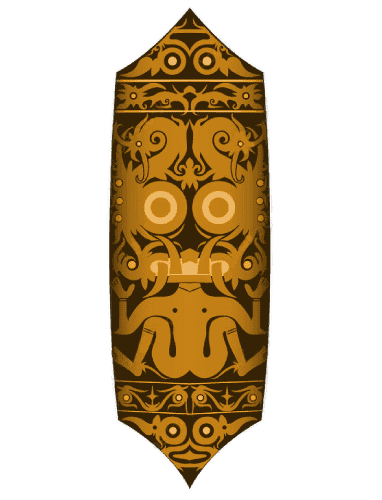
Name: Macan Tutul
Dates of birth and death: Somewhere, sometime
Nationality: Unknown
Blood status: Unknown
The Isle's vast jungle, Macan Tutul, still bears the name of the school’s first teacher. A remaung spirit that went by the name of Macan Tutul (the leopard). The remaung were usually flying tiger spirits, fierce and powerful, that people left offerings to in order to help them transform into great warrior spirits that would aid their own hunters in battle. Macan Tutul was one such legend, though he was known to take the form of a leopard. He was also believed to be the last of his kind. And was sometimes hunted for it. In reality, Macan Tutul was an ordinary dukun that had mastered an animagus form while studying abroad. Even his name was just a moniker the non-magical villagers had given him, which he had accepted and taken for his own use.
Though he had always enjoyed the infamy, being hunted did force him to stay on the move a lot. And with a riper age, the desire to settle down beckoned to him stronger and stronger over the years. So he set out to find himself a hidden home. Over the years he had acquired a handful of allies, some of them his own apprentices, also called pewaris ("heirs" of knowledge). They helped him create the Isle of Divination and Tenūsa. The newly formed land, essentially a floating jungle that had risen from the ocean, only helped enforce Macan Tutul's legend. Though Macan Tutul and his allies did make it hard to find. And so he eventually would pass into one of the world's forgotten histories.
Many of Tenūsa's former pewari and current dukuns still speculate on where Macan Tutul's story began. Some thought him to be a foreigner that travelled from far away to begin a new life. Others countered these arguments by saying he was too familiar with the islands' ways the moment his name popped up in history. Most are willing to agree that the truth likely lies somewhere in between. But none can deny that he had been a great Dukun. Even his first apprentices were known to possess great knowledge and power and were mighty warriors on top of that. Their legends are a bit better recorded. Some researchers think that it might even be partly their fault for shrouding their master's history in mystery. To try and protect a much older Macan Tutul from having his past catch up to him.
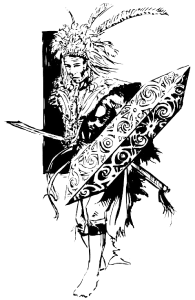
Traditionally, students in the vast regions of Melanesia, Polynesia, Micronesia, and the East Indies would learn from a dedicated tutor or shaman. For centuries, an elder member of a wizarding community would take a younger member from a village or from a nearby island as an apprentice, teaching them the ways of magic and other such life lessons. Whilst the particularities of how traditions would function in each of the disparate communities would vary in accordance with culture and best practice, broad similarities could be observed. For one, most mentors would not take more than three apprentices at a time, and should a magical village have an abundance of youths, then some would be required to travel to a nearby community for education. Such voyages would often take place via the sea, and it became commonplace for apprentices to settle in the regions of their tuition, as opposed to their birth. Further, most educators would hold the position of ‘shaman’ or its equivalent, being wizened elders of their communities. Whilst some youthful teachers did take multiple apprentices, this appeared to be a cultural exception rather than the rule.
To contrast, in pre-European Australia, excepting the Torres Strait Islands, the first peoples would train young wizards and witches within their own tribes. Whilst complex kinship and gender rules applied to who would learn from whom, young people were not expected to leave their traditional lands and families in search of education.
These disparate and informal systems would operate for many years, with little in the way of change, until the early 1600s. The growth of Islam as well as Christianity in much of what would become modern Indonesia and Malaysia, together with colonization efforts from Portugal and the Netherlands, would see an increase in militaristic conflict, driving the magical community further underground. The influence and importance of Shamans and elders in cross-magical communication would slowly diminish, and in some cases, contact between villages would cease entirely. With military campaigns and gradual consolidation of Java under Dutch control, many of the shamans of the isle would band together and begin to conduct their apprenticeships through joint endeavours. These small classes would form the basis of the formalization of education into a singular school. Until the modern day, the word Dukun, being the Javanese word for shaman, has been adopted throughout the region as being the sign of a person educated through this system.
As the system’s influence gradually spread over Java, so too did both the number of students and teachers increase. Eventually, the more ancient practice of apprenticeships would re-emerge, however, in such a way that each apprentice would be assigned to a singular Dukun. The bond between apprentice and teacher would evolve in such a way that the very foundation of the school would be built around it.
Unlike the European and North Asian models of wizarding school, the former of which would also see export to the Americas, Tenūsa would gradually revert to a more informal, traditional system. Overtime, the prestige of the school would grow among the peoples of the East Indies, and teachers and prospective students both would travel to the island that had become the school’s home to offer their services as masters or to learn from those who came before. Unlike in Europe, however, the more traditional systems would never truly be displaced due to the rapidly expanding prestige of Tenūsa. While many wizards began to take up their training in the school many also continued to learn either from their families or from trusted advisors, never making the journey to the Isle of Divination.
Royston Idlewind [Captain of Australian National Quidditch Team, World Cup champions 1966. Former International Director of the International Confederation of Wizards Quidditch Committee.
Nakovalaka [Solomon Islander chieftain and wizard]
Sekartaji [Famous Javanese snail animagus]
Mami Timoti [Maori magizoologist and conservationist]
Esava Muamua [Fijian actor and philanthropist]
As soon as a child shows an affinity to magic, they are invited to attend Tenūsa to begin the first stages of their magical education. The invitation will take the form of a formal visit from a junior dukun, a recent graduate who has only recently become a teacher in their own right. These dukun are also tasked with informing potential students who hail from a muggle background of the realities of the wizarding world and their status within it. Often this visitor is from the same region, or failing that, one that speaks the same language.
While some students will begin their journey to the Isle of Divination at this point, others will commence or continue with the preferred education methods of their parents. Children who set on the path to Tenūsa will be accompanied by their parents, provided those parents themselves are wizards, as guides and guardians, or alternatively, will be met and accompanied by a dukun who will assist the child with undertaking the journey. Traditionally, the journey to Tenūsa is done without the conveniences of modern magical travel, with dukun and fledgling wizards making their way to the isle by water, broom, and other such methods that do not rely on cupboards or apparition. Whilst magic is still used to greatly lessen the burden associated with such a trip, typically voyages will range in the span of weeks and months. Regardless of when a student is first contacted and whether they choose to undertake the pre-education of the clan system, they will all make the journey before they commence the first year of their apprenticeship.
Upon arrival to Tenūsa, students, or better named, pewari are initially placed into a clan of between ten to twenty individuals (depending on how many students are apprenticing at the time). In their clan years, education is undertaken in these groups, and they learn the basic knowledge any shaman, also called a dukun, ought to know. After a student reaches the age of eleven, they are to be selected by a full-fledged dukun who is willing to be their teacher and further their education, both in magical fundamentals and the more particular types of magic that they wish to undertake. This period of study follows the same year system as other traditional schools from year one to seven. While dukun must be a graduate of a magical school, this school need not be Tenūsa. Given the international nature of the school, and the presence of teachers from other international regions, there is no set language of instruction. Whilst Indonesian is often used as the language of communication in social and communal settings, dukun are not required to teach in it.
Between the ages eleven and eighteen, it is the dukun’s responsibility to teach their pewari all standard magical subjects, from astronomy to transfiguration. They are free to choose how they tutor their students, each individual adopting their own style of teaching. Both allowing the dukun and pewari to shape how they wish to formulate their study. It may occur that some dukun show patience and understanding in their students’ arduous pursuit of knowledge, while others maintain a strict dogma and only offer an intensive training program to sharpen their pewari’s skills.
This causes for a wide array of successful stories as well as failures. Not every teacher fits with their chosen student. Though it rarely happens, a student (or a teacher for that matter) is allowed to request a transfer to another dukun.
A pewari accompanies their dukun almost everywhere, from simple lessons in the village of Omah Geni to outdoor trips deeper into the island’s vast jungle, so that they learned from experience and personal guidance. The transition to learning directly under a dukun could prove difficult for some students, but was ultimately consider another step on their path to becoming a dukun of their own. Whilst the system often creates a sense of separation between students, the school continues to offer activities to promote a sense of community amongst those attending Tenūsa, including sports, shared meals, the dormitory system, and joint classes at the beginning of their education.
Located in a part of the Celebes Sea that has been magically erased from muggle maps, the Isle of Divination is an island shrouded in mists and troubled waters. The wild and unpredictable sea itself is an ally to its inhabitants by offering them protection from unworthy outsiders looking to invade these hallowed grounds. A dozen tall and slender one-man watchtowers scattered around the island are tasked to look out for new travellers and invading forces. Around the island there are four small harbours, built in service of the local fishermen and women. These small havens each protect one trail that leads to the main village, which lies in the heart of Macan Tutul (the leopard), a vast jungle covering the isle entirely and hiding within it the magical academy Tenūsa.
_____________________________________________________________
Nestled within Macan Tutul’s lush forestry past the wooden village of Omah Geni lies the main foundations of the magical school, Tenūsa. Overgrown structures of stone and wood laid bare to the natural world find themselves covered almost entirely in vegetation. Yet while some may view such a place as a ruin of ancient times or dilapidated beyond repair, the reality could not be further from the truth. While the island's nature weaves between the foundations and seemingly engulfs the school, it is actually a form of reinforcement and was taken as a sign by the founders of the school that the magic of the Isle, which they had created, was claiming the school as an extension of itself.
One of Tenūsa's founding principles revolves around the conservation and cultivation of the island and magic that has protected them so the school being claimed by the island was an extension of that principle. While the exterior hosts trees and moss, the island never encroaches into the school itself without the will of a dukun or shaman though many allow for this, and as such, classrooms often have patches of natural flora decorating the space. Much like most other wizarding schools, the educational buildings themselves consist of a number of facilities dedicated to particular subjects and even the facilitation of standardized exams where necessary. However, unlike the wider world, Tenūsa is not made up of one large school but more a collected pocket of these structures filtered both in the village of Omah Geni and deeper into the vast jungle. Educational structures are found where they may best reflect and convey the dedicated subject most effectively, like the observatory that is built high above the treetops for astronomy.
There is, however, still a large structure on the outskirts of Omah Geni that one might consider the primary school building, consisting of the dormitories, some regular classrooms for study and apprenticeships, a library and the hall where meals are held. Within the stone foundations students are granted all of the magical basics one could expect like cooling and heating charms keeping the open halls and chambers regulated. At the top of the largest tiered tower you would also find the Grand Seer’s office. The dormitories are populated by students, but there is no staunch requirement that those attending Tenūsa must board; in fact, some will continue to live in Omah Geni with their families, or other relatives who live within the village, while attending to their apprenticeship. Unfortunately for muggleborn and half-blood students, there are strict prohibitions on non-magical habitation of the island, even where those muggles are familiar with the magical world.
While students who come to apprentice, before their time as pewari begins, make use of the standardised educational resources provided, dukuns often choose a separate approach that is specialised to both their own talents and those of their pewari. Dukun will often take students around the island in the course of their education, and in so long as they conform to the academic standards set by the headmaster and other administrators, they are given broad discretion in how they teach. The bond between these two is the sacred foundation that the school is based upon, believing that one on one education is paramount and that a teacher is not merely an educator but a spiritual guide for their younger pewari.
____________________________________________________________
Like all structures on the isle, the village of Omah Geni is made from the diverse types of wood that make up the vast forests of Macan Tutul as well as other materials local to the island such as stone, clay, palm fibres, thatch, and bamboo. Shacks, huts, and even old fishing boats are constructed on top of older buildings, which creates a large mesh of houses overgrown with the jungle’s wild flora. Built into existing land masses rather than terraforming the area, the local people of Omah Geni bow to the natural order of the island in the knowledge that they belong to the island, the island does not belong to them. Dukun, those with pewari and those without, live throughout the township, as do families whose children are undertaking their group education.
Located in the densest part of the jungle Omah Geni is almost entirely blocked off from sunlight due to the overhanging canopies of trees and almost cavernous area in which it resides. Yet there are portions of the village that have nothing but clear blue skies above with towering cliffs on either side. Built into the mountain walls, stone stairways can be used to climb to the upper layers of the village and beyond to the main academic buildings of Tenūsa, though many classes take place in the village itself. With the thick foliage above, Omah Geni makes use of beautiful, coloured lanterns to illuminate the homes, shops and walkways, crafted with bamboo or wooden frames that are then covered in paper or silk, with candles or oil lamps within.
With areas of swamp or marsh like terrain spread across the jungle floor, wooden walkways are implemented so that the villagers may cross these areas without trouble. These walkways create a lattice across the marshland that allow local herbologists to grow and cultivate the areas magically. In fact, all across Omah Geni there are herbology marvels in the growing of flora creating pockets of stunning colour in among the mostly green expanse. The town is also well known for its medicinal and potion practices and often locals from the other villages will make the journey to Omah Geni when they require assistance as many great healers and potioneers call the village their home.
Much like Hogsmeade, Omah Geni hosts a number of vendors in which students and locals alike can buy basic supplies as well as culinary places such as Tari Lenso. Named after a Maluku dance it offers a range of Southeast Asian cuisine and hosts artistic events most nights with dancing, art, theatre and music. While the students from Oceania can be transported home in Charcoal Lane, a grill house making use of native aboriginal and Torres Strait Islander techniques. Blending native flavours with traditional Aussie and Kiwi comfort foods, it is a home away from home and offers culinary classes and training to those willing to learn.
Gifted by a crafter from Nephila Pilipes, a mesmerising stained glass aviary can be found in the centre of the village where the sun can shine down upon its sparkling rays of sun off the glass. It is home to a number of tropical and exotic birds of a wide spectrum of colour and sizes that can be used much like owls in the western world. From Hawks to hornbills and kingfishers to cockatoos the aviary hosts a great many species magical and otherwise, living harmoniously with shamans who specialise in keeping them safe and protected. The large stained-glass dome itself features illustrations of the supposed creation of the Isle and the story of Macan Tutul, its founder.
_____________________________________________________________
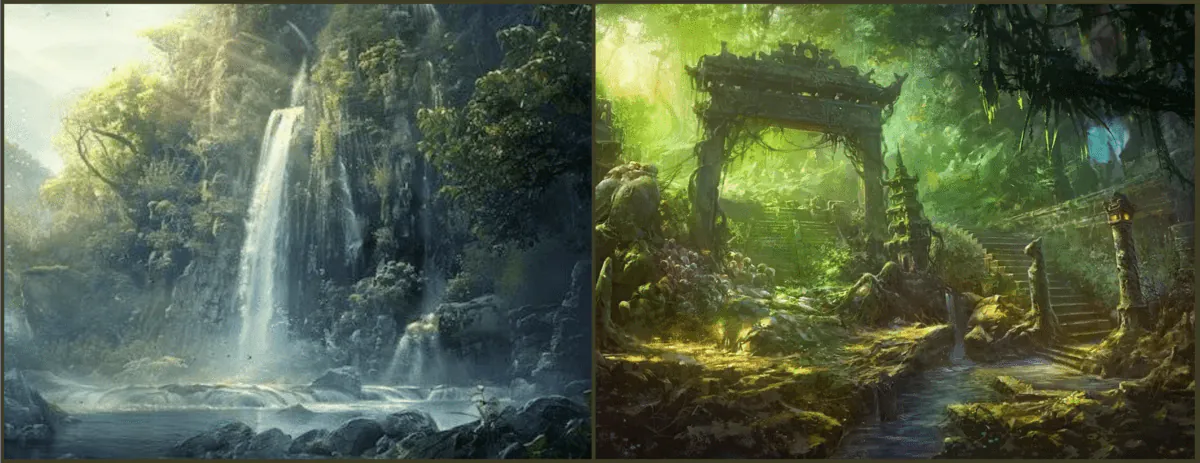
Macan Tutul, named after the founder of the Isle for his leopard animagus form, was a blessed union of magic and nature home to many diverse and vibrant species. The Isle itself was not entirely covered in jungle, with gorgeous golden and white sand beaches, lagoons and caves it was a testament to the incredulous power of nature. The jungle itself though was a dense, coated area with intertwining flora covering the majority of the floor. Footways from each of the four cardinal points would lead you through the mysterious forestry, through thick fogs and swamps, past waterfalls and sheer cliff faces to the heart of the jungle where Tenūsa resided.
Vines crawled up the side of the various species of trees such as Teak, Mahogany, Meranti, Balsa, Acacia, Rubber Trees, Sengon and the Banyan trees that could reach up to 100 feet in height. Such biodiversity in all plant life gave Macan Tutul an otherworldly feel, and their refusal to defy the natural law of the Isle allowed it to thrive under the people’s protection. Entirely sustained the tropical climate of the region meant that high temperatures could soar and thus clothing was often enchanted on the island with cooling charms. This climate also fostered abundant rainfall allowing for rapid plant growth, making the jungle retain a lush, healthy appearance.
Home to not only an incredible range of plant species, the biodiversity of the jungle was sustainable for a great number of creatures both magical and mundane. Left mostly to their own devices, the island would provide them with everything they needed much like it did the inhabitants. Having been entirely created by magic, some believed the Isle of Divination to be its own living organism and as such it is treated with dedicated respect. Every fibre and leaf, every drop of water was an extension of the island and an extension of that magic and thus should be respected. Much like how every creature, even a fly, was to be treated the same. The natural cycle was the fundamentals of Isle life.
When in bloom islanders could often discover the rare rafflesia flower, the world's largest, and revel in its beauty. With its bright red colour and unusual spots, one might mistake it for a magical plant and perhaps even once it was, but now commonly known in the muggle world any magical properties of the past are lost to the ages.
Making your way through the gorgeous expanse of wildlife many are often drawn to the serene symphony of sounds the jungle creates. From the chirping of insects to the songs of the birds, the soft trudge of sand and mud beneath your feet and the rustle of leaves it was a sound bath of tranquillity. Rich earthy smells would enhance the experience until you neared one of the four villages of the island where aromatic spices would fill the air, the culinary arts on full display for all the senses.
With areas of dense canopy there were a great deal of shaded areas across the span of the jungle but when light winds would blow, glittering sunlight would filter though the leaves creating a dazzling effect of light dancing through the forest itself. No matter where you found yourself in Macan Tutul it was a wondrous sight. Surrounded by trees, swimming in a lagoon by the shores, hiking a mountain or refreshing yourself under a cascading waterfall it was a place of natural harmony exempt from the ruin of deforestation.
_____________________________________________________________
The coastal fishing village of Lumba-Lumba (Dolphin) and its bajau inhabitants make use of the warm southern sands for their home, creating a sanctuary of relaxation and tranquillity. Working with the natural dunes and rock formations of the shore their village of clay, thatch and mangrove wood blends seamlessly into the terrain with overlapping houses towering above each other. Others, preferring to be directly connected to the sea, build floating foundations in the turquoise waters themselves. While the village is their primary home, bajau dukuns and their families also operate the four cardinal harbours of the Isle overseeing all who come to the island by sea.
On the gorgeous white sand beaches the local people sell small goods, like shells, seaweed and more rare treasures related to the sea. Across the shore local children contribute to the community by washing clothes together or preparing food, but can often be found playing games in the mesmerising lagoons and beaches. Being one of the few places unaffected by the Isle’s protective enchantments the waters here are peaceful enough for light water sports and in the surrounding depths a most luminous coral reef can be found. Situated further out in the water are small outposts of wood and cloth strategically placed in areas where the current can ferry fish straight into their nets. While for the majority of time the process is done without magic to preserve the natural balance of the world, occasionally large schools of fish might be drawn out of the water with spellwork due to necessity.
On the outskirts of the village, within the jungle was a flat area of fertile land that spanned fields of crops allowing the local people to farm all sorts of fruits and vegetables aided by skilled shaman herbologists. With flooded farmland for rice and tall banana and coconut trees, Lumba-Lumba was a paradise students could travel to when the constant vegetation of the jungle and stress of schooling became too much. On a clear night the beach was the perfect location to gaze at the stars with the infamous Delphinus or Lumba-Lumba constellation the village was named after shining above, glinting down on the tranquil waves.
Each harbour of the Isle was not only a base point for incoming students and visitors to take their journey into Macan Tutul but an additional fishing post to easily supply enough for the entire island. For much like the fliers of Elang Jawa the nomadic bajau shaman would often take the journey to retrieve students for their apprenticeship, using their mastery over the sea to bring them to their new home.
_____________________________________________________________
Unlike the other villages of the Isle of Divination, Nephila Pilipes (The Golden Orb Spider) derives from Latin rather than Indonesian due to it being the oldest civilisation on the island. Established before Omah Geni and Tenūsa it was said to be the first home of Macan Tutul and his pewari when they created the Isle of Divination. Serving as a home for them while they built the school grounds, the village would be abandoned in favour of living near Tenūsa replaced by the subsequent creation of Omah Geni. However, as time has passed this once quaint settlement has thrived once more to become one of the largest and most creative villages on the island drawing in the most broad spectrum of cultures who live harmoniously together.
Buried deep in the vines and trees of Macan Tutul, one can find the village and people of Nephila Pilipes best known for their proficiency in weaving and crafts. These creative folk are responsible for the majority of the textile resources of the island and as such are the main source of trade and commerce on the island. They are often travelled to by foreign Dukuns to aid in the process of creating a more traditional symbol, though some choose to opt out of such traditions adopting something unique to themselves.
With its rural setting the majority of houses here use combinations of local stone, jungle wood, thatch and clay to create small settlements that do not obstruct the natural grounds of the Isle. Often this method means layering buildings on top of one another rather than covering more of the natural world. They are entirely eco-sustainable, much like the rest of the island, and believe in the sanctity of nature, a quality that is a founding principle of Tenūsa.
Being such skilled craft workers, the people of Nephila Pilipes are responsible for the maintenance of the structural integrity for the villages and the school often found performing repairs of reinforcing existing structures. Whenever a new building is commissioned across the island, they are the first point of contact and work to preserve the authenticity of the isle working with only the resources it provides. While the natural resources of the island are utilised fully no islander may ever take without giving, thus a tree is planted for every one that is felled.
The village itself runs along a river that provides them with the majority of their water and allows the people of Nephila Pilipes to travel easily from house to house in teakwood and ironwood boats from the local forestry. Along this river a floating market can often be discovered with vendors selling their local goods and crafts while elders who can no longer transport themselves can be ferried to where they wish to go. Visitors of Nephila Pilipes can also use such means. Unlike the western world most transactions on the island are done by trade but currency is still accepted, though far more often than not the locals will pay it forward as the spirit of community they foster is more important.
_____________________________________________________________
Towering high above the jungle in the treacherous peaks the island provides lies the village of Elang Jawa (The Javan Hawk Eagle). A settlement built into the mountain side of the highest of the Isle of Divinations peaks. Here miles above the rest of the world, houses are suspended in the air attached to the mountain edges. Not for the faint of heart, the only navigation around this aerial village is by broom or by crossing the enchanted rope bridges that stretch hundreds of miles above the jungle floor. Enchanted to defend against all weather conditions, they are entirely safe but have still been known to cause many to pass out in fear. Given the grand altitude and its breaching above the treeline, it is the ultimate place to gain a scope over the entire island in all its magnificence.
Responsible for the conservation and cultivation efforts of the island, the people of Elang Jawa survey the entire island both by air and ground to preserve the Isle and keep its inhabitants safe. Given what the tribe are directly responsible for, they often work with Dukuns to lead excursions and lessons on the care of the magical creatures using their specialised knowledge of the island and its inhabitants both creature and being alike. They see the Isle not only as their home but as the magic that created it, the magic that grows every leaf and blossoms every flower. They are a deeply respectful people and acknowledge the blessing Macan and his pewari provided in establishing this place.
However, this suspended village is not only known for its devotion to the isle, for beside their work the people of Elang Jawa are known for their thrill-seeking attitude and adrenaline chasing spirit. Up in the heights of the mountains the quidditch and broom racing course can be found. Weaving in between the peaks, through thick rainforest patches and into tumultuous stormy weathers summoned from the Islands protection spells broom racers will find no easy route through the course that inspires them to work with nature and find its flow. While the quidditch pitch follows the traditional western design, Tenūsians are familiar with a few changes. Firstly quidditch balls were more commonly woven out of ratan and a gamelan ball was used for a snitch, techniques used in sports such as sepak takraw were often implemented and as such you would see athletes from Tenūsa using every part of their body in play not just their hands and arms. Local and school games held here brought people from all across the island supporting and encouraging those young and old to soar the skies. Sport in Tenūsa was just another artform of expression and many interested in pursuing it as a career would find a dukun from Elang Jawa fitted them perfectly, acting as both a coach and educator.
Their final role was to ferry across any islanders who prefer not to travel by sea. Scouts of proficient fliers would leave the Isle for the mainland in search of prospective students so that they may be offered their rightful place in Tenūsa, a home where they could flourish and grow.
_____________________________________________________________
Pulau Siluman Macan - Isle of the Weretiger
Off the northern coast of the Isle of Divination lays a far smaller island known by the local people as Pulau Siluman Macan or the Isle of The Weretiger. An expanse of thick, tropical trees line the towering, sharp cliffs of the mountain untouched by civilisation in centuries. Nature having taken its course and reclaimed the island allows it to retain a completely natural feel with captivating beauty. Deep into the jungle terrain a large waterfall called the Taniwha can be found representing the Māori culture at Tenūsa, while nestled in amongst the native flora and fauna are the ruins of an ancient monastery or temple. Long lost to time the structure is now no more than a ruin covered in moss that robbed it's history from record but preserved it in time within the jungle.
Given the lack of native wolves in the southeast of Asia and Oceania, stories of the western world revolving around werewolves took on new meanings. Non-magical folk from these areas still had their folk tales of werewolves and undoubtedly the stories were sparked by such creatures, but they had no basis to assign them to the wolf, instead taking on new meanings. All across southeast Asia, from Indonesia to Laos the tiger was given such a moniker and as such, many cultures associated the large cat with the idea of the shapeshifting creature. In Javanese the weretiger was siluman macan, in Malay the harimau jadian and in Thai, the suea saming but no matter the culture the story of the shapeshifting creature remained the same.
Across the waters in Oceania the Māori people had their own shapeshifting spirits called the Taniwha believed to be some kind of animal like spirit that lived in deep waters or rivers and represented the duality of their forms in being both protectors and destroyers. Not dissimilar, the Aboriginal colonies of Australia had the Yowie, a hairy, apelike creature thought of as the protector of the land capable of shapeshifting and portraying a fear of the unknown. It is likely that many of these myths were started by the lack of foundation wolves provided for werewolves in the west and inspired by real transformations seen by non-magical people.
To celebrate the diversity of each cultures beliefs and give the werewolf population of Tenūsa the freedom and comfort of safety students are taken to the island during full moons by boat. These boats are repurposed fishing boats from the northern harbour and the pewaris, dukun and local lycanthropes alike are sailed to the coast and retrieved the following morning. Dukun werewolves are provided with the necessary wolfsbane potions ahead of the journey that are distributed to the students and locals and are brewed communally by the shamans each month. In an act of good faith and symbol of community the fisherman retain a supply of their daily catch that is given to the werewolves for their journey and evening meal. Once on the island the Dukuns lead the way to the Taniwha where they can eat and drink before the change commences.
Given the islands preservation, there are a whole array of wildlife to hunt once transformed and the island becomes a paradise of freedom with the knowledge that the rest of the community of Tenūsa is safe an island away. For extra protections, a shaman is placed on the relevant watchtower during full moons to guarantee the safety of the island. Werewolf Dukuns additionally receive specific medical training to assist any struggling werewolves before the boats can arrive to ferry them back across, ensuring that no one is left to suffer the morning after a transformation. Unlike some parts of the world Tenūsa's residents demand themselves to look past the stereotypes of the creature within and see them for the person they are, thus no shame or disregard should ever be shown during this process.

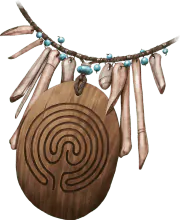
While there are no strict uniform requirements for students at Tenūsa, tradition dictates that a dukun provide their pewari with some symbol of their contract. These symbols are passed down from mentor to mentee, and as such, a dukun will use the same token as their teacher before them, and their teacher before them, and so on and so forth. The particulars of each token are specific to that token and its history, with some dukun following strict rules and traditions as to who they take as pewari, and others electing for lax and unremarkable symbols of their apprenticeships. Dukun who teach at Tenūsa, but were educated at other institutions, will create their own tokens, with new legacies starting as others pass into obscurity as graduates do not return to teach at the isle.
*Original Lore by Caradoc Browne, Magdalena Wickham-Deakin, Amended lore by Lawrence Maynard
This is the "Game Master" account. Please do not owl this account, unless specified. This account is not moderated actively and therefore, you may not receive a response.
Contact a Head of House or the Headmaster if you need anything.
Tenūsa, Isle of Divination
- 2024: Denbeigh - deceased
Reducio
Name: Denbeigh
Age: 96
Nationality: Australian
Blood status: Wizardborn
A thick bush of a beard and a signature favourite cork hat are what makes this Headmaster look more like a tourist trap rather than a powerful wizard. And yet Empu Denbeigh is, undeniably so, the current master of Tenūsa, Grand Seer of the Isle of Divination. He has held this position for only three years, though he has been a teacher for nigh three generations and has thus personally trained dozens of pewaris in his many years of teaching.
Denbeigh originally hailed from the Darling Downs in Queensland, Australia. He grew up on a farm with his squib parents, five older siblings (equally non-magical as their parents) and a Dukun (shaman/wizard) grandfather who needed tending to in his old age.
After a decade of slow decline, Denbeigh’s grandfather was reinvigorated with the flame of life when it was revealed that his youngest grandson showed signs of magic at the age of ten. It was him that served as Denbeigh’s guardian and guide and managed to bring him to the isle of Tenūsa. There he witnessed his grandson grow into a talented Dukun and eventually passed away just one week after seeing Denbeigh pass his final trial, at the age of seventeen.
Honouring his grandfather’s traditions, Denbeigh devoted his life to the Dukun of Tenūsa. And though he never travelled far from the Isle, he became a wise and learned wizard with vast knowledge of land and sea. Like most of Tenūsa’s disciples, he mastered the art of Divination and offered counsel as a wandering hedge wizard for some time.
Until he took his first pewari in his late-twenties, and never stopped since. Denbeigh was one of only a handful Dukun in history that had been permitted at one point in time to take on two pewaris at once. Though the cataclysmic results of a competitive relationship between both pupils also made him the last since. Despite wearing his failed pupils as a badge of shame, Denbeigh managed to maintain a hopeful perspective for the next generations.
Living now close to a century, he is known by the inhabitants of Tenūsa for his cheery disposition and optimistic advice. Always welcoming the break of dawn like an old friend coming to bring him a surprise visit, and laying the stars to rest like tired children after their slow and arduous flight through the night. ‘Denbeigh smiles upon you’ is a common phrase used by the inhabitants of Tenūsa. A comforting message to the pewaris offered in guidance of their personal journeys to becoming full-fledged Dukun.
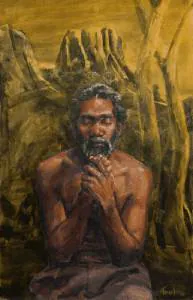
- 2024 - 2025: Arturo Reyes
- 2025 - beginning of April, 2026: Lawrence Maynard
- middle of April 2026 - present: Hadrian Hsia
This is the "Game Master" account. Please do not owl this account, unless specified. This account is not moderated actively and therefore, you may not receive a response.
Contact a Head of House or the Headmaster if you need anything.