
Castelobruxo

I. History II. Alumni III. Education IV. Grounds V. Werewolves VI. Jungle Village VII. Shopping VIII. Wildlife
IX. Sky Routes X. Uniform
Castelobruxo’s founding has become enshrined in historical myth and folklore, and the precise details as to the particular individuals who would create the entity that would one day evolve into the modern school have been lost to the ravages of time. However, what is known is that the school traces its history back to the latter years of the Classic Maya period, sometime around the 9th century AD. However, this founding was not of the school as it stands currently, but as a cross-national research fellowship, headed and staffed by various wizards and sorcerers of the many Mayan polities of the period. Said fellowship found itself primarily located in a sparsely populated region of modern Belize, known to the local muggle population as Wayal (lit. Land in abundance of spirits). Over the following century, the seasonal congregation of wizards at Wayal would expand in scope and size, developing from a small group of practitioners into a functional scholarly retreat. Whilst the Wayal fellowship did begin the gradual process of development into a truly educational body, its expansion died in the crib, any chance of evolution strangled by the advent of the Classic Maya Collapse. With the continued depopulation of the Mayan lowlands, many of the wizards who resided at the installation permanently returned home to their polities of origin, and the vast majority of the seasonal visitors never returned to the fledgling settlement. As the collapse continued, the remaining scholars grew more insular from the surrounding muggle populations, relying more heavily on their own subsistence farms for survival. Eventually, they would see fit to abandon the peninsula entirely.
Through the use of magic, the wizards of Wayal had greatly explored much of what would later be known as the New World. Even whilst the muggle civilizations of the Western Hemisphere found their capacity to explore and expand limited by the geography, the continued development of techniques in the practices of spellcraft and enchantment allowed sorcerers the ability to travel hitherto unthought of distances and to traverse seemingly impossible landscapes.Through the use of canoes enchanted to soar through the sky as opposed to through the water and small-scale proto-apparition, the mages of Wayal began the process of mapping the vast and untapped wilderness surrounding the grandest river upon which they’d ever set their eyes upon, thousands of miles from their homelands. While these initial journeys to the Amazon were purely scientific in nature, in due course, they would become imbued with an entirely different motivation.
In the early 10th century, a period mired in societal collapse, the research fellowship at Wayal would relocate itself entirely to the Amazon. Thousands of miles away from their civilisation of origin, the wizards became an effective island in and of themselves, isolated from their homeland. The farming techniques and cultivation practices pioneered in Belize would become integral to the survival of the fledgling settlement, and the practicality of labour in turn would develop to be as vital to the culture of the research institute as the study and development of the mystical arts.
In spite of initial difficulties in settlement, the wizards from Wayal persevered, and over time their ranks and number would swell with the best and brightest wizards from the invigorated Mayan populations in the highlands and northern lowlands. Whilst originally a destination purely for scholars, the prestige of the institution and its increasing desire to expand would see it evolve in part into an educational institute, and the children of the wizarding elite would spend their youthful years honing their craft under the watchful eye of the old masters. By the advent of the 1150s, the prototype of what would develop into Castelobruxo had formed, a place of learning and education in witchcraft and wizardry, deep in the heart of the Amazon. Of course, the body would soon be rocked to its core by an unprecedented development.
Whilst civilizations and nations flourished in Mesoamerica, other such steps had been taken on that same path in the Andes. Naturally, where the Mayan polities had given birth to organized gatherings of wizards, so too would the newly arisen states in the South American continent, and just as their northern counterparts did, they too sent expeditions into the Amazon by way of magical means. Despite being initially tense, the contact between the wizarding populations of these two vastly different civilizations would eventually lead to a cross-pollination of ideas and magical techniques that would kickstart a nascent golden age in each of their respective wizarding communities. In time, Andean wizards would come to join their Mayan counterparts in study, and soon thereafter the next generation of young wizards from the lands that would one day be known as Tawantinsuyu too would venture forth into the Amazon in pursuit of a wizarding education. Whereas the muggle counterparts of these two great and vast civilizations remained unknown to one another, their hidden realms of magic had never been closer.
However, this exchange and contact would pale in scope and consequence in comparison to the arrival of explorers from across the Atlantic. The Columbian exchange was a time of unparalleled change in the American continents, and nowhere were these changes more prevalent than in the very makeup of the populations of the regions themselves. Endemic diseases to the old world would devastate the virgin soil of North America and South America both, and the ravages brought upon indigenous populations could not, in any terms, be overstated. Yet, for wizards from Wayal, the plagues were countered by the twofold manifestation of isolation and the gift of healing magics. Whereas vast population shifts occurred in muggle populations, and to a lesser extent in the urbanite mage populace, the school remained effectively untouched.
Whilst technically within Portugal’s colonial claim, in the early days of those colonies the wizarding youth would still make the journey back to the old continent to undertake their education. It was only as further dialogues were undertaken between native practitioners and their newcomer European counterparts that a gradual cultural shift would begin. Such changes were evidenced clearly in the decreasing number of students traveling beyond the Atlantic for their magical education. Instead, the bright and hopefuls of Rio de Janeiro and Sao Paolo would join their indigenous siblings in study in the heart of the Amazon. In time, the reputation of the school would continue to flourish and develop in educated circles across the South American colonies. Soon these students would be joined by the wizarding youth of not only New Granada and Rio de la Plata, but also from the bustling ports of the Caribbean. K’iche’ and Quechua would cease to be the languages of study, with Portuguese becoming the tongue not only of those who claimed the land upon which the school sat, but also its faculty and students. Accordingly, a new name was forged in this newfound speech for this intermixture of cultures and ideas, Castelobruxo.
Yet, this name did not mean that Castelobruxo had succumbed to the influence of Lisbon or even Salvador. The school remained as independent and research-minded as it had been at its founding, and even as its mission had evolved purely from the study of the mystical world to the imparting of that knowledge to the next generation, and its culture had grown and developed into a harmony of nationalities and traditions, it never acceeded this independence to any government, be it magical or muggle.

Ah-Bolom-Tzacab - Mayan Seer, famed for pioneering techniques used to divine the future based on readings of the stars
Kusiwallpa Olaya Humahuaca - Inca Magizoologist
Mama Qura - Queen Consort of the Second Sapa Inca
Libatius Borage - Guyanese Potioneer, considered one of the world’s most famous
Francisco Javier Nápoles - Chilean quidditch player, winner of award for both ‘most times knocked off broom’ and ‘most other people knocked off broom’ in a single season
Roberta Mallory - Jamaican musician and herbalist

Castelobruxo is a purely private institution, and whilst subject to legislative requirements per statute passed by the Brazilian Ministry of Magic, it does not directly answer to the government in an administrative capacity. Instead, it is governed by a board of independent directors. That said, the school does receive some government subsidies, although a majority of its funding is received through private donations and grants.
As with all other schools, the school year begins in September and finishes with graduation in July. There is a two-month-long winter break between years, and further mid-term breaks of a week in each of April and October. The exact commencement and conclusion of the school terms vary by year, depending upon the relevant dates of that year’s Carnival.
Students commence schooling at Castelobruxo at the age of 11 and undertake a program of study for seven years. Young wizards and witches from the entirety of South America and Central America, the latter definition extending into Mexico until just north of Guadalajara, receive their acceptance in the form of a letter delivered by a tropical bird upon the first day of that year’s Carnival. Those prospective students born to muggle parents are instead visited by one of the school’s faculty, who in turn explains the wizarding world and the nature of magical education to the family. In addition to those students who are eligible for the school by virtue of catchment area, Castelobruxo also accepts applicant students from Central Mexico and the Caribbean. Additionally, considering the age of the school, the precursory institutes to Castelobruxo being older than Hogwarts, familial ties run deep in the college's history. Accordingly, as applicants from outside of Central America and South America are never muggleborns, by virtue of needing to be aware of the school to apply, combined with this longstanding culture of alumni families, mean that muggleborns tend to be rarer at Castelobruxo than at other institutes of a comparative size. However, there is no prohibition on attendance based on blood-status.
Prior to the commencement of the schooling year, students are expected to make their way to the city of Manaus in the Brazilian state of Amazonas. At which point they board a Diver ship and commence their journey down the mighty river. Once out of muggle eyesight, the ship sinks into the Amazon and continues its journey underwater, eventually surfacing outside of Castelobruxo’s illusory waterfall. Upon sailing into, and through, the waterfall, students arrive at the school itself.
Schooling is broken into two levels, Fundamental from years 1 through 4, and Superior from years 5 through 7. Whilst undertaking their fundamental education, students undertake mandatory classes in Charms, Potions, Herbology, Magizoology, History, Philosophy, and Language (with both Quechua and Classical Ch’olti’ offered in alternating terms for such). For their third and fourth year of study, students are also able to commence their education in Transfiguration, Divination, Muggle Studies, Arithmancy, or Ritual Magic. The last of which is a subject focused on those traditional forms of spell-casting that make use of places of power, mystical components and astrological phenomena, as opposed to wandwork. Education as to flying and defensive magic do not form core classes but are instead taught in conjunction with extracurricular obligations. Superior schooling takes the form of far more intensive classes, and students are required to pass requisite exams in order to undertake further study from their fundamental classes. Astronomy is taught purely as a superior class and requires functional fluency in Classical Ch’olti’ as well as high grades in Divination and Ritual Magic. Other superior exclusive classes include Phasmology, the study of spirits, spirit-beings and other such matters related to the post-mortal realm, and Theory of Magic, a class focused on the scientific analysis of the very nature of magic itself, culminating in a research thesis of the student's own design. The Herbology and Magizoology classes, both at a superior and fundamental level, are also famous, or infamous, for significant periods spent on field studies in the Amazon itself. Traditionally, education at Castelobruxo focuses less on wandwork and more on the understanding of the magical world, its workings, and the living things within it.
In addition to classes, students are expected and obligated to undertake agricultural work and other labour on the school grounds. Dependent upon the task in question, students are either expected to undertake these tasks through physical exertion or with spellcraft. These requirements are built off of the philosophy of holistic education, namely imbuing students with the importance of hard work and self-sufficiency. This latter value has evolved out of the school’s origins and reliance on its own farms to feed itself, and even up until today, the school’s agricultural department supplies a majority of its produce and other foodstuffs. In addition to these chores, students are expected to involve themselves in at least one extracurricular activity. These activities include, but are not limited to, quidditch, broom racing, dueling, quodpot, woodwork, and music. Any student may join a relevant sporting team and will undertake training with that team, although they are not guaranteed a place on a competitive side.
Classes themselves operate from the hours of 7 am to 12 pm, Mondays to Fridays, with a half an hour break in the middle of the morning. This is followed by a break for lunch, with the afternoon taken up by either extracurricular obligations or assigned duties such as farming or cleaning. On public holidays, there are no classes or chore obligations, however, first-string sports teams may still be expected to train on these days.
Castelobruxo operates without a house system, instead, students are assigned to lodgings for boarding by year group. Whilst the school does make use of a points system, this system is purely based on individual merit, and is combined with academic results to create an individual ranking within each year group. High-scoring individuals are honoured at the end of each academic year, and a culture of competitiveness in this regard is fostered and allowed to flourish.

Image credit to Johanna Rupprecht
Castelobruxo is located in the Amazon rainforest, off of a tributary river of the Amazon itself. The exact location is unknown to all but faculty, in part this is due to the actions of the caipora native to the grounds and the surrounding jungle. These trickster spirits emerge at night and deliberately obscure the natural environment around the school, so that those traveling near the grounds are disoriented, with natural landmarks seemingly shifting and plotted courses becoming untenable and entirely different from how they stood at the time of explorers’ departure. The few muggle adventure-seekers who have been able to stumble across the school grounds find themselves utterly incapable of ever relocating the same patch of the rainforest, and in some cases, never manage to return to civilization.
The primary school building takes the form of a Mesoamerican pyramid, seemingly made entirely out of gold. Surrounding this structure are a number of farms and lodging houses. The former of which has been sown with all matter of crops, both magical and mundane, from the continent and from abroad. During the wet season, the fields bloom with colour and vibrancy the equivalent to the shimmering gold of the pyramid itself. As to the surrounding lodgements, they have been constructed in all matter and a variety of traditions, including but not limited to buildings of such a similar style to the golden Mayan pyramid that they appear almost a natural extension, elaborate houses of stone and thatch as one may have expected in the Horizon of the Inca Empire, and colonial Portugueses estates. To muggle eyes, all appear as if in a state of ruin and disrepair. However, such an enchantment only serves as a final defense. For in addition to the actions of the caipora, the entirety of the school is hidden behind a colossal waterfall, and without crossing the threshold of this great body of water the rainforest appears virgin and untouched for miles. Regardless, the scant few muggles who did manage to cross the threshold to bear witness to the school have enshrined it in myth under an assortment of names, such as the legendary El Dorado, or Guimarães’s Lost City of Z.
The pyramid serves as the centre point of the entirety of the school, and much of the classwork is undertaken within its depths, as well as being home to the gathering hall and ballroom. However, meals are typically taken in the lodging-houses, with house-elves assigned to cook for that particular group of students. These elves are often assisted by the students themselves, particularly when they are seeking to garner further points for the school ranking. Only during feast days and other such celebrations is the Gathering Hall, located within the base of the ziggurat, utilized. Alternatively, they may feast in a nearby open-air pavilion within the grounds when weather allows and during special occasions. At other times, when it's not in use for special ceremonies, students can use this space as a place to relax, sunbathe, study, or bond over shared snacks.
The interior of the pyramid is built as maze-like corridors, where the ceilings are high, and walls, floors and stairs are made of basalt stone to combat humidity. Though much of the pyramid’s interior is enclosed in shadow, the architects had deliberately carved vast open-air sections into the structure. Panoramic openings overlooked the rainforest canopy and allowed warm air to escape upward through the pyramid, preventing the interior from becoming stifling during the wet season. During periods of rainfall, water can often be heard running through narrow drainage channels carved directly into the stone, while the sound of distant voices and footsteps echo through the corridors. Compared to the student population, the school itself is vast in scale, causing many of its halls and corridors to remain quiet even during the busiest hours of the day. The pyramid’s immense interior, combined with the spread of classrooms, creates a calm and almost serene atmosphere.
When you reach the core of the pyramid, the enclosed corridors open up into an open-sky courtyard, where the rain is allowed to fall and gather in pools. Moss, vines, and flowering plants cling to the damp stone walls surrounding the courtyard, while bridges and terraces overlook the open space from above. During heavy storms, rain descends through the center of the pyramid in great sheets, transforming the courtyard into a deafening curtain of water.
Other noteworthy parts of the school building include the astronomy classroom and observatory at its zenith and the various walled gardens that adorn its outer steps. The Trophy Room, also known as the Wall of Fame, is treated less as a register of student achievements and more as a mythical phenomenon. The central feature is a vast wall covered in carved glyphs, depicting the notable accomplishments of every student who has attended Castelobruxo in sequences of magical imagery, persisting and appearing long after they have left the school. These glyphs are not carved or decided by staff, making the appearance of new inscriptions a ceremonial and often anticipated event. While not all glyphs are celebratory in nature, nor is everyone granted a place on the wall, they form a continuous historical record of the school’s past, preserved for decades, if not centuries. The exact mechanism behind the glyphs’ appearance is unknown, though many attribute it to lingering ancient Wayal magic upon which the school is built. They are, however, said to appear when a person accomplishes something meaningful or makes a life-changing decision.
The lodging-houses are scattered across the grounds in a sort of miniature society. The cabins varies in sizes and design depending on year group that live there, though all are built using dark, sturdy hardwoods, set atop basalt foundations, with large panoramic sliding-door windows overlooking the surrounding grounds and rainforest. The spacious terraces serve as gathering points for unofficial student gatherings, with some students decorating them according to their own interests and tastes. Tree swings and hammocks are more rule than exception. The student houses have the capacity to host up to ten people, with a shared living space equipped with the necessities: bathroom, lounge-area and a dining area where the elves serve daily meals. There is a smaller sized kitchen for those who wishes to cook for themselves, though the usage varies depending on interest.
While not a conscious effort on the institution’s part, natural, crystalline pools have formed from the small river streams running alongside the buildings. Houses with these pools directly outside their doors are in especially high demand, giving parts of the grounds an almost resort-like atmosphere.
The grounds themselves are vibrant with life, a natural result of basing itself in the world’s largest rainforest, and these areas of greenery are interrupted only by the flowering of various tropical plants. Additionally, the school's agricultural departments raise flocks of llamas, alpacas, and guinea pigs, and these animals can often be seen in the distance as students make their way between classes. Much of the school grounds are open-air, with the various sporting fields seemingly taking up as much space as the buildings themselves. Of note is Castelobruxo’s rather unique dueling arena, being entirely outdoors and unenclosed, it is not unheard of for matches to continue even under torrential tropical rain. As a result of the campus’s size and horizontal as opposed to vertical approach to construction, each and every part of the school is connected by long and intersecting cobblestone pathways, illuminated by glowing flowers come nightfall.

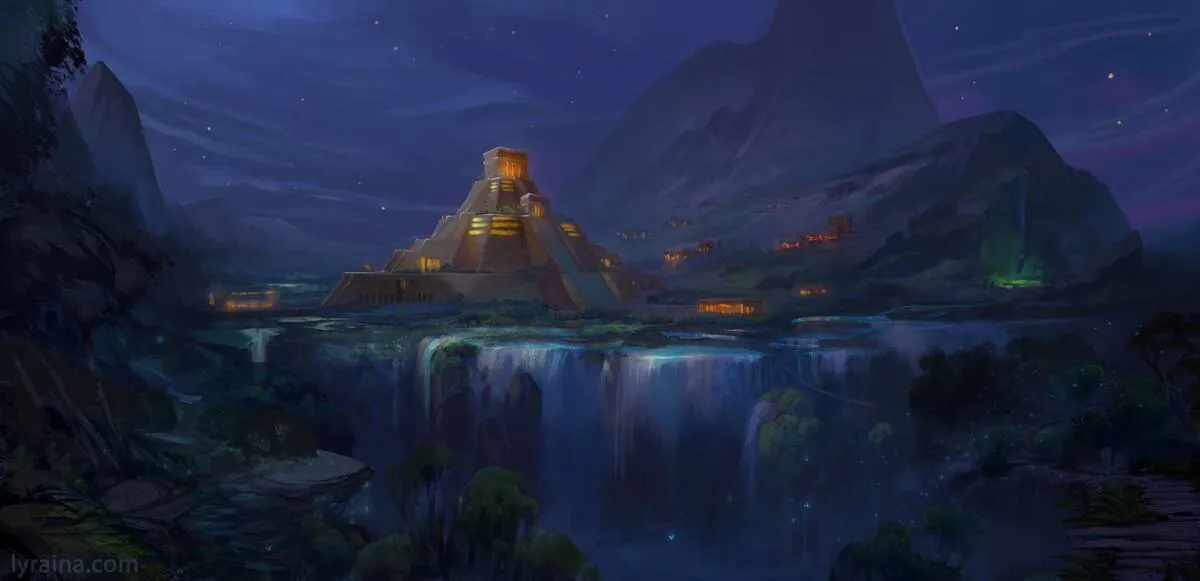
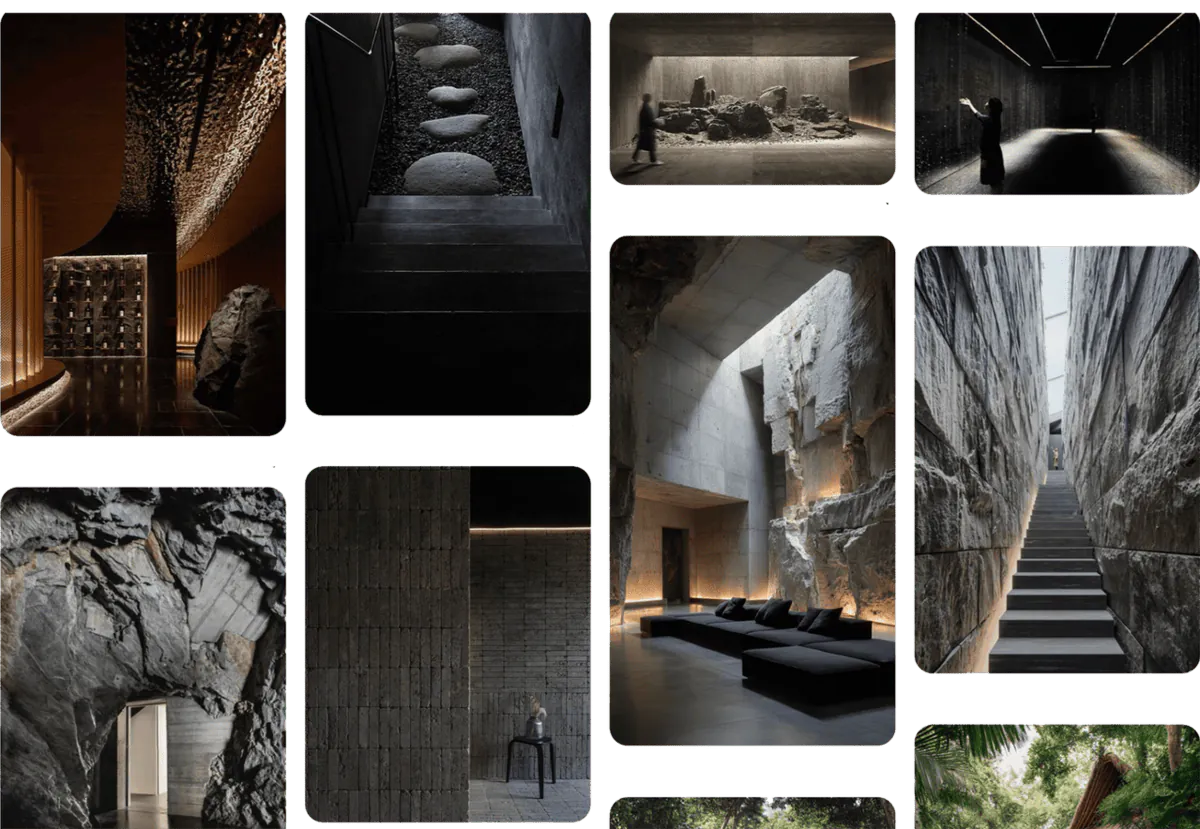
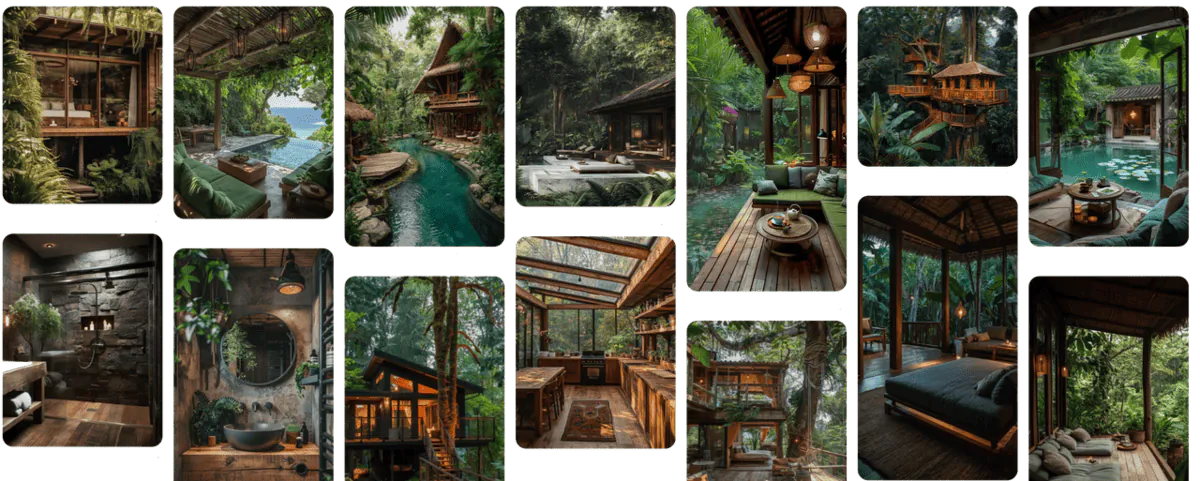
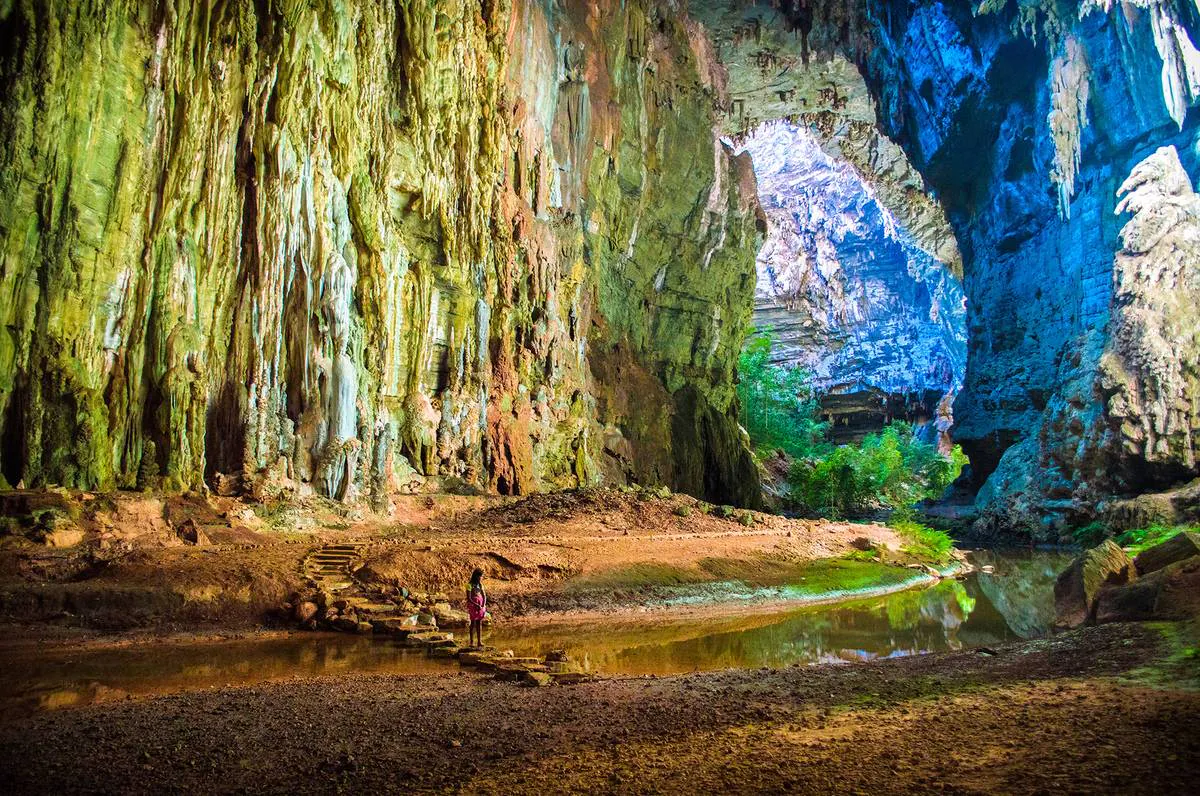
photo of Gruta do Janelão
Sitting on the northern edge of the Castelobruxo grounds, hidden amongst the towering rainforest trees, sat the Caverna Uivante, or Howling Cave. A paradise in its own, the cavern was thousands of years old but resting peacefully for hundreds of years. The name comes from the strong winds that will commonly blow through the cavern, creating an almost howling noise. On the full moon, much of the cavern is lit from the reflections off of the water that drips down different parts of the walls. The deepest parts of the cavern are kept bright by candles stored in specially carved out spots in the cavern walls.
The main features of the cave are the small stream running through the center and the massive stalactites and stalagmites. A variety of plants and small animals live in the cave, the walls covered in moss and lichen and the stream filled with a variety of smaller aquatic animals. Closer to the entrance into the cavern, a rather large sinkhole, trees, shrubs, and flowers grow, creating a small forest that must be waded through to get into the expanses of the cave. If someone were to look enough, they would find a variety of cave paintings throughout different areas of the cave. The smallest section of the cave is 30 meters tall and 22 meters wide, the largest section sitting closer to 92 meters tall and 80 meters wide. Caverna Uivante is about 731 meters in length from the bottom of the entrance to the end.
The entrance to the cavern is a rather large sinkhole, most recently surrounded by a fence to keep anyone from somehow accidentally falling in. To get into the cavern, one must go down hundreds of feet of stone stairs, carved into the walls of the sinkhole hundreds of years ago. The stairs have since been made safer and a railing added, but most of it is the original work. Close to the entrance, a few rooms had been carved into the stone, some natural some human-made. These rooms contained a variety of things such as blankets, extra clothes, food, and drinks, to keep everyone comfortable.
Werewolf students are brought to Caverna Uivante every full moon, being chaperoned by a staff member to and from the cavern. These students are given their wolfsbane potion and are then given free rein of the large cavern. To keep students from going up the stairs and somehow returning to the school grounds while in werewolf form, the stairs-into-slide charm is cast to keep everyone in the cavern. The next morning, the students are escorted back to the school.
Vila do Mato - Jungle village
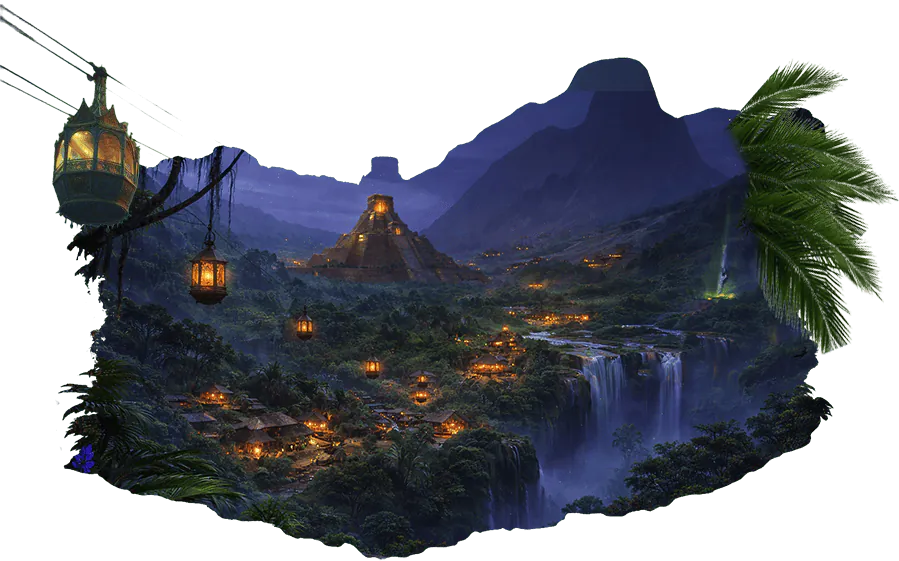
Hidden behind the same waterfall, Vila do Mato is a jungle village located near Castelobruxo and functions as a connected but independent hub for trade, services, and student leisure. It is primarily accessed through enchanted cable cars that depart from the school on a regular schedule—once per hour on weekdays and more frequently on weekends. The journey takes about twenty minutes and follows routes above the rainforest canopy, linking the school directly to the village without any ground-level access. Integrated into the rainforest, students sometimes report the route changing, depending on day and the forest spirits mood. Some unfortunate souls have claimed that they were stuck for longer than an hour, though the credibility of said sources is debatable.
"We swear! We saw a shadow moving between the trees. A caipora hid behind the trees, and all of a sudden we were in a waterfall. God... I thought we were never getting out of there."
- Anonymous Castelobruxo student, 5th year.
The village itself is built across raised platforms and walkway systems integrated into the tree structures. Instead of shaping the earth to allow for architecture, Vila do Mato had been shaped around the earth instead. You'll see buildings taking advantage of the trees, vines and organic stone it is built upon as a part of the architectural design. A narrow but fast-moving river runs directly through Vila do Mato, dividing the settlement into several sections connected by rope bridges and crossings. While primarily used for water access and transport of smaller goods, certain stretches of the river have been adapted for supervised student activities, including controlled river travel using canoes or rafts.
While it is closely tied to the school, Vila do Mato operates as a mixed-use settlement where commerce, practical services, and social spaces exist side by side. It is a key point of exchange between Castelobruxo and the outside world, particularly for materials, ingredients, and handcrafted goods that are not produced within the school grounds. Trade routes do not follow fixed paths, and are only navigable under specific conditions known to village guides. It is estimated that around 120 people of magical origin live in this village, working together closely knit with the school to ensure functional services, secrecy and safety in an otherwise exposed environment.
"Everyone there is so nice, it borders on weird. People just treat you like you’re their cousin or friend if you’ve never met before. It’s cool, I guess? If you’re into a lot of strangers patting you on the back and shouting."
- Thales Amaro, 1st year.
Nearby, the Posto de Travessia (Crossing Station) manages the cable car system, including maintenance of the enchanted transport lines and coordination of incoming and outgoing cargo. Unlike the airy platforms seen from above, this building is heavily reinforced, built into a series of layered terraces that descend into the canopy. It houses the maintenance for the enchanted cable lines, repair workshops for gondolas, and staging bays where cargo is sorted before departure. Students often underestimate its scale; what appears from the air as a simple stop is, in reality, a logistical hub capable of moving entire crates of magical goods, school supplies, harvests, and even animals and lifestock. This system is essential for the well-being and economy of the school and magical population that lives in the rainforest.
Although visitors would have to pass the waterfall to access the school on ground level, some airborne travelers are not restricted by the same rules. Owl delivery, in particular, is not affected by the environmental rearrangements caused by the caipora. Since owls track magical recipients rather than fixed locations, they do not require knowledge of the exact route to Castelobruxo, so long as the intended recipient is within the grounds. In case of larger deliveries beyond owls capabilities, the mail is delivered in bulk through the cable car transportation system, then dropped off at a service point in Vila do Mato for collection.
Fixed service points are placed in the surrounding rainforest for regular cargo to make sure that the system continues to run smoothly. However, the cable cars never take the same route twice, reducing the risk of tracking that could lead unauthorized visitors to the school’s location. The occasional and sometimes inconvenient route shifts experienced by students traveling between the school and the village are a direct result of these external conditions, which remain in constant motion beyond the protected boundaries of the grounds.
In case there's an emergency, there's a medical facility by the edge of the forest, the Clínica de Remédios da Mata (Forest Remedies Clinic), which provides treatment for injuries, environmental exposure, and magical side effects related to rainforest flora and fauna. It is used by both village residents and Castelobruxo staff or students when fieldwork requires medical attention outside the school.
For education and skill exchange outside the school, there's Centro de Aprendizagem Prática (Practical Learning Center), a workshop complex where apprenticeships are offered in medical herbology, potion ingredient cultivation, harvesting, and creature handling. It is here that many older students from Castelobruxo come during off-season periods to practice specialized techniques. The center is strict; unlike the rest of the village and surrounding areas, its pathways do not shift unpredictably, and the architecture resists the rainforests's tendency toward organic rearrangement, often when you least need it. As part of the village’s wider infrastructure, the center is also involved in the intake and rehabilitation of injured, displaced, or threatened magical creatures from the surrounding rainforest.
Through coordination with the Posto de Travessia, certain cargo transports are used to receive creatures in need of care. They are either sent from distant regions or transferred from areas where conditions have become unstable. Many of the creatures received are victims of illegal hunting networks, where endangered or rare species are specifically targeted for their high black-market value. Vila do Mato and Castelobruxo are actively involved in trying to protect these creatures. In other cases, recovery teams are dispatched directly into the rainforest to locate and retrieve affected creatures. These expeditions are not always planned, and are sometimes said to be guided by the forest spirits. There are accounts of a caipora or other spirits leading teams off-path, only for them to emerge later with creatures no one had known were there.
Participation in this work is limited and closely supervised. Students must demonstrate both technical proficiency and composure before being considered to join rehabilitation, as not all creatures brought in are stable, and not all wish to be helped. The rehabilitation areas themselves remain partially hidden from the main village, integrated into the forest in a way that allows for recovery with minimal human interference.
Additionally, the village caters for other basic infrastructure for utilities. The Estação de Purificação do Rio (River Purification Station) oversees purification and water supplies. This ensures that clean, drinkable water is accessible throughout, at all times, not only to the villagers but also to the school and the business community in the village.
Apart from the functionalities, Vila do Mato has also been noted to be among the places that offer recreation for students and visitors. There are a number of small restaurants and shopping centers available there, which include coffee shops, street kiosks that sells both trinkets and snacks, as well as general merchandise outlets. For visitors outside of official school events or purposes, the local Pousada do Passo do Rio (Inn of the River Crossing) offers bar service, small catering, and rooms for rent.
RP HOOKS- You're boarding the cable car and expect a standard route, only to be taken through a long detour.
- A jaguar sighting has closed the main walkway through the village, forcing you to find an alternative way back.
- Someone drops an important item in the fast-moving river, and you're asked to help retrieve it.
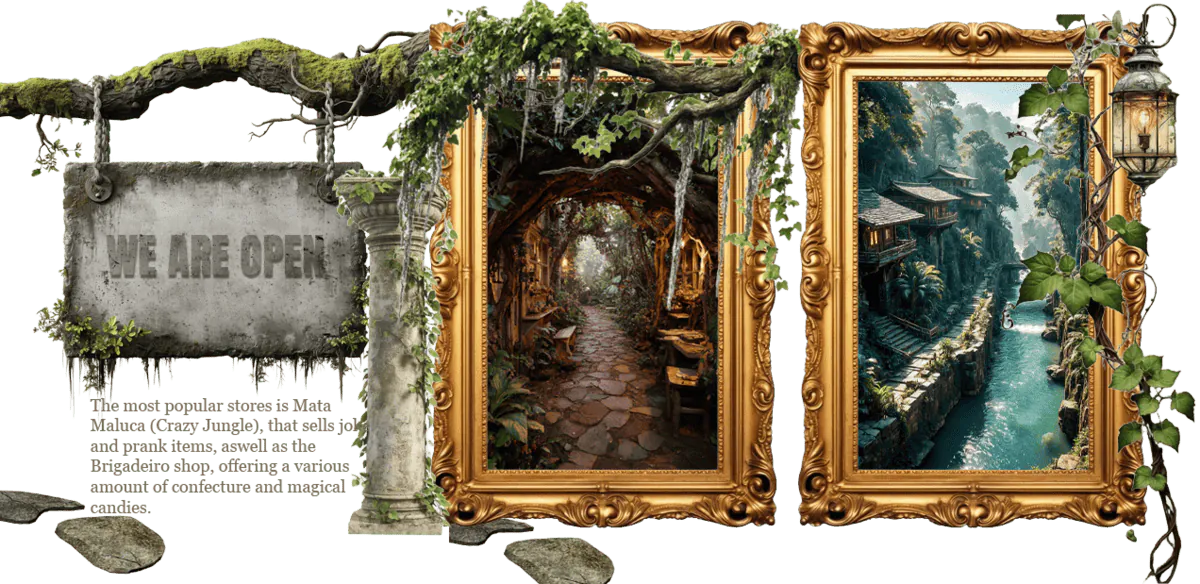
Mata Maluca (Crazy Jungle)Prank shop
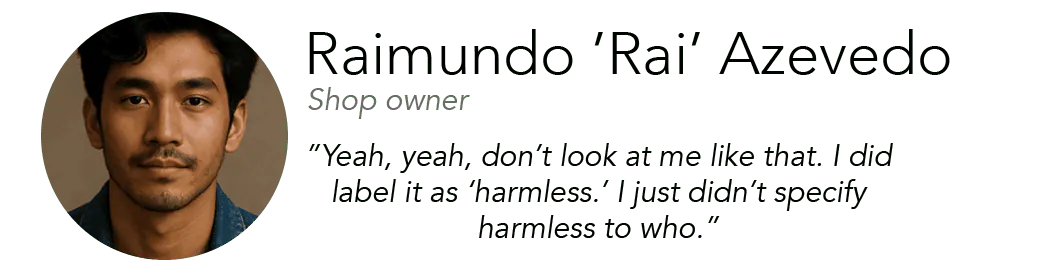
A pranks and jokes shop that, despite countless of complaints from the school about incidents in the hallways, is still standing. The wares are known to be technically safe but questionable. According to the owner, a former Castelobruxo student who argues his items are "educational", every time there's a another complaint, the students flock to his store. To combat the pranks, the school established a new rule that anyone who was caught with inkbombs in their possession would risk immediate detention.
Selling:
- Whisper Coins: Repeat anything they hear, always loud, always with attitude.
- Mood Mirrors: Reflect your emotional state a little too honestly.
- Self-Tying Rope: Organizes everything it touches whether you asked or not.
- “Harmless” Ink Bombs: Vanish on impact, but leaves behind chaos that may or may not wash out.
- Confession Ink: Reveals mildly embarrassing truths when under pressure.RP HOOKS- You overhear a Whisper Coin repeating a private conversation from earlier in the hallway, except it slightly exaggerates everything and makes it sound much worse than it was.
- You test the confession ink on a piece of paper, but before you're finished writing, the ink reveals something embarrassing you didn't mean to include.
- There's an inkbomb accident, and you're caught in the cross-fire. Not only are you ink-stained, but Rai insists that you'll have to help clean the mess.
BrigadeiroConfectionery
A small, constantly warm confectionery tucked between two walkways in Vila do Mato, known for its dense, handmade Brazilian truffles. Despite its size, it is one of the most visited stops in the village, especially by Castelobruxo students after long field sessions or exam weeks. The brigadeiros are made fresh throughout the day, with flavours changing depending on what ingredients the jungle offers and what the owner feels like experimenting with. The shop is run by a former apothecary assistant who eventually swapped potion work for sweets after deciding that “people are easier to fix when they’re not exploding.” Now, she hopes to fix heartbroken customers with chocolate truffles. If you've ever cried in her shop, she'll remember you forever.
Flavours avaliable: Classic Chocolate, Forest Honey, Passionfruit Cocoa, Firewhiskey, Flavour of the day.RP HOOKS- Dona decided that you look sad and insists on giving you relationship advice.
- You're offered to try a new sample, only to realize you're being more honest than usual while she asks you personal questions.
- Enjoy a truffle. What more do you need?
The Canopy CupCoffee shop
Located just an arms' length from the cablecar arrival terminal, The Canopy Cup offers freshly brewed coffee made by locally farmed beans. The owner, an older man who takes bean quality very seriously, doesn’t talk much unless spoken to directly, but remembers regular customers’ orders down to small details they often forget themselves. Inside, the seating is simple with wooden stools, hanging planters, and wide windows. Most students don’t stay long; it’s more of a stop between arrivals and village errands than a place to linger, though some end up staying longer than intended when the rain starts.
There's no written menu, only the staples that travel by mouth, the dark roast being the most requested beverage. Most of the orders end up custom-made on the spot. If asked, he’ll just shrug and say, “It’s just coffee.”RP HOOKS- You are handed a drink you never ordered. When you ask the barista, he says it's "already paid for", and points out another person in the coffee shop.
- You confidently order "the usual" and the barista pretends to not know what you're talking about.
Pousada do Passo do Rio (Inn of the River Crossing)Food & Lodging
Run by Maristela Lima and her husband that conventiently is nowhere to be seen during the day, a warm but endlessly talkative woman known for treating every guest like a long-lost relative, whether they asked for it or not. The inn offers simple rooms above a small bar and dining area overlooking the river, with lantern-lit walkways and the constant sound of water below. Maristela is famously unable to let conversations end. If you stay long enough, you will eventually hear the full story of all three of her previously failed marriages, usually while she refills your drink without asking.
Offer Pratos (Food)
Ensopado de peixe do rio – slow-cooked river fish stew with herbs
Arroz de castanha e ervas – rice with roasted nuts and seasonal greens
Frango da mata assada – roasted chicken with smoky spice glaze
Tigela de mandioca temperada – seasoned cassava served warm with garlic oil
Caldo de feijão escuro – thick black bean broth
Pão de forno de lenha – wood-fired bread, served with butter
Espetinhos do dia – meal of the day
Frutas da estação com mel silvestre – seasonal fruits with wild honey
Bebidas (Drinks)
Café do rio escuro – strong dark roast coffee
Chá de folhas da mata – herbal tea
Suco de maracujá selvagem – wild passionfruit juice, very tart and refreshing
Água de mel e limão – honey-lime water
Cachaça da casa – house-distilled spirit infused with forest fruits and herbs
Vinho de frutas da floresta – fermented fruit wine
Remédio da Maristela – not officially a drink, but a very strong herbal mix she insists fixes everything eventuallyRP HOOKS- You decided to have lunch at the Inn when a heavy rainfall starts. While waiting for the downpour to stop, Maristela takes this as an invitation to sit with you, and the conversation slowly shifts from small talk to an unexpectedly detailed account of her personal life, whether you’re ready for it or not.
- A lone guest is always present in the corner seat, staring over at your table. No one ever sits with them and no one ever reacts to them. Except you.
Raiz & Resina (Root & Resin)Apothecary
Raiz & Resina is the area’s only apothecary, built into the hollow of an old tree. As you step down a small staircase and enter the tree, you're met with humid air that smells of rainforest and soil. The space is small, with various jars stacked tightly on shelves carved straight out from the tree, but stock is extensive and clearly labeled. It serves as one of the primary suppliers of potion ingredients and herbological materials for both Vila do Mato and Castelobruxo. Common ingredients required for standard curriculum potions are kept in consistent supply and restocked frequently, while more specialized or rare materials are available upon request, depending on sourcing conditions. Some items are, officially, not in stock. In practice, this depends on who is asking.
The shop is run by a reserved witch with formal training, though no one can tell exactly what her professional background is, identifiable more by precision and efficient transactions than personality. Questions are answered directly, but never expanded upon. Students are expected to know what they are asking for beforehand, and incorrect terminology is more likely to be met with silence than correction.
Among older students, a rumor that the shop maintains a backroom of restricted and, in some instances, illegal ingredients is treated as common knowledge, never advertised and only accessible if you know what you're looking for.RP HOOKS- A misunderstanding starts when you're told an item is “not in stock,” but another customer is immediately sold the same thing right in front of you.
- You’ve heard the rumors about the hidden stockroom. Instead of asking about it, you try ordering something that shouldn’t exist on the public shelves to see the shopowner's response.
Veio Vivo (Living Vein)Wandshop
First established 1890 CE, Veio Vivo is a relatively new supplier of wands compared to its counterparts. Prior, students were expected to get their wands from their local wandshop before attending Castelobruxo. The shop has been passed down only two generations since its creation, currently ran by Mr Monteiro. He is commonly found wearing a broad, friendly grin while making pointed remarks about his clients’ wand choices, life decisions, and general competence. Despite his habit of gentle mockery, he is well liked and respected.
The wandshop has a broad selection wand woods, with chestnut being one of the most favored among the student body and villagers due to the abundance of magical flora and fauna surrounding the rainforest and the high interest in these subjects; this wood is known to bond especially well with creatures compared to many others woods.
Those working in rainforest operations may instead find themselves in possession of hawthorn or blackthorn wands, the former valued for its healing properties and the latter for its reputation for bonding strongly with its owner in potentially dangerous situations.
Hazel wands are also highly valued in Castelobruxo for their rare ability to detect underground water sources, making them particularly useful in rainforest navigation and fieldwork.
The wandmaker favors cores that remain stable in humid, shape-shifting environments, with unicorn hair, kelpie hair, and horned serpent horn being the most common. Curupira hair is also used in some wands due to local sourcing, though it is considered more volatile and unpredictable. Their distribution is limited and typically recorded due to their tendency toward heightened responsiveness in uncontrolled environments. A small number of users are known to possess such wands, among them Rai.
Outside of business hours, students have noted that the wandmaker and the apothecary of Raiz & Resina are often seen together, though any interpretation of this is speculative and unverified. If asked, they'd deny it.RP HOOKS- Looking for a new wand handle? Do you want to be lightly roasted or discuss your wands behavior recently? Come on in!
Nuvem de Pelos Café (Cloud of Fur Café)Chinchilla Café
A small café recognized by its soft pastel-colored exterior and decorative, swirly letters painted across the glass with a chinchilla wiggling its whiskers at you. The interior is decorated in the same color-palette for a calm ambience. Seating consists of plush cushions placed directly on the floor to allow for safe handling of the chinchillas. A sandbox bath is placed in a corner in the back, where the chinchillas can roll for a brief, meticulous grooming session.
If you've ever wanted to enjoy a biscuit with a chinchilla on your lap, this is the place to go. The waitress—and the face of the café—is the owner’s younger daughter, a soft-spoken girl who keeps her voice low for the comfort of the animals. Chinchillas are not native to the region, but the ones here are domesticated and live in the building full-time alongside the family, who reside a flight upstairs.
Offers Doces (Sweets)
Bolo de mandioca fofo – fluffy cassava cake
Pão doce de mel silvestre – warm wild honey sweet bread rolls
Mousse de maracujá leve – airy passionfruit mousse cups
Biscoito de castanha crocante – toasted nut biscuits
Doce de banana – caramelised banana dessert
Salgados Leves (Light Savoury)
Pão de queijo macio – soft cheese bread balls, served warm
Tapioca recheada simples – cassava crepe with fillings (cheese or honey)
Cuscuz doce suave – sweetened corn couscous
Torrada de manteiga e mel – toasted bread with honey butter
Bebidas (Drinks)
Café com leite suave – coffee with milk
Leite morno de baunilha – warm vanilla milk
Suco de maracujá – passionfruit juice
Suco de goiaba fresca – fresh guava juice
Água de mel e limão – honey-lime water, served warm or coldRP HOOKS- You’re handed your order with a quiet apology: a chinchilla has already sampled part of it. Would your rather have something else?
- You sit down to enjoy your order, only for a chinchilla to climb into your lap and refuse to leave, no matter how long you wait.
- Something is off with one of the resident chinchillas close to your table. The waitress hurriedly asks you to keep an eye on the café while she takes a chinchilla to the clinic for an emergency check-up.
Wildlife
While reinforced magical wards deter potentially dangerous animals from roaming the village, visitors may still encounter a wide range of flora and fauna, both mundane and magical, as they explore the area. Students are advised to not engage with wild animals or unknown magical plants unprovoked, though they may not always be afforded the same discretion in return. Some of them might get too close for comfort.
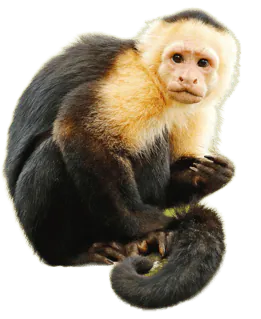
Capuchin Monkey
Type: Mundane | Temperament: curious, opportunistic | Risk Level: Low
Capuchin monkeys are highly intelligent and opportunistic, and frequent visitors along the main walkways. They show little to no fear of students and have learned to associate them with food. Unattended bags, especially those containing sweets and snacks, are often targeted. Attempts to shoo them away are rarely effective, but despite their relentless nature, they're generally seen as harmless.
RP HOOKS- You leave your bag unattended for a second and return to a group of capuchin monkeys rummaging through your belongings.Sloth
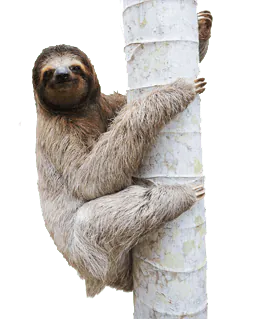
Type: Mundane | Temperament: Passive, indifferent | Risk Level: None
Sloths are common in upper canopy layers, where they're seen but not interfered with. They exhibit no meaningful reaction to humans unless physically disturbed. A sloth could be considered an informal indication that the canopy in that area is stable.
RP HOOKS- A sloth is hanging directly above the walkway, minding its own business. So should you.Toucan
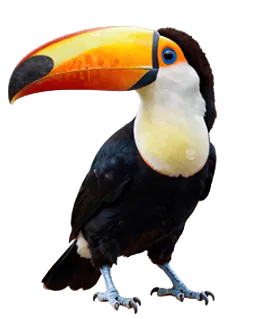
Type: Mundane | Temperament: Wary, observant | Risk Level: Low
Toucans are frequently seen near fruit-rich zones. Toucans maintain distance to humans but are not easily startled by their presence, making them commonly seen moving around the village. Compared to capuchin monkeys, these birds would not get close enough to steal fruit from your hand.
RP HOOKS- A toucan at a respectful distance watches you enjoy a fruit. You decide to leave it a snack.Tree Frog
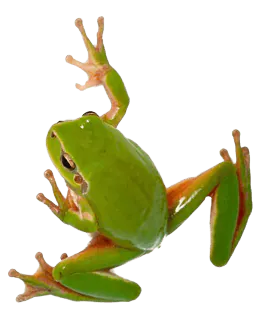
Type: Mundane | Temperament: Variable | Risk Level: Low–Moderate
These tiny tree frogs usually appear around water systems, or in shaded cracks in the nearby tree structures. Even though they are mostly harmless, some of them can cause irritation or have hallucinogenic effects on touching. Students are advised to not handle them with direct skin on skin contact. You'll recognize them by their vibrant coloring.
RP HOOKS- You accidentally touch a frog and the world around you stops making sense until the effects wear off.Jaguar
Type: Mundane | Temperament: Solitary, avoidant | Risk Level: High (in external zones)
Jaguars are hardly seen inside warded areas. Jaguars avoid human contact and never venture into areas where people live except when the environment is disturbed. Any confirmed sighting in Vila do Mato will lead to immediate containment measures being put in place.
RP HOOKS- You’re mid-rid in a cable car when a jaguar briefly appears along the route through the forest, matching the cable car’s movement for a few seconds before disappearing into the trees.Bowtruckle
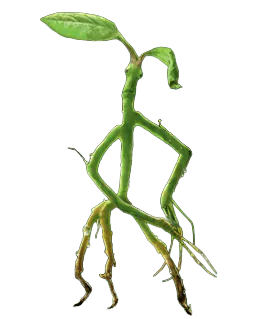
Type: Beast | Temperament: Territorial, cautious | Risk Level: Low–Moderate
Bowtruckles are typically found on older, wand-quality trees integrated into village architecture. You might find them climbing on tree structures close to their host tree. Bowtruckles are non-aggressive unless their host tree is damaged or threatened in any way.
RP HOOKS- You try to move a branch aside and a bowtruckle immediately appears looking offended.Diricawl
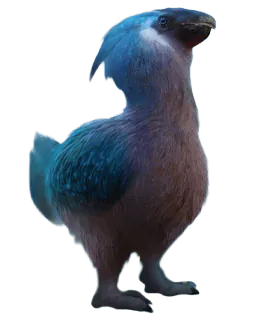
Type: Beast | Temperament: Elusive, non-confrontational | Risk Level: None
Occasionally, Diricawls are mistaken for ordinary birds due to their tendency to vanish before you're able to get a proper look. They avoid all interaction and are considered non-interactive species, and due to this they're generally considered rare to see in the wild.
RP HOOKS- You think you see a bird nearby, but the moment you try to focus on it properly, it’s suddenly gone, and no one else seems to remember seeing it.







Courtesy of the school’s extensive and long-established cable car system, students are able to travel beyond the immediate grounds without needing to pass through the waterfall itself. While movement through the surrounding rainforest remains unpredictable due to the influence of the caipora, the network connects to a number of known crossing stations and settlements that remain relatively stable once within the system. Though there remains the possibility that further locations exist beyond current knowledge. As a result, students are afforded opportunities to experience parts of the wider rainforest and South American nature beyond Castelobruxo during their years of study.
The official minimum age required to travel beyond Vila do Mato is thirteen, with students expected to carry school-issued travel admission while using the external routes without staff. In practice, however, such regulations are rarely enforced.
While portions of the route network remain restricted to Castelobruxo, several stations also function as shared infrastructure used by the wider magical population of South America. Traders, researchers, healers, and travelling magical communities may occasionally be encountered along the routes, particularly beyond the Posto de Travessia station. However, beyond the maintained lines, the rainforest quickly becomes unpredictable territory where neither the school nor the village claim true authority.
Castelobruxo campus
The route connecting Castelobruxo to Vila do Mato serves as the central artery of the entire transport network and is notably the only permanent one-way line within the system. Students seeking to travel beyond the school grounds must first transfer through Posto de Travessia before boarding external routes deeper into the rainforest. Due to the volume of traffic moving between the village and the school, this line is considered the most stable and least affected by the shifting influence of the caipora, though not immune.
RP HOOKS- You return from a day off-campus to relax in one of the natural pools between the houses.
- A group of students have dragged board games and snacks onto one of the terraces for an unofficial late-night gathering.
Cargo points
Travel time: 20 minutes - 2 hours
Located in west, south, east and north. These stops are mainly for incoming and outgoing cargo. Students are not recommended to take these routes, with the risk of not finding their way back if they venture out into the rainforest alone. All of these routes are accessible through Posto de Travessia.
RP HOOKS- Unless you plan to get lost, you should probably get out of there.
- You heard about an injured creature and decides to go look for it yourself.
- A cargo gondola arrives damaged and partially covered in claw marks.
Posto de Travessia - Vila do Mato
Travel time: 20 minutes
Serving as the primary interchange point of the entire cable car network, Posto de Travessia is where students departing Castelobruxo must change lines before continuing elsewhere. Cargo lines, student routes, and long-distance crossings all converge here before branching back outward into the rainforest.
RP HOOKS- Your cable car is reassigned at the last second to a route you didn’t choose.
- While waiting for your transfer, you overhear an argument between two cargo workers about something that supposedly came back from Videira Morta.
Passagem dos Tucanos (Passage of the Toucans)
Travel time: 35 minutes
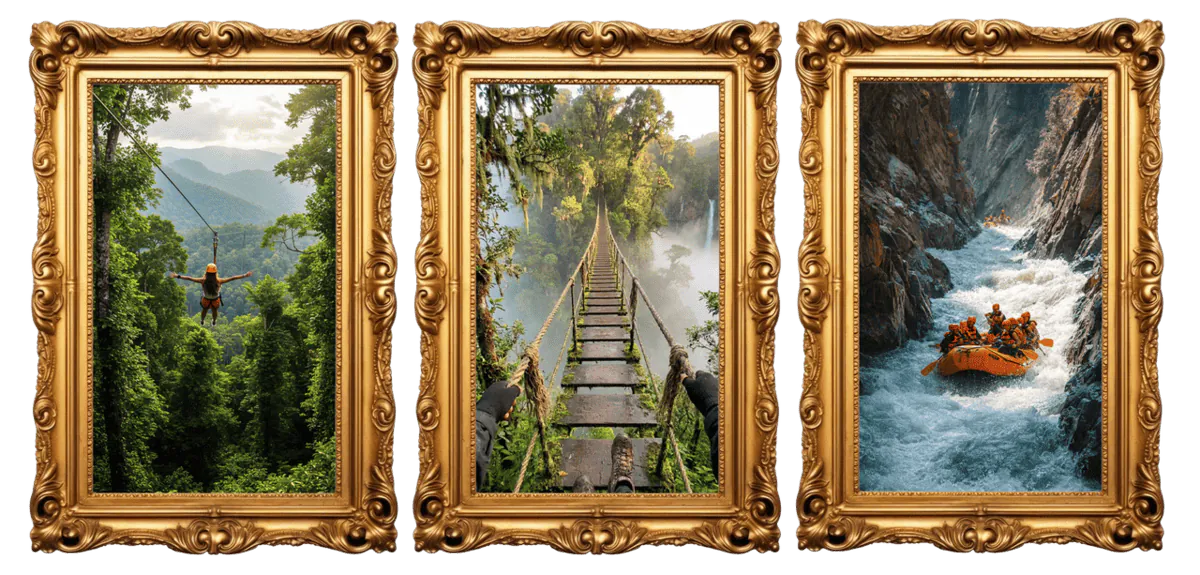
Constructed high above the rainforest canopy, Passagem dos Tucanos is among the most scenic and popular stops connected to the Castelobruxo network. The station is famous for its observation bridges, canopy walkways, and zipline routes stretching between jungle trees. Toucans and other avian species are frequently sighted throughout the area, particularly during the early mornings when mist still clings to the upper canopy, among other species. Due to the station’s altitude and open-air design, heavy storms can cause the entire structure to sway noticeably in the wind.
RP HOOKS- During a fun zipline excursion, a storm breaks out while you're stuck in a tree.
- You see a beast you haven't encountered before while ziplining.
Ruínas da Videira Morta (Ruins of the dead vine)
Travel time: 40-50 minutes
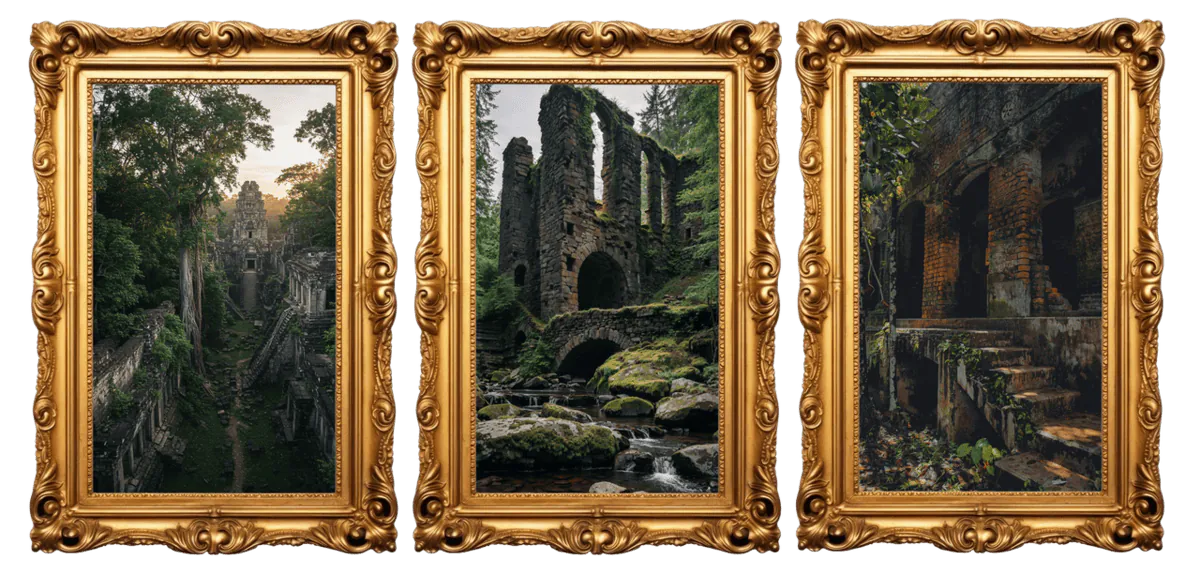
The station has long been abandoned and is officially closed to students. Ruínas da Videira Morta is considered a ghost town, yet remains connected to the cable system despite the surrounding station having long since fallen into ruin. The area has largely been reclaimed by the rainforest, with collapsed platforms, overgrown support towers, and thick black vines wrapping around the remaining structures. Rumours persist that gondolas occasionally still arrive at the station despite no scheduled route leading there. Students are strictly forbidden from attempting to access the ruins, because no one knows what one might encounter there now.
RP HOOKS- On the way to another station, the gondola suddenly stops at an abandoned ruin that you haven't seen before.
- You're determined to find this mysterious station, not knowing that poachers might be lurking.
- You discover fresh footprints in the mud around the station platforms.
Platô do Céu (Sky Plateau)
Travel time: 2-4 hours.
Situated high within the Andes, Platô do Céu serves as one of the most distant points accessible through the Castelobruxo route network. The humid rainforest gradually gives way to cool mountain air, sheer cliffs, and vast skies overlooking the surrounding peaks. Rope bridges and via ferrata routes carved directly into the mountainside allow experienced students and faculty to traverse the surrounding terrain. Owing to the altitude, the station is particularly popular amongst astronomy and ritual magic students, and even advanced broom racing practitioners, many of whom claim the stars appear unnaturally clear from the plateau. For those preferring solid ground, the mountain lodge offers warm snacks, hot chocolate, and panoramic views from a safe distance.
RP HOOKS- You're facing your fear of heights by joining a group for a via ferrata climb.
- Not much for climbing, you simply decide to enjoy the view with a hot chocolate in hand.
- Someone challenges you to a broom race through the mountain passes at sunrise.
Enseada Azul (Blue Cove)
Travel time: 1.5–2.5 hrs
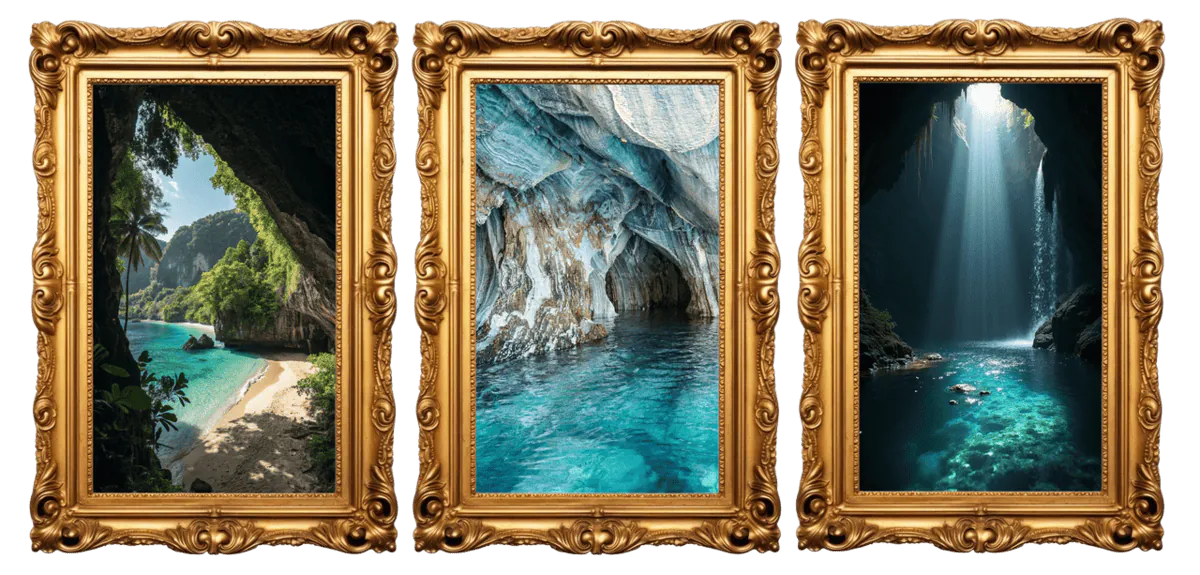
Located along a secluded tropical coastline, Enseada Azul is among the most popular recreational destinations connected to the school network. Just a five minute walk from the station, the forest opens onto white stone cliffs, white sand, crystalline tidal pools, and partially submerged cave systems. During school holidays and warmer months, students frequently gather along the coastline to swim, cliff jump, explore the caves, or simply escape the humidity of the rainforest interior. The location became so popular amongst students that Castelobruxo eventually established its own seasonal beach club along the shoreline, recognizable by its green-and-gold sunbeds, striped parasols, and embroidered towels and robes bearing the school crest. The bar is closed during the winter season, which spans June to August in this region, but offers music and small catering during the warmer months.
RP HOOKS- Enjoy a drink while lying on the Castelobruxo Beach Club sunbed during a sunny day.
- Someone dares you to swim into one of the tidal caves after dark.
- You find something glittering beneath the water in one of the tidal pools.
- A group of students attempt to sneak into the closed beach club bar after hours.Lore By Camille De Varenne

Art credit to Biscoito Recheado
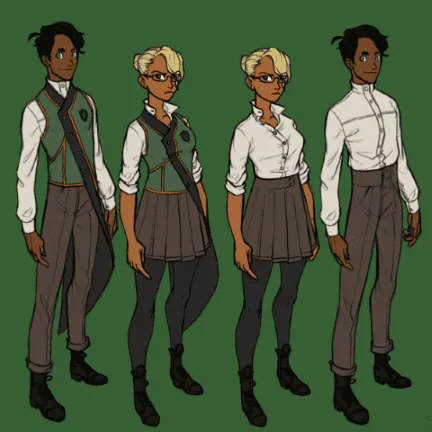
Like much of the school, Castelobruxo’s uniform draws from, and combines, elements from both modern Brazil and that of the indigenous civilisations of the new world. Given the high temperatures endemic to the tropical location of the school, the everyday uniform is lightweight and airy. All genders wear a white, silk, button-down shirt, notable for its lack of a flared collar. This is paired with brown trousers, although they can be substituted for a pleated skirt or shorts of the same colour in the warmer months of the year.
The primary colour of the uniform, and of the school itself, remains green, and this is reflected in the tailcoat that makes up the rest of the day-to-day uniform. Atypical in its form, this tailcoat is tapered purely to the left, with the right-hand side ending at the waist.
For formal occasions and in periods of inclement weather, students are also known to wear enchanted ponchos. Said ponchos are also of lightweight material and are of a slightly richer shade of green than the tailcoats. However, they have also been enchanted to not only serve as adequate protection against wind and water but also to reflect symbols and iconography particular to the student in question. Whilst these symbols are difficult to decipher for those who are not alumni of the school, they reflect a number of factors about the individual, including nationality, preferred gender identity, extracurricular involvement, classes being taken at a superior level, and accumulated points and honours. Castelobruxo makes no use of badges or pins as is common on the continent, and instead, students’ deeds are reflected by these patterns, which in turn are based on Chimú designs. The year level is also reflected by the poncho, but in a different way, with quipu knots fastened to the bottom of the fabric used to count and denote such.

Lore by Elaine Pendrast, Tuesday Jeremiah Irons, Magdalena Wickham-Deakin & Camille De Varenne
This is the "Game Master" account. Please do not owl this account, unless specified. This account is not moderated actively and therefore, you may not receive a response.
Contact a Head of House or the Headmaster if you need anything.
Castelobruxo

- 2024: Sónia Alejandra Veritas Duorado - deceased
Reducio
Name: Sónia Alejandra Veritas Duorado
Age: 63 (Born January 15th, 1959)
Nationality: Colombian
Blood Status: Half-Blood
Born the youngest and only daughter of a family of six half-blooded siblings, Sónia was raised in the metropolis of Bogotá. Her father was a small-time file clerk inside the Colombian Ministry of Magic, while her mother was a local baker. As a child, Sónia had a natural affinity with the natural arts of magizoology, and as a student of Castelobruxo excelled in her studies of the subject of the same name.
At the age of eleven, Sónia’s invitation to Castelobruxo arrived via beautiful Scarlet Macaw, a letter clutched in between its claws. Even as a child, Sónia held herself with grace and poise, however even with the grace, she was terribly shy compared to her more outspoken brothers. Throughout her several years at Castelobruxo, she excelled in her studies but yet she couldn’t help but find that her love of magizoology was still the most prevalent in her heart. This love stayed with her all the way through graduation and into her adult life.
As an adult, Sónia felt that it was her place to become a wizarding naturalist. While she never participated in the sanctioned breeding of magical creatures, she spent the majority of her professional career tracking and saving desperate magical creatures from the likes of poachers and those of less-principled parties. Throughout her tenure as a Magizoologist, she was lauded for her observational aptitude and natural empathy that was involved in studying these creatures from afar and taking care of those who could not take care of themselves.
Some might say that Sónia was a black sheep of her family, as her brothers had found their callings in more labor-intensive or bureaucratic careers. She had found that the muggle naturalist societies and the local cryptid hunters were a bountiful source of information, even if these muggle parties were very ill-informed nine out of ten times. So as she traveled the world, and tracked the movements of endangered magical creatures, the woman often had many contacts within the muggle realm of cryptid and non-magical creature advocates. Only in her recent years had she come in contact with what Dourado would call a lifelong friend, and what a creature resembling an overgrown ferret would vehemently deny. The creatures known as Jarveys were foul-mouthed little things that were verbally aggressive and equally physical had caught the intrigue of the Wizarding naturalist. After saving the creature from a group of rowdy huntsmen, who had found that Jarvey’s words were not to their liking, she kept the overgrown ferret with her. The creature was dangerous for non-competent wizards and witches, but Sónia had little trouble keeping it in line. Sónia mostly kept it around because she loved the thrill of their verbal sparring matches, slinging insults back and forth at one another. Sadly the Jarvey was always the clear winner.
After years in the service of magical creature advocation and protection, Sónia had found a new passion in tutoring the young minds of the future wizards and witches of the world. For several more years, she had found herself independently teaching young students in the ways of magizoology. That was until the end of 2020. Only a year after the former Headmaster of Castelobruxo, Gideon Guerra, was ousted from his position for gross negligence and failure to uphold the standards set forth by the Colégio de Castelobruxo. However, Guerra’s incompetence paved a path to headmistress status for Dourado.

2024 - September 10th 2025: Esmeralda Fernandez
September 11th 2025 - March, 2026: Catalina de la Torre
March 2026 - present: Santiago Peralta
This is the "Game Master" account. Please do not owl this account, unless specified. This account is not moderated actively and therefore, you may not receive a response.
Contact a Head of House or the Headmaster if you need anything.