Source Astronomy Textbook

CODING Credit To:@Winnie Harper
Image posted by the member
Chapter One | Introduction To Astronomy
Chapter Two | Astronomy Tools
Chapter Three | Spaceflight
Chapter Four | Core Planets
Chapter Five | Dwarf Planets
Chapter Six | Introduction To The Solar System
Chapter Seven | Astrology
Chapter Eight | Navigation
Chapter Nine | Earth's Moon: Advanced
Chapter Ten | Solar System: Advanced
Chapter Eleven | Time
Chapter Twelve | Astronomy: Advanced
Chapter Thirteen | Theories
Chapter Fourteen | Missions
Chapter Fifteen | Creating A Spacecraft


───────────
"First I believe that this Nation
should commit itself to achieving the goal,
before this decade is out,
of landing a man on the Moon."

John F. Kennedy
───────────
Image posted by the member
This is not a complete textbook but will contain important information that may not be directly included in the homework lesson. I am going to try to keep it in order with the homework you have following the curriculum. Unless otherwise stated, the spell information will be found in the homework lesson and not in the textbook. The textbook is designated for the purpose 0f assisting you in your homework- providing materials that might not be in the lesson. The same rules apply here as it does in homework and across the site. No plagiarism. No breaking site rules, yada yada, you know what to do. In addition, you should not respond/reply to this if you ever find the textbook open in any case- maybe because I forget to lock it, but you should still not post in this.

Over time, I, Octavius Baird, will be adding things to the Textbook; new chapters, new information, etcetra. Be aware that this is not complete.

To use it in IC roleplays, that's fine, you can do so, but it's not your assigned class textbook, it is considered notes. The professor's notes.

A little fun activity- Astronomy Internship members will occasionally be quizzed, and the questions will come from the content in this textbook- not from the homework.

To recap: No posting in this if it ever happens to be open. This textbook is to be used as a resource in your homework. No plagiarism.

Little Tip: Ctrl+F to find what you are looking for
Image posted by the member

──────────────────

What have I gotten myself into?
Astronomy Professor |
| Student: Colin McCoire | iNPC: Cursa McCoire

Source Astronomy Textbook
CODING Credit To:@Winnie Harper
Image posted by the member
───────────
"In Order To Move
Forward
You Must Learn From
The Past"

Unknown
───────────
Image posted by the member


Chapter Includes
Chapter One | Introduction
Chapter Two | Ancient Assyro-Babylonians
Image posted by the member
Introduction
I'm sure you're intrigued by what might come from this book, but as it says on the cover- "Astronomy Textbook", you should expect exactly that and not something completely random like- "The Autobiography of Solomon Lear." Jokes aside, by the end of every chapter, you will likely have an increased understanding of Astronomy and some of the numerous things it comes with. All credits to the information you find in this textbook will be from NASA (National Aeronautics and Space Administration). NASA is a space agency from America in which the information of the text comes from. If there are any other sources used, I will list them. Every single source will be credited.

I'm sure you're asking, "But Professor? Why did you come up with the textbook?" People search different sources than I provide, it happens, but the intention of this source is to cover everything I can so you have a source that IS used in my class, and something you can refer to as needed.

As simple as that is, you should understand that while Astronomy's history and everything that falls under the category of "astronomy", it does not mean that it's intimidating. It's quite easier to grasp the concept rather quickly, but I suggest taking mind breaks. This book encompasses all seven years of Hogwarts- covering the topics that we discuss in class along with a few other fun things sprinkled in.

Use it as a source. Use it as you will. This book is made for you.

In your first year, you basically spend your time learning the rules of the room, taking in the atmosphere, and maybe cracking a joke or two while the professor is talking. However, you don’t actually learn the true Astronomy History until your later years. We start with the Ancient Assyro-Babylonians and end with the literal missions we have gone on to explore space. Keep in mind that everything that is covered and said in this book has a possibility of changing in the near future as Astronomers (and those in the different fields of Astronomy, covered later in this book) make new discoveries and either prove or disprove theories and the studies we have.


Ancient Assyro-Babylonians
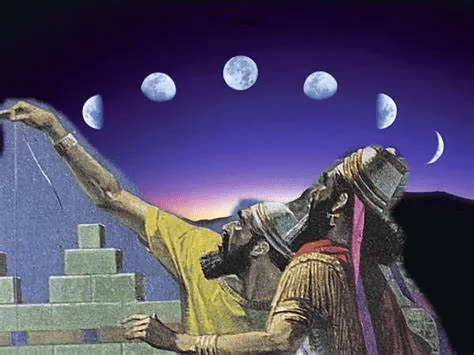
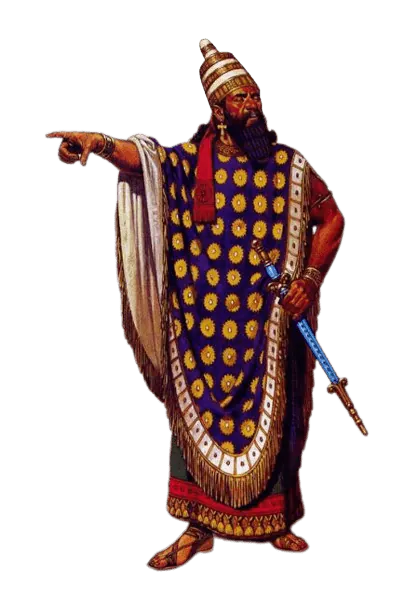
First things first, let’s jump into it! Keep in mind that our information from the Ancient Babylonians (and other historical civilizations) are fragmented at best. This means that we only use the information provided to us based on the fragments and documents we retrieve. From what we know about the Babylonians, they often focused on what’s called Ziqpu stars. Ziqpu stars are really just constellations and stars that were observed by the Babylonians. They recorded it on a cuneiform. There was a cuneiform recovered that showed their observation on Hailey’s Comet (164 CE), but it’s thought that even while we know what we do about what the Babylonians have studied due to their notes in the cuneiforms, there’s a likelihood that there are still numerous out there- information we don’t know yet.

Babylonian had earned the title of being the first ancient civilization with surviving fragments as a successful means of giving a refined mathematical description of what we could call astronomical phenomena.

Tablets were recovered from the Babylonian era and on it were mathematics calculating the variation in the length of daylight in what’s called a Solar Year. A Solar Year is the time it takes for the Earth to rotate around the Sun. Not mentioned is a Lunar Year, which is only 11 days shorter than a Solar Year because it tracks how long a year is once the moon has achieved 12 full moon phases.

Continuing with the Tablets, the oldest known Babylonian Astronomy tablets are called ‘Enûma Anu Enlil’ and it’s assumed we have either 68 or 70 Enûma Anu Enlil tablets discovered. The oldest tablet we possess from the Enûma Anu Enlil series is Tablet 63 and the tablet is titled ‘Venus tablet of Ammisaduqa.’ It is about the first and last rising of Venus over a course or period of 21 years. You could consider it one of the earliest evidence of planetary phenomena.

The Ancient Babylonians also had star and constellation catalogs, which were also known as the Three Stars, but the one that is important is called the ‘MUL.APIN’, and it’s an expanded form of the Three Stars. It is based on what they call ‘accurate observation’ from what they could see, the tools they used. However, the MUL.APIN wasn’t created by the Assyrians. It was created by Neo-Babylonians. The Neo-Babylonians likely were required to give all the information they discovered to the royals at the time. The MUL.APIN also had a few tools within its text to assist with predicting heliacal risings and planetary positions- as well as measuring daylight with the three objects they used; a water clock (clepsydra), a gnomon (think of a sundial but instead of a circular base, this had a square base), and implementing intercalations (timekeeping, think of a calendar, but it also is when you insert a leap year into keeping time).

When you wonder what the first civilization was that came up with the planetary theory, your immediate thought at this point should be the Ancient Babylonians, however, at this point we are talking about Babylon/Mesopotamia during the time where the Assyrians were in control.

The oldest document alive that we possess proving the functional planetary theory is from the Enûma Anu Enlil, Tablet 63. Tablet 63; Venus Tablet of Ammisaduqa, covers the first and last rising of the second planet- Venus- over 21 years. This established and paved the way for Western Astrology, but also included omens as they believed there was a sky god and the omens listed are in correlation with the sky god.
Image posted by the member

──────────────────

What have I gotten myself into?
Astronomy Professor |
| Student: Colin McCoire | iNPC: Cursa McCoire

Source Astronomy Textbook
CODING Credit To:@Winnie Harper
Image posted by the member
───────────
"And on the fifth day
I hath created
THE TELESCOPE!"

Octavius Baird
───────────
Image posted by the member


Chapter Includes
Chapter One | Telescope
Chapter Two | Jovilabe
Chapter Three | Orreries

Image posted by the member
Introduction To Tools
When you use certain tools in Astronomy, you may wonder what they do. This is a very good question. You know what else is a good question? How do you use them? Sure, you may know what function it offers, but what about when you have to use it on your own when you don't have this book? This chapter is intended to inform you of what the tools are, their functions, and how you can utilize it.


Telescopes
Magic or a plain old trick that has no sense of humor? Telescopes have a cool history. It began in 1608 in the Netherlands. No, at that time, there was not a literal telescope, but there was an eyeglass maker named Hans Lippershey. He realized that by aligning two eyeglass lens, it made the objects in question bigger- more zoomed in. When he tested it with a convex objective lens and a concave eyepiece, he basically created a type of telescope called the refracting telescope, but he didn't. He attempted to get a patent based on his discovery but failed to get one. It was only 1609 where Galieo improved upon that design and really just applied it to the study of Astronomy.

In 1611, Johannes Kepler had explained that in order to have a telescope to function better, you would need a convex objective lens and a convex eyepiece lens. And he was basically right. Because all the way up until 1655, scientists and early astronomers would make and experiment with telescopes that were unwieldly but powerful. These types of telescopes that these scientists were making were called the Keplerian telescope with a compound eyepiece. Compound eyepieces are the lens at the top of your microscopes or telescopes with rubber sticking out on the edges to keep your eyes from coming into contact with the glass (among other reasons).

A very cool man who has done quite a bit of work for science and math has also gained credit in 1668 for creating the first reflecting telescope. This man was Isaac Newton. A reflecting telescope is made with diagonal mirrors! In Newton's case, it was a single diagonal mirror that was inserted via a small slit in the telescope. This helped to reflect the light to the eyepiece he had mounted to the side of the telescope.

In 1672, Laurent Cassegrain essentially described a second mirror in the reflecting telescope to reflect light through a small hole in the main mirror. Years later, in 1733, Chester Moore Hall invented a type of lens called achromatic lens. The function of achromatic lens were to essentially make telescopes shorter by reducing color aberrations in objective lenses. However, Hall never did publish or make it known about his invention of the lens. But several years down the line in 1758, John Dollond had stumbled upon this invention and turned around and make profit off of it by commercializing and mass producing telescopes with the achromatic lens.

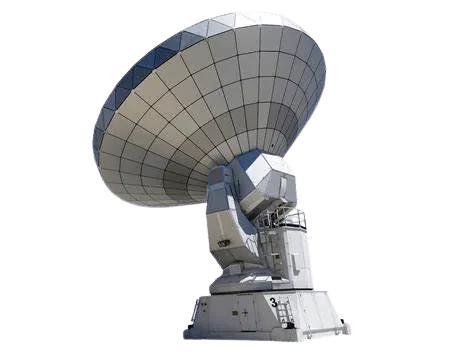
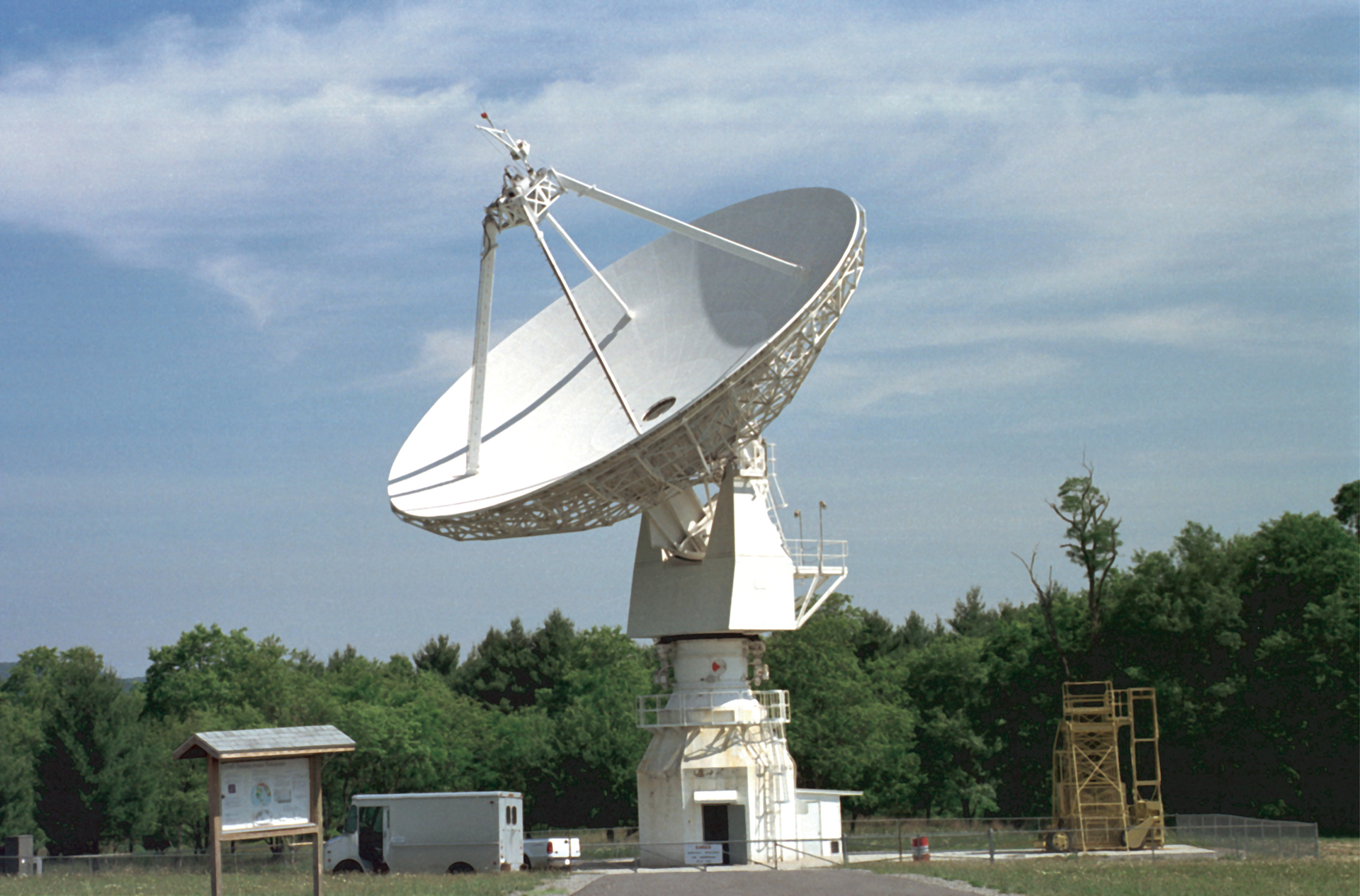
Fast forward several centuries to 1931, Karl Guthe Jansky had invented Radio Telescopes and discovered that there were radio waves seeping from the Milky Way. A radio telescope isn't exactly what was previously listed. It looks like a giant satellite dish or a plate that was dented on the inside causing the plate to warp- on a giant metal pole. [Radio Telescope Reference]

Because of the development of the Radio Telescope and space observatories after the 1960s, we now have knowledge of gamma rays and other wavelengths like X-Ray and infrared.

When might you use a telescope? Well, the simple answer is for you to use it at night time. Any time the sun has sunk below and behind the horizon, you may use it without a high risk of injuring your eyes. Safety is important. Definitely do not point your telescope at the event of a solar eclipse. The moment the moon slides past the sun and a fragment of the sun is shown, you risk damage to your eyes again. You may use it to discover why one star is burning brighter than the others, or to attempt to see whether what you think is a planet is a star or is actually what you thought it was, or maybe you could even look at the moon and study its surface with the telescope.

How may you use a telescope? In general this is about a simple reflecting telescope- but with the exception of a Radio Telescope and several other telescopes that aren't established for portable use. You take the telescope, place it down on the ground, make sure the legs are kicked out, then you look through your lens and look around. It's super simple.


Jovilabe
A Jovilabe had an unknown date of creation and of the origin of whom made it. However, it was used by Galileo Gallelli for the historically and notably. The intent of the Jovilabe was to measure the Jupiter's moon's orbital periods by analyzing four of the moons and their eclipses. Engraved on the instrument is four tables full of calculated means and measurements from the four moons. On the instrument, there is two circular discs that are different sizes; one large and the other small. Both are connected by a rod and can be moved to represent the view of the sun's view. It was only 1611 when he had discovered the measurements are more accurate when analyzing the eclipses of the moons from Jupiter. This helped to determine longitude.

March 13th, 1610, Galileo had made the announcement of the discovery of Jupiter's moons in the Sidereus Nuncius. The Sidereus Nuncius went by different names such as the Starry Messenger or the Sidereal Message. It was essentially a treatise or a pamphlet that featured a short Astronomical study. It was the first pamphlet to feature astronomical studies through the telescope and essentially with a Jovilabe.

Over time he had proposed his studies to the King of Spain (Philip IV) and to the States General of Holland (Legislature of the Netherlands). But his studies have been declined. As an attempt to propose his studies to people who took part in discussions from the Spanish, he had produced a helmet with a telescope put on the top with a hinged mount. But on the second proposal he had for the helmet, he wanted to put a pendulum to the clock. Both were declined. This particular helmet was called a celatone.

How do you use a Jovalibe? This is simple. Rotate the discs according to the mean tables on the Jovalibe. Easy. You have simulated the movement of Jupiter's moon from the perspective of Earth.


Orreries
This particular tool called a Lunarium is a type of Orrery. An Orrery is essentially a mechanical model of the solar system that can either predict or illustrate the movement of planets and moons. Though, usually Orreries are not typically built to scale. You can't exactly drag Saturn down to place it onto a mock orrery in order to experiment and learn about the planets and the moons. At least from a Heliocentric model. A Lunarium is particularly designed to study Earth's moon. A Tellurium is designed to study the planets.

The first Orrery ever discovered was called the Antikythera Mechanism. It was discovered in the year of 1901 off the coast of a Greek island called Antikythera. The Antikythera Mechanism displayed the diurnal motions of the Sun, the Moon, and the five known planets at that time. The Diurnal Motion is essentially an astronomical term that is used when we talk about the movement of celestial bodies or objects around Earth's celestial poles- typically over the course of one day. The planets known during that time (between 205 to 87 BC/CT) were Mercury, Venus, Mars, Jupiter and Saturn. The planet in study never included Earth for obvious reasons. The Antikythrera Method displayed moon phases as well. This Orrery was geocentric and ideally was used as a mechanical calculator that would calculate the astronomical positions.

Moving on towards the future, in 1348, Giovanni Dondi had built something that was also mechanical. But this version was the first known clock driven mechanism of an orrery. The Orrery was called the Dondi's Astrarium and it displayed the ecliptical position of the Moon, Sun, Mercury, Venus, Mars, Jupiter, and Saturn. However, this was only according to what is considered complicated; the Geocentric Ptolemaic Planetary Theories. In a nutshell, the Geocentrical Ptolemaic Planetary theory involves the idea that assumes Earth is stationary and at the center of the universe. According to Ptolemy, the planet would move in a small circle and at the same time make a large circle as it circles around the Earth. The small circle is called an Epicycle, the large circle is called the deferent. Under this theory, the Sun, Moon, Stars and Planets all orbit Earth. When the Astrarium model was discovered, the clock was lost. But Dondi had left a complete description describing the Astronomic Gear Trains.

In 1650, P. Schirleus built another Geocentric model, this time a planetarium. The sun was represented as a planet. Mercury and Venus were demonstrated as if it were the Sun's moons.

Over the years, there were numerous Early Orreries, but in a book in 1543, you would find Nicolaus Copernicus challenging the Western teaching of a universe that followed the Geocentric idea. This book was called the De Revolutionibus Orbium Coelestium, or in English; On The Revolutions of the Heavenly Spheres. The De Revolutionibus Orbium Coelestium promoted the idea of the heliocentric theory that Copernicus had. It was observed by Copernicus that several Greek philosphers- namely Aristarchus of Samos- proposed a heliocentric universe. What this meant was that the motions of the planets were essentially simplified. In 1576 to 1601, the instruments from Tycho Brahe were improved and had more accurate observations of the skies. Under Johannes Kepler in 1621, it was discovered that the Sun rotated around the Sun in ellipses. But we have to thank Isaac Newton once again for explaining the cause of the elliptic motion of the planets around the Sun. This explanation was from his Law of Universal Gravitation.

Moving through nearly another century to 1710, George Graham and Thomas Tompion built an orrery that can now be found in Oxford in the History of Science Musuem. The name for the Orreries came from the first model being given to the Prince of Eugene of Savoy, and another copy soon followed for Charles Boyle, 4th Earl of Orrery.

Christiaan Huygens, in 1703, published details of a heliocentric planetary machine that he had built in Paris over a span of 16 years (from 1665 to 1681). Details were included with the calculation of the Gear Trains to represent the gear trains and how the gear trains would represent the days; 365.242 days! And he had utilized that calculation to produce the cycles of the principal planets.

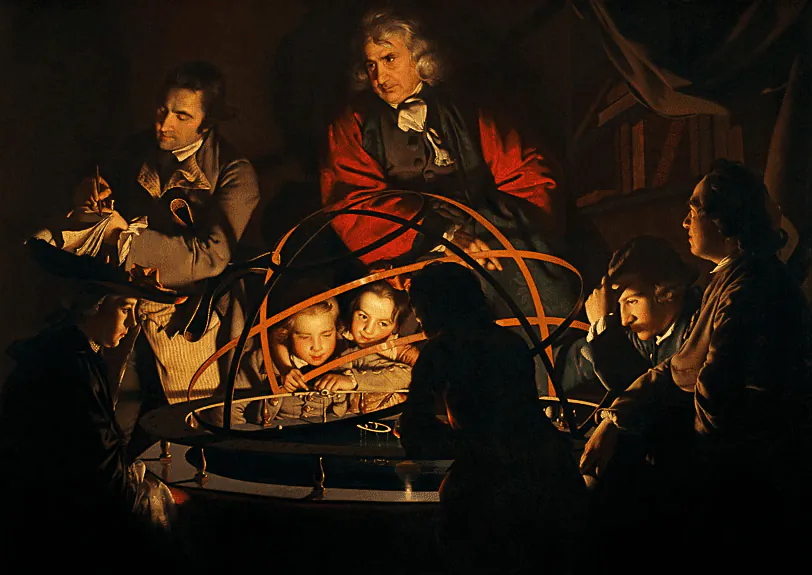
With Joseph Wright's painting titled "A Philosopher giving a Lecture on the Orrery in which a lamp is put in place of the Sun," was made in 1766. It now hangs in a musuem called the Derby Musuem and Art Gallery and displays a group of people listening to a lecture that was led by a natural philosopher. In reference to the "lamp in place of the sun," this shows the Sun in a brass orrery providing as the only light in the room. The Orrery in the painting has rings and it decipts what looks like an Armillary Sphere. An Armillary sphere is a model of objects in the sky, consisting of a spherical framework of rings centered on the Earth or the Sun and represent celestial latitude and longitude and eliptics. The demonstration was able to demonstrate eclipses.

When putting it into context, in 1762, John Harrison's marine chronometer first enabled accurate longitude measurements. In 1766, the astronomer Johann Daniel Titius demonstrated that the mean distance of each Planet from the sun could be demonstrated by Astronomical Units.

The mathematics for Astronomical Units often looked like this:
Image posted by the member
(Image and source credit from Wikipedia.)

When you look at it; the first fraction is worked out like this:
1. 4+0 = 4.
2. 4 divided by 10 = 0.4
3. The answer is 0.4

In general it would become longer and longer and be extended to be lengthier. The numbers refer to Astronmical Units which is the mean distance between the Sun and the Earth. The Astronomical Units between the Earth and Sun are 1.496 x 10⁸.

The Derby Orrery unfortunately does not show Astronomical Units or the Mean Distance, but it does show the relative planetary movements.

But if we once again move forward in time, to the year 1764, we meet a man who basically came up with a model for the Tellurium and the sun as well as the Lunarium. The orrery was specifically made to demonstrate the inclined axis of the Earth and the rotation of the Earth around the Sun, and the Lunarium had the fun task of demonstrating the moon's orbit around the Earth. All three motions were placed on a table and separately used a central spindle as the prime mover. A grand orrery includes the outer planets, the term Planetariums as an orrery term tend to range in size.

A mechanical device that is essentially used to predict eclipses and transits are called an astrarium. The Orrery should only show the Sun, Earth, and Moon and occasionally (via the Grand Orrery) the other planets. If it shows only the Sun, Earth and Moon, it's called a tellurium. If it only shows the Earth and the Moon, it's called a Lunarian. A quick and helpful way of identifying which are which are to realize that a Lunarium has a prefix of Luna and Luna is Latin for Moon. A tellurium has a Latin word derived "tellus" which means Earth.
Image posted by the member

──────────────────

What have I gotten myself into?
Astronomy Professor |
| Student: Colin McCoire | iNPC: Cursa McCoire

Source Astronomy Textbook
CODING Credit To:@Winnie Harper
Image posted by the member
───────────
"Everytime We Have A
Chance To Get
Ahead, They Move
The Finish Line.
Everytime."

Mary Jackson
───────────
Image posted by the member


Chapter Includes
Chapter One | Spacecraft Introduction
Chapter Two | Crewed Spacecrafts
Chapter Three | Uncrewed Spacecraft

Image posted by the member
Spacecraft Introduction
With Spacecrafts, Satellites and Space Probes being different from tools that you would actively use on Earth grounds, these objects deserved their own chapter. Spacecrafts were divided into numerous categories whether it was manned or not. Spacecrafts also include the categories of Satellites and Space Probes in it's short span of history.


Crewed Spacecraft
Starting off with the basics, what defines a Spacecraft is simple. It's a vehicle that is designed to fly in or through space and perform a series of operative purposes. Such purposes include Communication, Observation of Earth, Meteorology, Navigation, Colonization of Space, Planetary Exploration, and the transportation of Humans and Cargos.

Every spacecraft cannot get to space on their own, typically requiring a launch rocket to get them into space. That is, except for one type of spacecraft called a single-stage-to-orbit spacecraft. Essentially, it will launch itself into space unlike the other spacecrafts.

It all began during World War Two in Germany (June 1944), where a German V-2 (technical name: Aggregat 4/A-4), the world's first long-range ballistic missile made in Peenemünde Germany, was developed for use against the Allied Cities during World War Two. It had reached 189 kilometers, This made the V-2 the first spacecraft.

Then in 1957, on October 4th, the Soviet Union launched Sputnik 1. Sputnik 1 was the first artificial satellite that was launched into an elliptical low Earth Orbit. Because of this (single) Launch, it began the Space Age; full of political, military, technological, and scientific developments. However, despite it starting the Space Age, Sputnik 1 helped identify the density of the upper atmospheric layer. Sputnik 1 also provided data on radio-signal distribution in the ionosphere, provided the first opportunity to detect Meteoroids. This artificial satellite was the first to orbit the Earth in 96.2 minutes, travelling at 29,000 kilometers per hours (or 18,000 miles per hour).

You can determine what kind of spacecraft one is by classifying them in two categories, Crewed and Uncrewed. Crewed is when it consists of people actively being on the spacecraft while the uncrewed spacecraft has no one on it.

Crewed Spacecrafts have only three nations who have manned a spacecraft. The Soviet Union/Russia, United States of America, and China are the three nations who have achieved such an extraordinary task. The first crewed spacecraft was from the Soviet Union, Vostok 1, carrying a cosmonaut whose name was Yuri Gagarin, into space in 1961. Just that same year, the second crewed spacecraft was from the United States, Freedom 7, and would perform a sub-orbital spaceflight carrying Alan Shepard just over 187 kilometers in altitude. (116 miles)

Spacecrafts that require people to man it manually would be classified into further spacecraft categories. Space Capsules, Apollo Lunar Module, Space Shuttle, Space Station, and a Spaceplane. There is also a broad classification called Human Spaceflight that would also fall under this category.

Space Capsules is a spacecraft specifically designed to transport cargo, scientific experiments and even astronauts to and from space. What distinguishes them from other spacecrafts are their ability to survive reentry and have a shape that doesn't resemble the others. Space Capsules don't have wings, nor do they require a ton of fuel than what's considered necessary just to return safely. An example is Soyuz, a Soviet Space Capsule that has been in use since the 1960s and have been on more than 140 flights.

Apollo Lunar Module was the lunar lander spacecraft that was launched by the United States with the Apollo Program. It was essentially the first crewed spacecraft to operate in space- where there was no air, and it would be the only crewed spacecraft to land anywhere that isn't Earth.

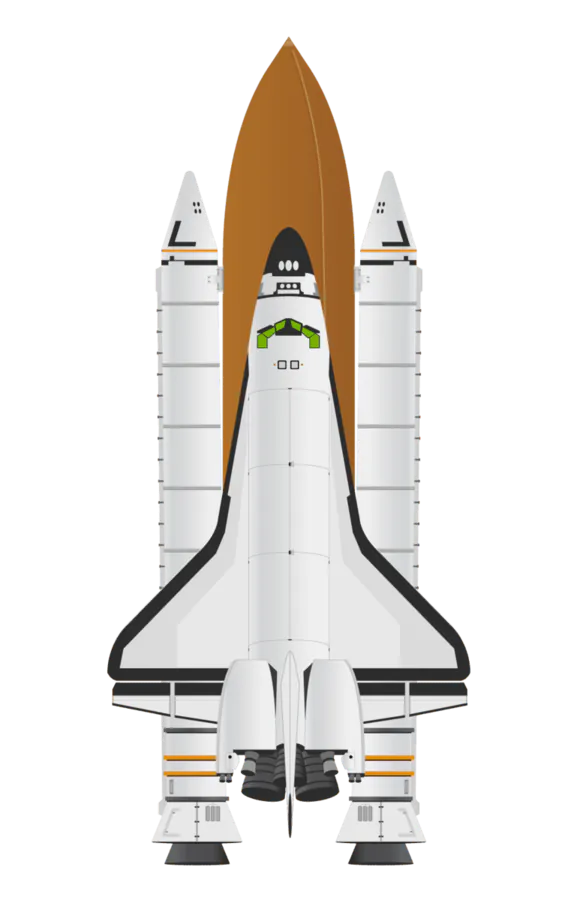
Space Shuttles are something we commonly know of with rockets. However, Space Shuttles is a retired spacecraft system in where they operated for 30 years from 1981 to 2011 by the United States National Aeronautics and Space Administration (NASA). The official program was not titled Space Shuttle or anything of the likes but was called the Space Transportation System (STS) where the idea came from a 1969 plan for reusable spacecraft systems. The first Space Shuttle consisted of four orbital test flights in 1981 from the STS-1. The Space Shuttles were launched in Florida at the Kennedy Space Center.

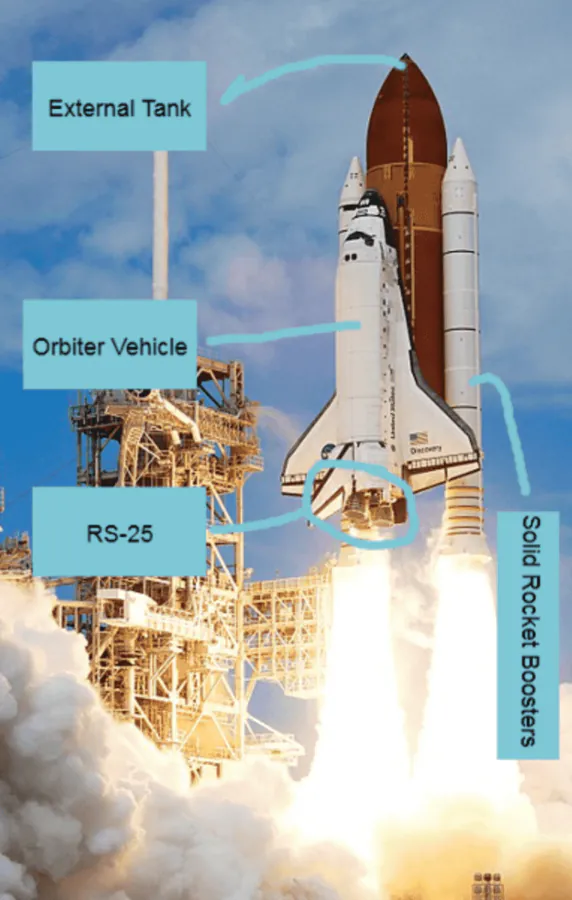
When looking into what makes up the Space Shuttles, you'll need to have a Orbital Vehicle, the plane-like body that is attached to the three tubes. You'll need to have three clustered Rocketdyne RS-25, or main engines. Rocketdyne was an American rocket engine design and production company. Two rocket boosters, and an external tank. Inside the external tank there were two components: liquid hydrogen and liquid oxygen. When you launch a Space Shuttle vertically, the Solid Rocket Boosters operate in parallel with the Orbiter's three main engine (RS-25), and were all fueled from the External Tank. However, the Solid Rocket Boosters don't stay with the Space Shuttle as they go into space, they are ejected/detached. Right before going into orbit, the external tank is then ejected. To renter the atmosphere and to exit orbit, the Orbital Maneuvering System is used. As it enters the atmosphere, it glides like a plane would a runway and land that way. An example Space Shuttle would be Discovery, an American Space Shuttle launched in 1984.

A Space Station supports a human crew in orbit for quite a bit of time and makes it a temporary habitat out in space. It does not have a propulsion system or any landing systems at all. As it is an orbital station, also called orbital space station, it requires a docking port in order to have other spacecraft transfer crew and supplies. Currently up in space are the International Space Station, launched by the United States in the 2000s and the Tiangong Space Station, launched by China in 2022. But these two Space Stations weren't the first. The first was launched by the Soviet Union. This Space Station was called Salyut 1 and launched April 18th, 1971.

There are two types of Space Stations that have been flown. Monolithic and Modular. Monolithic has the prefix of mono in it, telling you that it has something to do with "one." So, Monolithic stations are basically a single vehicle and are launched by one rocket. However, Modular stations have two or more separate vehicles that are usually launched by themselves and then docked on orbit. Most prefer to launch and make Modular Stations due to the flexibility and lower costs.

You can look into what makes up a Space Station, and it is rather complex. It has to include different subsystems like structure, electrical power, thermal control, altitude determination and altitude control, orbital navigation and orbital propulsion, automation and robotics, computing and communications, environmental and life support, crew facilities, and crew and cargo transportation. This is a lot to maintain. However, the Space Stations are also made up of durable materials that require it to withstand cold temperatures, space radiation, internal pressure, thermal effects of the sun, and micrometeoroids for long periods of time.

Think of a plane on the runway. You have basically just imagined a spaceplane, however, it is structured a bit differently. A spaceplane is a type of vehicle that can fly and essentially glide like an airplane in Earth's Atmosphere and work just like a spacecraft would in Outer Space. In order for this function to work, it would mean that the Spaceplane would need to have both elements of a spacecraft and of an aircraft like a plane. The types of Spaceplanes can be divided into two major categories: orbital and suborbital.

Orbital Spaceplanes are structured for the intention of working like a spacecraft would out in space. Such example would be Buran, a Russian Space Shuttle. Orbital Spacecrafts require flight and launching at high velocities and the orbital kinetic energies to be at 50 times greater than the suborbital trajectories. However, the kinetic energy is typically shed upon reentry due to the heat of coming in.

A suborbital spaceplane has the intention of gliding throughout the atmosphere without having to necessarily go into external orbit. An example of a suborbital spaceplane would be the X-15, launched in the 1960s and reaching speed and altitude records as it crossed over into the edge of Outer Space but never exceeded that limit.

Preferably, a spaceplane would have both functions of a orbital and suborbital system, allowing it to go and orbit space like a regular spacecraft and to function like an airplane when in the atmosphere. The US Space Shuttle was truly the biggest, most complicated and expensive, most flown and only crewed orbital spaceplane due to the complexity, risk, dry mass, and cost of spaceplane designs.

When it comes down to the Flight trajectory, the spaceplanes are typically expected to have a launch escape system, which the US Space Station did not have due to it's massive size and weight. This was part of the reason why it wasn't possible for the Challenger victims to survive. They didn't have a launch escape system like modern spacecrafts would have.

Upon reentry, instead of having to crash-land somewhere, the Spaceplanes have the ability to land horizontally, such as on a runway.


Uncrewed Spacecraft
A Uncrewed Spacecraft essentially consists of no one working on the spacecraft or being on the spacecraft. This would include Satellites, Space Probes, and Cargo Spacecrafts. Typically these types of spacecraft are sent in when there is no way that a human could survive or even make it past the atmosphere of a planet or moon.

A satellite or artificial satellite is an object that is directly placed into orbit around a celestial body such as Earth. You will notice that multiple muggles watch something on their picture box called a television set, in where the map of a particular country has different colors on it or different symbols/pictures on it. That would be the weather on the news. A satellite is used to relay communication, forecast weather, handle navigation (such as GPS), broadcast pictures onto the muggle world's television sets, scientific research, and observation of Earth. It can be used for the military with the purpose of early warning, signal intelligence and weapon delivery.

Some satellites can work together in groups forming a satellite constellation, which is when a group of artificial satellites work together as a system and can provide global coverage.

Due to the high launch cost of sending objects into space, CubeSats are sent in its place. and it is a class of miniaturized satellite with a size of 10 centimeters (3.9 inches) cubes and usually have a mass of 2 kilograms (4.4 pounds) per unit.

Satellites usually orbit Earth, with the intention for mapping, monitoring the weather, ocean, forest, and more, or for the purpose of reconnaissance/intelligence satellites for military purposes.

To understand the orbiter the possibility of an artificial satellite, you can thank Isaac Newton for explaining the emotion of natural satellites such as the moon in his book called the Philosophiæ Naturalis Principia Mathematica.

Space Probes are satellites designed for robotic space exploration outside of Earth. The Space Probes are given different sets of scientific instruments that differ from what an artificial satellite would obtain. The spacecraft might flyby, orbit, or land on other planetary bodies, approach the moon, travel through interplanetary space, or even just enter interstellar space. A Space Probe can also obtain materials like moon rocks from the moon and return it to Earth. An example of a Space Probe is the Soviet's Space Probe Mars 2, or even the 2001 Mars Odyssey launched by the United States.

Finally, the last of the Uncrewed Spacecraft is the Cargo Spacecraft. Cargo Spacecrafts, also known as Resupply Spacecrafts, are Robotic Spacecrafts that are designed to carry cargo, usually to support the Space Stations by providing them with food, propellant, and other supplies. A Cargo Spacecraft has no scientific intent to it, except to relay resources to people that need resources. The Russian Cargo Spacecraft, Progress, is an example, and relays necessities to the International Space Station.
Image posted by the member

──────────────────

What have I gotten myself into?
Astronomy Professor |
| Student: Colin McCoire | iNPC: Cursa McCoire