Spacecraft Introduction
With Spacecrafts, Satellites and Space Probes being different from tools that you would actively use on Earth grounds, these objects deserved their own chapter. Spacecrafts were divided into numerous categories whether it was manned or not. Spacecrafts also include the categories of Satellites and Space Probes in it's short span of history.
Crewed Spacecraft
Starting off with the basics, what defines a Spacecraft is simple. It's a vehicle that is designed to fly in or through space and perform a series of operative purposes. Such purposes include Communication, Observation of Earth, Meteorology, Navigation, Colonization of Space, Planetary Exploration, and the transportation of Humans and Cargos.
Every spacecraft cannot get to space on their own, typically requiring a launch rocket to get them into space. That is, except for one type of spacecraft called a single-stage-to-orbit spacecraft. Essentially, it will launch itself into space unlike the other spacecrafts.
It all began during World War Two in Germany (June 1944), where a German V-2 (technical name: Aggregat 4/A-4), the world's first long-range ballistic missile made in Peenemünde Germany, was developed for use against the Allied Cities during World War Two. It had reached 189 kilometers, This made the V-2 the first spacecraft.
Then in 1957, on October 4th, the Soviet Union launched Sputnik 1. Sputnik 1 was the first artificial satellite that was launched into an elliptical low Earth Orbit. Because of this (single) Launch, it began the Space Age; full of political, military, technological, and scientific developments. However, despite it starting the Space Age, Sputnik 1 helped identify the density of the upper atmospheric layer. Sputnik 1 also provided data on radio-signal distribution in the ionosphere, provided the first opportunity to detect Meteoroids. This artificial satellite was the first to orbit the Earth in 96.2 minutes, travelling at 29,000 kilometers per hours (or 18,000 miles per hour).
You can determine what kind of spacecraft one is by classifying them in two categories, Crewed and Uncrewed. Crewed is when it consists of people actively being on the spacecraft while the uncrewed spacecraft has no one on it.
Crewed Spacecrafts have only three nations who have manned a spacecraft. The Soviet Union/Russia, United States of America, and China are the three nations who have achieved such an extraordinary task. The first crewed spacecraft was from the Soviet Union, Vostok 1, carrying a cosmonaut whose name was Yuri Gagarin, into space in 1961. Just that same year, the second crewed spacecraft was from the United States, Freedom 7, and would perform a sub-orbital spaceflight carrying Alan Shepard just over 187 kilometers in altitude. (116 miles)
Spacecrafts that require people to man it manually would be classified into further spacecraft categories. Space Capsules, Apollo Lunar Module, Space Shuttle, Space Station, and a Spaceplane. There is also a broad classification called Human Spaceflight that would also fall under this category.
Space Capsules is a spacecraft specifically designed to transport cargo, scientific experiments and even astronauts to and from space. What distinguishes them from other spacecrafts are their ability to survive reentry and have a shape that doesn't resemble the others. Space Capsules don't have wings, nor do they require a ton of fuel than what's considered necessary just to return safely. An example is Soyuz, a Soviet Space Capsule that has been in use since the 1960s and have been on more than 140 flights.
Apollo Lunar Module was the lunar lander spacecraft that was launched by the United States with the Apollo Program. It was essentially the first crewed spacecraft to operate in space- where there was no air, and it would be the only crewed spacecraft to land anywhere that isn't Earth.
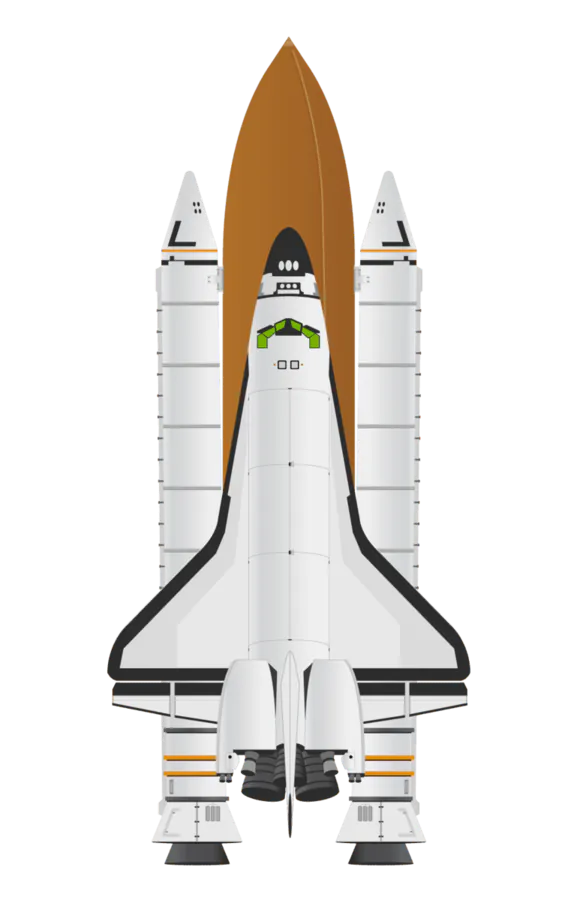
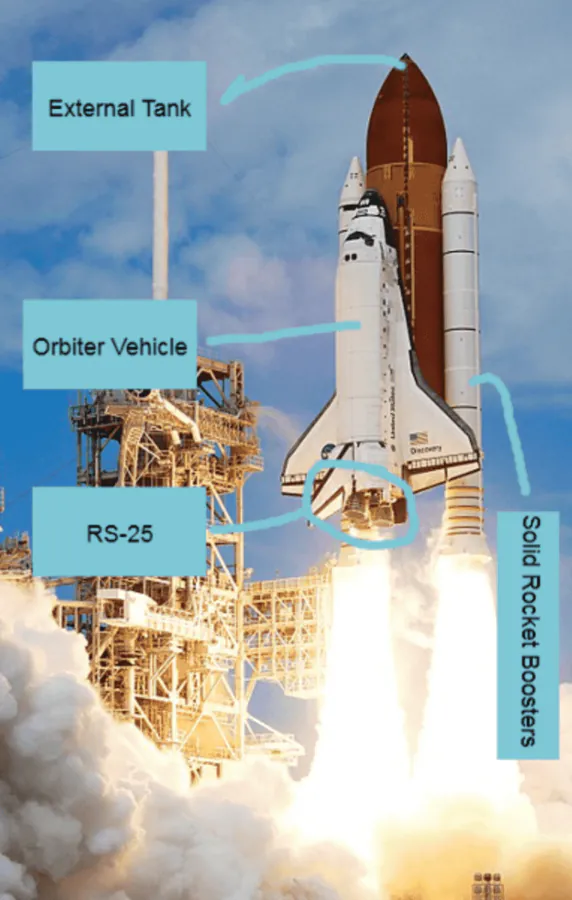
Space Shuttles are something we commonly know of with rockets. However, Space Shuttles is a retired spacecraft system in where they operated for 30 years from 1981 to 2011 by the United States National Aeronautics and Space Administration (NASA). The official program was not titled Space Shuttle or anything of the likes but was called the Space Transportation System (STS) where the idea came from a 1969 plan for reusable spacecraft systems. The first Space Shuttle consisted of four orbital test flights in 1981 from the STS-1. The Space Shuttles were launched in Florida at the Kennedy Space Center.
When looking into what makes up the Space Shuttles, you'll need to have a Orbital Vehicle, the plane-like body that is attached to the three tubes. You'll need to have three clustered Rocketdyne RS-25, or main engines. Rocketdyne was an American rocket engine design and production company. Two rocket boosters, and an external tank. Inside the external tank there were two components: liquid hydrogen and liquid oxygen. When you launch a Space Shuttle vertically, the Solid Rocket Boosters operate in parallel with the Orbiter's three main engine (RS-25), and were all fueled from the External Tank. However, the Solid Rocket Boosters don't stay with the Space Shuttle as they go into space, they are ejected/detached. Right before going into orbit, the external tank is then ejected. To renter the atmosphere and to exit orbit, the Orbital Maneuvering System is used. As it enters the atmosphere, it glides like a plane would a runway and land that way. An example Space Shuttle would be Discovery, an American Space Shuttle launched in 1984.
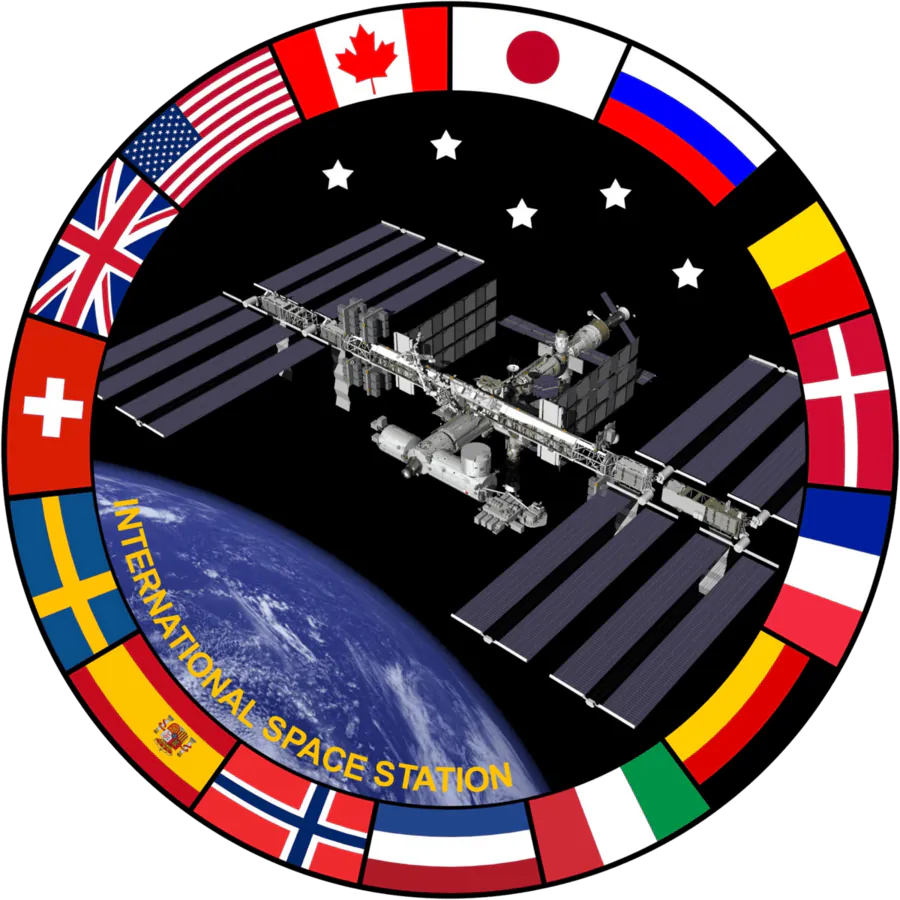
A Space Station supports a human crew in orbit for quite a bit of time and makes it a temporary habitat out in space. It does not have a propulsion system or any landing systems at all. As it is an orbital station, also called orbital space station, it requires a docking port in order to have other spacecraft transfer crew and supplies. Currently up in space are the International Space Station, launched by the United States in the 2000s and the Tiangong Space Station, launched by China in 2022. But these two Space Stations weren't the first. The first was launched by the Soviet Union. This Space Station was called Salyut 1 and launched April 18th, 1971.
There are two types of Space Stations that have been flown. Monolithic and Modular. Monolithic has the prefix of mono in it, telling you that it has something to do with "one." So, Monolithic stations are basically a single vehicle and are launched by one rocket. However, Modular stations have two or more separate vehicles that are usually launched by themselves and then docked on orbit. Most prefer to launch and make Modular Stations due to the flexibility and lower costs.
You can look into what makes up a Space Station, and it is rather complex. It has to include different subsystems like structure, electrical power, thermal control, altitude determination and altitude control, orbital navigation and orbital propulsion, automation and robotics, computing and communications, environmental and life support, crew facilities, and crew and cargo transportation. This is a lot to maintain. However, the Space Stations are also made up of durable materials that require it to withstand cold temperatures, space radiation, internal pressure, thermal effects of the sun, and micrometeoroids for long periods of time.
Think of a plane on the runway. You have basically just imagined a spaceplane, however, it is structured a bit differently. A spaceplane is a type of vehicle that can fly and essentially glide like an airplane in Earth's Atmosphere and work just like a spacecraft would in Outer Space. In order for this function to work, it would mean that the Spaceplane would need to have both elements of a spacecraft and of an aircraft like a plane. The types of Spaceplanes can be divided into two major categories: orbital and suborbital.
Orbital Spaceplanes are structured for the intention of working like a spacecraft would out in space. Such example would be Buran, a Russian Space Shuttle. Orbital Spacecrafts require flight and launching at high velocities and the orbital kinetic energies to be at 50 times greater than the suborbital trajectories. However, the kinetic energy is typically shed upon reentry due to the heat of coming in.
A suborbital spaceplane has the intention of gliding throughout the atmosphere without having to necessarily go into external orbit. An example of a suborbital spaceplane would be the X-15, launched in the 1960s and reaching speed and altitude records as it crossed over into the edge of Outer Space but never exceeded that limit.
Preferably, a spaceplane would have both functions of a orbital and suborbital system, allowing it to go and orbit space like a regular spacecraft and to function like an airplane when in the atmosphere. The US Space Shuttle was truly the biggest, most complicated and expensive, most flown and only crewed orbital spaceplane due to the complexity, risk, dry mass, and cost of spaceplane designs.
When it comes down to the Flight trajectory, the spaceplanes are typically expected to have a launch escape system, which the US Space Station did not have due to it's massive size and weight. This was part of the reason why it wasn't possible for the Challenger victims to survive. They didn't have a launch escape system like modern spacecrafts would have.
Upon reentry, instead of having to crash-land somewhere, the Spaceplanes have the ability to land horizontally, such as on a runway.
Uncrewed Spacecraft
A Uncrewed Spacecraft essentially consists of no one working on the spacecraft or being on the spacecraft. This would include Satellites, Space Probes, and Cargo Spacecrafts. Typically these types of spacecraft are sent in when there is no way that a human could survive or even make it past the atmosphere of a planet or moon.
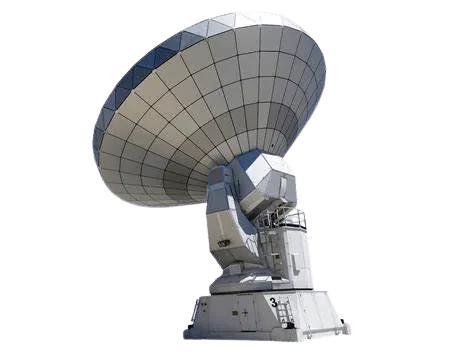
A satellite or artificial satellite is an object that is directly placed into orbit around a celestial body such as Earth. You will notice that multiple muggles watch something on their picture box called a television set, in where the map of a particular country has different colors on it or different symbols/pictures on it. That would be the weather on the news. A satellite is used to relay communication, forecast weather, handle navigation (such as GPS), broadcast pictures onto the muggle world's television sets, scientific research, and observation of Earth. It can be used for the military with the purpose of early warning, signal intelligence and weapon delivery.
Some satellites can work together in groups forming a satellite constellation, which is when a group of artificial satellites work together as a system and can provide global coverage.
Due to the high launch cost of sending objects into space, CubeSats are sent in its place. and it is a class of miniaturized satellite with a size of 10 centimeters (3.9 inches) cubes and usually have a mass of 2 kilograms (4.4 pounds) per unit.
Satellites usually orbit Earth, with the intention for mapping, monitoring the weather, ocean, forest, and more, or for the purpose of reconnaissance/intelligence satellites for military purposes.
To understand the orbiter the possibility of an artificial satellite, you can thank Isaac Newton for explaining the emotion of natural satellites such as the moon in his book called the Philosophiæ Naturalis Principia Mathematica.
Space Probes are satellites designed for robotic space exploration outside of Earth. The Space Probes are given different sets of scientific instruments that differ from what an artificial satellite would obtain. The spacecraft might flyby, orbit, or land on other planetary bodies, approach the moon, travel through interplanetary space, or even just enter interstellar space. A Space Probe can also obtain materials like moon rocks from the moon and return it to Earth. An example of a Space Probe is the Soviet's Space Probe Mars 2, or even the 2001 Mars Odyssey launched by the United States.
Finally, the last of the Uncrewed Spacecraft is the Cargo Spacecraft. Cargo Spacecrafts, also known as Resupply Spacecrafts, are Robotic Spacecrafts that are designed to carry cargo, usually to support the Space Stations by providing them with food, propellant, and other supplies. A Cargo Spacecraft has no scientific intent to it, except to relay resources to people that need resources. The Russian Cargo Spacecraft, Progress, is an example, and relays necessities to the International Space Station.