Chuki wa Mwanamke
Chuki wa Mwanamke
Uagadou |
16 // Sixth Year |
Half-Blood |
Kenya |
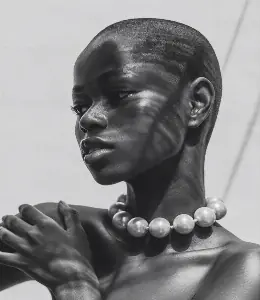
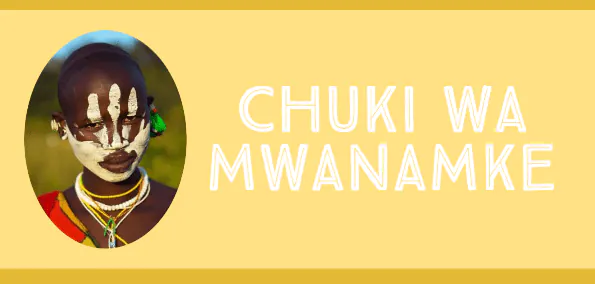
AppearanceRaised in a village of an all-woman tribe, Chuki believed her body a canvas. And as a way to declare a message to all. Multiple tones of colors embellish her body all the way to her hairless scalp. Each day, the paint will change to her liking. Sometimes it deciphers a message of devotion to the women she was raised under. Other times, it deciphers a message of merciless wrath against all who face her in battle.
Chuki's skintone rivals the darkest of ashes, a blessed protection from the sun's burning heat. When she is not in her mandatory school uniform, she can be found in her tribal robes that are just as colorful as the paint she uses; cloth made of brilliant fabrics and beads that were made with love and care. One day the paint will be replaced with permanent markings once she is of age, recognized and given the respect to speak her turn under their tree of life.
Chuki's frame is slender, and of average weight for a girl her age and height. Her height already rivals that of teens older than her. She took to choosing a off-color version of white for her school uniform, and the colors of Kenya for the hems. Using the skills her tribe has taught her, she made various bead bracelets. These bracelets would repeatedly added over time as Chuki ages, and removed during sport-like activity. Her eye color is of common color; brown.
Despite the village consisting majorly of witches, they strive to rely mostly on their hands rather than wands and other magical sources. Already, Chuki's hands are rough and callous from the days of working the land and weaving the baskets among her fellow sisters, aunts, and her own mother.PersonalityChuki took pride in her village, and will eventually learn to take pride in her schooling. Her competitive nature has been with her since the day she learned kandanda
(football). But her competitive nature did not become built from her schooling alone. Her village, while with a sense of love and compassion to each other, still held women desiring to take a harsh stance against the world outside. For the things left unspoken but understood by all; Chuki's mother held such beliefs. And these beliefs passed down to her daughter.
Chuki's lack of respect for those not from Uagadou is well known. She can speak English well, and uses it to insult those who can speak and understand it. Her lack of respect grows even hotter if she is in challenge with boys, to which she is far too willing to belittle whenever she finds opportunities to do so. This lack of respect can potentially be eased when she faces a challenge that doesn't go into her favor. While harsh in competition, honor still runs through her blood when humbled.
Even on the more friendlier side of Chuki, one will still experience her wrath on the battlefield all the same.HistoryChuki's mother was forced to survive alone. Her family threw her to the streets after being accused of witchcraft. Her arrival to her new-found family came at a humid night when one of the tribal members found her fending for herself in one of the nearby villages. Her mother was welcomed, as were all girls and women who took refugee in Mwanamke.
Despite the attendance and comfort of the women surrounding the young girl, she still felt a sense of anger for what she lost. Her angry beliefs ended up passed down to her child who was raised only among women. Chuki held no last name until the day she began her schooling, to which she ended up adopting Mwanamke, her tribe's name. Her invitation to the school was met with light praise, if not with some nervousness from some in the tribe. They all knew Chuki had her mother's spirit, and with it, her aggression. The symbol for her acceptance was raised to the full moon by her, on a humid night much like when her mother came to the tribe. A dream that disturbed her and made her awake with a scare. Many of the women knew what it meant as soon as Chuki revealed the token.
A rude awakening, something forcing her away from her home. From her sisters. Her aunts. Her mother. She held her mother's hand with a tense grip as the ritual was completed.
Unacceptable.
When Chuki began her schooling, she was a harsh child. Her desire to return to her tribe was passionate when she had to undergo changes. The first change she had to go through was being told to wear sandals after many years of being barefoot and feeling the soil beneath her heels. It was like losing one of her senses. She did not like it.
Whenever Chuki had the chance, she would return home to her mother. She'd help her with craft work and commit to field work. But she ends up missing her tribe more when it was time to return back to her schooling.
After a number of years at Uagadou, Chuki eventually learned to accept the entire school as another family for herself. She could be found tutoring and working with her classmates to "make better warriors of them against the outside."WC: 386First Instance of MagicChuki, always was a child of fire and wild spirit. The day she asserted her talent in magic was during a beloved game of football. A strong kick to the ball sent it flying, and flying...and flying, way too far for a child her age to have sent it. The ball landing in crocodile-infested waters has caused the game to end quickly, with the fellow children bickering at the young girl for the rest of the day. The confusion ended with a sit in with the chieftress, her mother, and a few other women to explain to her the world of magic, and what it may have in stores for her.
Last edited by Chuki wa Mwanamke on 12 Jul 2026, 21:38, edited 2 times in total.

Chuki wa Mwanamke
Stats // Abilities
STA 10 // EVA 15 // STR 10 // WIS 9 // ARC 0 // ACC 20
+ 1 PC Broom Racing Win, + 1 PC Broom Racing Win, + 1 PC Broom Racing Win, + 1 iNPC Broom Racing Win
+ 1 PC Broom Racing Win, + 1 PC Broom Racing Win, + 1 PC Broom Racing Win, + 1 iNPC Broom Racing Win
 's Grace
The Mwanamke Tribe
Reducio
The Mwanamke Tribe is a tribe loosely based off of an actual tribe known as Umoja. "Mwanamke" is the Swahili word for "woman". The Mwanamke's own foundation is based more off of witchcraft accusations that target majorly the elderly, disabled, etc. They're a group of women who attend to children and other women affected by outside dangers or accusations. What makes these accusations different is that they may have likely been true. Chuki's mother, as a child, was accused of witchcraft the day her first instance of magic was seen by her own family.
There are also women and children accused yet there was no solid proof. No matter the case, they were all welcomed into the tribe. Those who are only escaping the dangers of Africa could also be found in the tribe. Those who are able to access the tribe usually do so because a member found them and took them in.
The tribe's location is in an area surrounded by mostly wildlife and dangerous terrain. It is not easily accessed by muggles. If muggles were to somehow arrive at the village and weren't invited in, they would be chased off immediately by "screaming banshees."
Because of the reason behind the tribe's creation, it's members purposefully withhold the tribe's location from outsiders who weren't in need. If Chuki is asked about her tribe's whereabouts, she will purposefully ignore the question and anything relating to it. Because she is young, she doesn't have the right to bring in outsiders.
There are also women and children accused yet there was no solid proof. No matter the case, they were all welcomed into the tribe. Those who are only escaping the dangers of Africa could also be found in the tribe. Those who are able to access the tribe usually do so because a member found them and took them in.
The tribe's location is in an area surrounded by mostly wildlife and dangerous terrain. It is not easily accessed by muggles. If muggles were to somehow arrive at the village and weren't invited in, they would be chased off immediately by "screaming banshees."
Because of the reason behind the tribe's creation, it's members purposefully withhold the tribe's location from outsiders who weren't in need. If Chuki is asked about her tribe's whereabouts, she will purposefully ignore the question and anything relating to it. Because she is young, she doesn't have the right to bring in outsiders.
Broom Racer | Yes. Quidditch Player | No. Duellist | No.
Last edited by Aiko Mori on 7 Jul 2025, 12:53, edited 6 times in total.
This is the "Game Master" account. Please do not owl this account, unless specified. This account is not moderated actively and therefore, you may not receive a response.
Contact a Head of House or the Headmaster if you need anything.
Chuki wa Mwanamke
Mwanamke Tribe
HistoryThe Mwanamke Tribe was formed by a young girl who sought to escape the discrimination and violence her former tribe brought to her due to the revelation of her magical ability. She was soon found by a mysterious staff member of Uagadou and taken in nameless due to her lack of a tribe. She eventually came up with Mwanamke, the Swahili word for 'woman'. Upon graduation, she took to building her own village with a few other women who also were banished from their own tribes. Soon enough, Mwanamke was formed in the savannah fields of Kenya.
The location of Mwanamke was based on a massive tree; the young girl recalled being found living there before her placement into Uagadou. The tribe is still young, with the founder still alive and active as the chiefess. Soon, the tribe began to adopt more and more children found lost and abandoned due to their uniqueness, and then eventually women who escaped their own tribes to avoid marriage and their cruel families.
Eventually, the tribe decided that it should only welcome women due to the intense fear most of the women have of men. They accept young boys and raise them, but would end up having them leave once they became adults.
The tribe wasn't otherwise as discriminatory. They took in muggles alike with those who can cast magic. However, the chiefess made a strict rule that magic would only be used in the event of emergencies to keep their Muggle sisters and daughters safe. And magic must not be shared so easily with outsiders, a rule most of the tribe members more than happily accept due to their own pasts.
Not long after, even with secrecy and defense, the tribe began to have issues with outsiders attempting to enter their territory without permission. They soon installed their own group of armed, magic-casting women capable of fighting or scaring off unarmed outsiders. These women are honored and considered to be the strongest to defend their home. While all women are able to speak under the tree (known as the Tree of Life), these women have a stronger voice that is deemed more acceptable for agreement in comparison to their non-fighting sisters. These women were originally taught by the Chiefess until the rank became capable of teaching on its own. Because of this, Askari have become a highly honored rank that almost rivals even the Elders.
Even with non-fighters, they are trained to a degree in defending themselves should the situation become dire. However, non-magical sisters are expected to go into a shelter and prepare to defend young children with other older children capable of magic. Due to the increase in population and the constant movement of villagers entering and leaving the village, protection spells decreased in use in exchange for an increase in Askaris.While they have those with magical abilities, the tribe still seeks to isolate itself for the purpose of safety. The outside was taught to be dangerous to avoid young children and magic-less women alike from leaving beyond the tribe's borders. The village establishes some wards, but beyond the border, leaves wanderers unguarded.Hidden But All Knowing
The village has guards stationed around during daylight and nighttime hours. It is considered an honor when a woman is bestowed a rank as one of these guards. Typically, these women can cast magic, but there are some new instances where magic-less women were also allowed to join their ranks, taking to patrol only the inside of the village to ensure village rules are followed and to allow the tribe to prepare for defense should it be invaded.
On the outside, the village appears to be like any other, but anyone not welcomed to the tribe by a woman (magic or non-magic) member will find themselves restricted by the Askari, who are willing to turn offensive in manner should the unwelcomed member continue to force trespass. Children, regardless of age, do not have permission to invite guests or to give out the location of their tribe to outsiders. This is also regardless of their enrollment into Uagadou. Their travelling adult companion (typically their own adoptive mother or guardian to work in the agricultural department of Uagadou) would have to be willing to grant this information or an invite when necessary to Uagadou staff members should the need ever arise. The rules, depending on gender, still go into effect.
The pathways to the village are purposefully difficult, done by the chiefess herself to prevent the average wanderer from accidentally trekking onto the village's border. This was done after poachers mistakenly invaded the land. Afterwards, Askaris were stationed around the border as well to protect the animals that roam it.Men in general are not allowed whatsoever to enter the village. At most, they are allowed up to the gates only until they end up experiencing defensive actions from the village itself. Only young boy children were allowed to roam the village, and upon adulthood, are asked to leave. But not without supplies and granted a festival of celebration towards their new life outside the village. Typically, these festivals occur after Uagadou graduations, regardless of whether the newly found adult is magical or not.Men
Despite the form of banishment they have experienced, they are not considered rejected from the tribe when it comes to offering assistance to their livelihood. Most of the boy children who grew up ended up typically helping to herd livestock on the borders in exchange for food, clothes, and various other goods the village was willing to give in exchange for their work. But despite this, they are still not truly welcome inside the village. Men who are former children of the village have a special tattoo marked onto them to prove their past membership to enter the village's borders freely without the risk of Askari turning offensive against them. The tattoo is different depending on whether they are magical or not.
[Place tattoo designs here.]While all women are considered to be of equal worth inside the village, where all women are allowed to speak under the Tree of Life, there is still a form of ranking within. Women who have officially been given a voice have a tattoo ingrained on them. Over time and depending on ranks, women can also obtain more tattoos or markings to signify their rank in the village.Women & Ranks
At first, the tribe was small, with a few women and even fewer children trying to learn just to farm the land alone with the Chiefess. Eventually, the village grew in size that a hierarchy and a form of order were created. Once a week, women would gather under the tree to speak of any issues they face, along with spreading their own opinions regarding any established politics.
[Place starter tattoo here; to write Chuki's own adulthood.]
Chiefess
The highest rank possible to uphold inside the village. Her word is law and final. She may consider the voices of the other women, but her words are considered to be in favor of keeping the entire village safe, whether from itself or from the outside. Currently, the chiefess is also the founder of the village, still alive and healthy, going by the name of 'Amani'. The village itself is not considered old by standards, having existed for less than a century in comparison to many others. Due to the various, diverse members coming from various countries in Africa, 'chiefess' can be various differing titles (Orkoiyot is a more common title due to its Kenyan background, meaning 'King.') yet recognized all the same in rank.
Elder
For the ones who did not obtain the rank of Chiefess, but their old age still grants respect and command. They have formed a council, using a democratic vote to choose their next Chiefess should the beloved founder become deceased. Some Elders may still hold the title of healers, but most of them are retired, and their main job roles are to lead the village when the chiefess is not stationed at it, or has become disabled from her role for a temporary period. The odds of a new Chiefess being promoted from Elder are higher than in other ranks.
The Elders do not consist only of the elderly. Some are former Askaris who retired earlier than later due to injuries or illnesses that happened during battle. The tribe is currently at peace and does not fight often, resulting in few injuries.
Healer
Some Elders are still healers, but typically they accumulate mentees to soon take their place. A majority of healers have come from being mentored by Elders, but some also come from their own teachings outside the village. Unlike men, women are free to return to the tribe whenever they please, unless they commit to marriage with a man.
Healers are allowed to exit the village and cross the border, even for the purpose of collecting ingredients or medicine to make or sell for the village. Healers can be with magic or without. Those without are not allowed to exit the village without a fellow healer with magic or a woman guard with magic. The exception to this is when they are permitted to leave for a short period to start a family, then return to the village with their new child(ren), biological or adoptive.
Askari
Askaris are those who are trained specifically regarding the defense of the village. They could be considered the equivalent of Aurors for the village, but there are still non-magic-casting women who also can become Askari, albeit only to work inside the village. Askari is a Swahili word meaning 'guard.' The term is not so widely accepted due to its various meanings in differing locations, such as South Africa, but eventually it grew to acceptance and was recognized as a more convenient term to use.
Multiple, if not all, of the women are trained in various degrees of martial arts. Those without magic are trained further and equipped with a wooden non-magical staff. These women are used for keeping order and ensuring all portions of the village are in continued progress. They are also used to ensure physical barriers, such as wooden gates and acacia thorns, remain intact. The most popular martial arts learned amongst the Askari are Dambe and Moraingy, two styles known to only be learned by men until recent events. However, some women have taken to making their own unique martial arts to prevent counterattacks from their opponents. Some women eventually come to using brooms and sticking inside the borders for patrol. To prevent the issue of magic being leaked, they dress in various animal skins to scare off intruders or onlookers, hinting at the legend of 'banshees' being spread by locals that keeps intruders away via words alone.
Tattoos for these women usually end up being scarification of their own choosing. But some have chosen to use facial ink tattoos instead.
Miscellanous
Other roles taken by the women are being farmers (the majority), cooks, weavers, beadmakers, yayas (caregivers), and other roles needed to keep a common African village functioning. Farmers, magical or not, take care of crops and use them to feed the village or sell to bring in currency. Typically, an arriving student of Uagadou would have their adoptive mother or chosen guardian come with them to help tend to the livestock in the agricultural department of Uagadou, seeing it as a fair trade-off in exchange for the resources used to raise a child in the school, and to keep an eye on their village child(ren). The majority who take these roles are those who can not cast magic. These women are also considered the very heart of Mwanamke as most homes are mud-brick crafted by them, especially due to the ban on most magic in the village. Some of these farmers also go out to help the men with the livestock out on the borders, but they are occupied by at least one Askari for safety.
Cooks use non-magical ingredients for their foods to ensure the safety of their non-magic-casting members, along with preserving the use of ingredients for more beneficial purposes. The cooks can sometimes help healers in creating medicines for the village whenever sickness comes through, or to sell to friendly outside villages.
Yayas (caregivers) attend to the children, whether for nanny purposes or as teachers. Non-magical children are granted teachers through them until their own adulthood. Celebrations between non-magical and magical children upon their reaching adulthood are seen as no different.
Weavers and beadmakers are exactly that. Weavers work to make clothes and baskets for the tribe to use, while beadmakers create various bead designs for farewell gifts, sale, or as offers in exchange for trade. Part of the payment to the men who do help with the borders' livestock is granted these beads to sell or keep at their own leisure.There are a few cases where they have accepted transgender women back into the village, even taking them back in with views of acceptance and placing them in various roles, depending on which role is the most needed to be filled at the time. There is one case of a child changing genders during their childhood, and the women have accepted the child into their new designated role without issue.Inclusion
There are same-sex relationships amongst the adult women. Some enter into 'marriage' with a festival of their own occurring inside the village. The village will end up accepting their marriage and view them as 'one.' However, women choosing to marry a man outside the village will be deemed as leaving the tribe altogether.
One of the more well-known traits of Mwanamke is their inclusion of people with albinism. Unlike outside of the village, they are respected inside and, for women, are allowed a voice under the Tree of Life along with their own mothers, sisters, and daughters. Men, while 'banished' upon adulthood, are allowed to live on the borders for safety.
Note: In development, and this is not yet shared with the index or iNPC team for true approval. The village is loosely based on the real-life Umoja Village in Kenya, which is all-women, but I am giving Mwanamke greater inclusion in its design, with the idea of building various characters established from it (e.g., Vale Ashwood's mother, Chuki wa Mwanamke, and Jabari ya Nyota). 'Mwanamke' means woman in Swahili. This will still be in development as all characters age up and build their own historical lore attached to the same village.
Research Links for developing:
Household Magic (site lore), Umoja Village, Kenya (wikipedia), Askari (wikipedia), Uagadou Lore (site lore)