
Uagadou
UAGADOU
SCHOOL OF MAGIC
SCHOOL OF MAGIC
CONTENTS
Founders, History, Grounds
Education, Uniforms, Traditions
Legends, Famous Students, Headmasters
Founders, History, Grounds
Education, Uniforms, Traditions
Legends, Famous Students, Headmasters

Founders
Name: Unknown
Dates of birth and death: Somewhere in the 8th Century
Nationality: Unknown
Blood status: Unknown
The exact names and origins of the founders of Uagadou have been lost to time. Some claim one person led the initiative, whilst others claim it was a group. Even the Council of the Wise – the current governing body of the school - differ in their beliefs as to its origin. What is agreed on, however, is that the idea of a school was first started by a mountain tribe in the distant past. They have been referred to by many names over the last thousand years. But for many centuries now, they have called themselves the Uagadou Tribe. It is believed that the tribe was around three thousand years ago, at the least. However, Uagadou School of Magic was officially founded in the eighth century.
The Uagadou Tribe’s origins and identity are shrouded in more mist than that of which surrounds the school. They resided in one of the mountains of Africa. Some speculate it was on the same ground and mountain that the founders built this school, others say they moved throughout the country over generations.
Loyal to the founder's teachings, the tribe has practiced an incredible amount of humility. Their name, the location in which they resided and the identity of each member - or even the heads of the tribe - are unimportant to the existence of the school. What matters most to them are their ethics and beliefs that have driven the school for centuries.
What little is known about the founders, however, is that they had a strong connection to the Moon and the Sky. They also held dreams in the highest regard, an importance traced back to their usage of dreams in communicating with their future students. During the school’s acceptance process, where Dream Messengers are sent to prospective students, people often see an unknown small girl. Many members of the tribe believe her to be a direct descendant of a founder. Whilst her attire changes over the centuries, she has never been described by anyone as older than ten, hinting at an untimely death.
They also held a strong link to nature and animals. It is rumored that every individual of the tribe was capable of self-transfiguration and that several members were also highly proficient seers that envisioned the school as it is now, in all its glory.
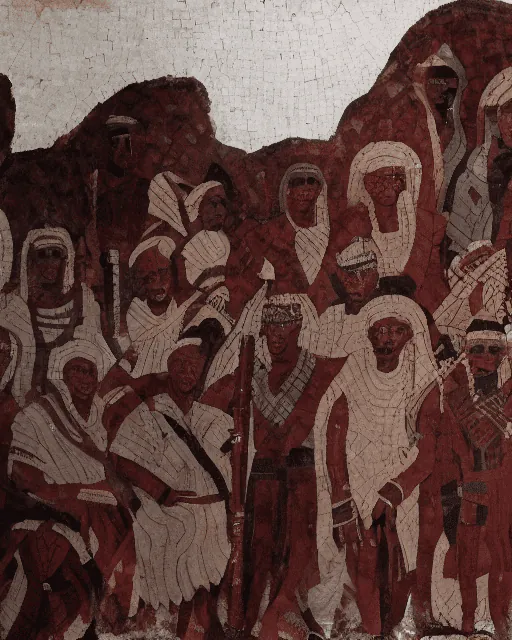

Uagadou School of Magic was founded in the eighth century by what is now known as the Uagadou Tribe. No individual member was ever credited for the school’s creation, believing that the roots of the principles and ethics that the school followed should be attributed to the tribe as a whole.
They have gone by many names over the centuries but as the original was lost in time, it was decided that the ‘Uagadou Tribe’ was the simplest option – though no one knows if the school was originally named after the tribe anyway or if the tribe is now named after the school. Some believe that the tribe’s original name had an association to dreams, the sky, the mountains or the moon – all of which are fundamental parts of the school and how it is governed.
As such, the history of Uagadou is full of legends and stories - all from its origins to its beliefs. These legends are often associated with creatures, such as the Legend of the Tebo. It is believed that this is because the tribe had a spiritual connection with nature and animals, each of them known to be a skilled shapeshifter and were able to transform themselves into a single animal at will. It was later recognized that they were animagi. Students grow up with these stories, often debating the ones they believe in strongly, but whether they are simply legends or fact has been lost in time. What is evident is that they all hold meaning to the school.
Each individual that passes through the school, whether as a student or teacher – though most teachers were usually alumni – are welcomed into the tribe and seen as a part of it, defining what it means to be from Uagadou and how the school – and its reputation - carries itself in the future.
The school was founded deep into the mountains of Uganda, high up into the skies where it is shrouded in mist as well as mystery.
Since the time of its founding, it has grown to be one of the oldest and largest schools, accepting students from all over Africa. Due to this, there are many languages spoken at Uagadou. However, as the school itself is located and considered a Ugandan school, classes are taught in Swahili - which is also used in several other countries. It is one of the most spoken languages in the continent. During the first three years, there are additional supplement language classes in Swahili for those who require it. However, there are teachers and mentors proficient in many African languages, as well as those brought to the continent from Europe, to cover any students that struggle in Swahili. For the past two hundred years, English was also introduced as a supplement class.
Following the successful addition of the wands around two centuries ago, the school has adapted and evolved to allow students a more international experience. As such, Uagadou created a modern logo with symbols that were of importance to them and what the wizarding world associated the school with, introduced more broom sports such as Quidditch and Broom Racing and started using wands.
For the founding tribe, one of the most important beliefs that they held was the importance of dreams. For them, every child should have the opportunity to follow their dreams. They strongly believed in having aspirations, no matter how ridiculous they might seem to others around them. It was for this reason that they recruited their first students to the school through the use of Dream Messengers.
On the 1st of January every year, every ten year old witch or wizard in the continent receives their Dream Messenger with a notification of their selection to start in the coming academic year. This method of notification is unique to Uagadou. The Dream Messenger itself is sent by the current headmaster or headmistress of the school, appearing in the new year to the children as they sleep. As there are many small wizardry schools in the area, students now have to 'accept' their offer within that calendar year in order to formalize their offer.
When the Dream Messenger is sent to the students, a token - also called the "dream token" - is left in their dominant hand, which they find upon waking. The dream token is usually an inscribed stone. The inscription on the stone is often related to the dream that the child has for the upcoming year, though the message is often vague and the true meaning behind the inscription is not always clear - like dreams usually are. The dream token is capable of changing every year, with a new dream to interpret for the upcoming year, these tokens are often very meaningful for the students.
The offer to attend the school is accepted by performing a small ritual. The student - accompanied by at least one guardian - will take the dream token into moonlight, usually a full moon. There, they pour a few drops of water onto it, raise it up so the moonlight hits it and speak the words 'Together, we will follow our dreams' in any language they choose to.

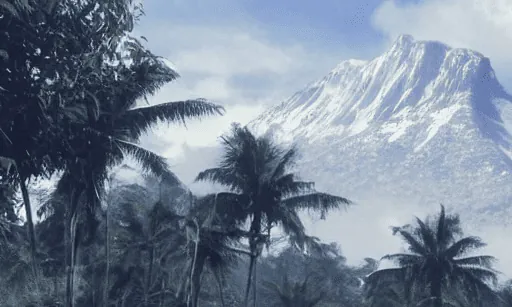
The school is located in western Uganda, deep within the Mountains of the Moon, Milima ya Mwezi. Many believe the mountains to be that of a legend, never seen nor found. Its exact location is unknown, even to magical folk around the country. It is rumored to be somewhere near or on the Rwenzori Mountains these days, which is what it is more commonly referred to as. Unknown to muggles, the highest source of the River Nile is actually found within the school grounds. However, even with that information, many have searched and failed to find this legendary mountain range.
The mountains themselves are clouded in mist, making the exact location impossible to find – unless you know where to look. Due to this, rumors have spread that the school moves throughout the mountain range in line with the moon cycle, making it harder to find. However, students have never found any solid evidence of this to prove the rumor true. There are no odd signs of shakes or movement, nor does it appear that the surroundings change. However, the majority of the view from the school is simply clouds and similar-looking mountains that make it impossible to tell.
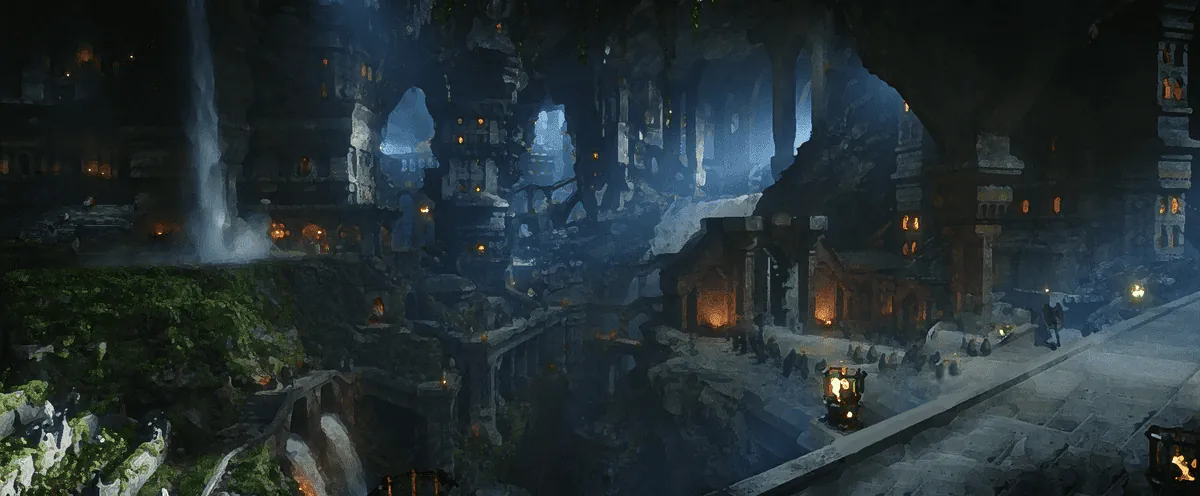
The main 'buildings' or rather rooms, are carved into the large caverns within the mountains. With the main areas of the school being nestled into the cavernous network, they get some natural light from the large entrance ways, though it is smothered by the fog surrounding the mountains, the school is filled with magical fixtures that had been added in over the years as the school grew. A vast network of halls, bridges and ridges creates a massive hub for Uagadou to spread its knowledge. The school even houses its own Agricultural Department providing for the school as they try to depend on as little external influence as possible. Multitudes of fields are splattered across the underground hills and are often tended to by families of students currently attending Uagadou. Uagadou has created a hidden paradise deep within the heart of the mountain with small waterfalls and streams finding their way within. Over the centuries, much has stayed the same and yet, the school's landscape is ever evolving and especially expanding.
Uagadou's mountains have four entrances or "moon gates", each named for their cycle in the circular pattern they were built in. As the First Quarter Gate (lango la Mwezi Nje) points directly north, the others follow suit. With the New Moon Gate (lango la Mwezi Mchanga) pointing east, the Last Quarter Gate (lango la Mwezi Ndani) south and the Full Moon Gate (lango la Mwezi Mpevu) towards the west. Each gate only opens during their represented cycle. Newly arriving students and their families need to be aware of the moon's current cycle in order to know which gate they can arrive through.
Transportation
Students are allowed to travel between the school and the local wizarding villages starting from 3rd year on. While the school has an elaborate cable car system, magically protected from any muggle eyes, there are some other more recreational ways to travel from place to place as well. Students are also welcome to leave the grounds via broom, if they are sufficient enough on a broom.
Each level of the school has their moon gate and with each level they will have the platform for the cable car as well as level-specific means of transportation.
From the highest level at the Full Moon Gate sits the rows of gliders. Students can glide through the wind down to the bottom of the mountain to visit the villages and, due to the magical alterations made to them, when the students are ready to return the glider will feel as though air is coming up underneath it and will lift the students back to the top.
The next level down is the First Quarter Gate where students roam the fields during their leisure time. From this level some of the more adventurous students like to enjoy the rush of riding down along the mountain on the zip line. Unlike the gliders, the students who choose this path down must use the cable car system still to return back.
Following that level is the Last Quarter Gate. From the entrance students will find a path leading out to the edge where the school’s via ferrata path started. A system of steel cables, protective harnesses and suspension bridges lead students down the rockier terrain of the mountain for a safer rock climbing experience.
At the lowest level of the school sits the New Moon Gate, the main area of the school. From this level students can choose to take the cable car to ride in comfort or enjoy a lovely nature adventure along the mountain footpath which leads right into the heart of the village.
You can find information about the main areas below in the reducios
First Quarter Gate:
Reducio
If one were to follow the hills, they could hike up to the First Quarter Gate entrance, facing the north. Out on the fields, students can enjoy leisure time in the sun as well as the occasional classes for Study of Wildlife and Nature. Flying classes, rare as they may be, are also held here. Towards the south are barns and paddocks, housing many magical and non-magical creatures, as well as the main location for the Wildlife and Nature classes. In the east Sports Classes that take place indoors are held. Towards the west you can find the Study Hall as well as the vast Library. On the First Quarter Gate's story is a waterfall that falls into the New Moon Gate.New Moon Gate:
Reducio
At the lowest point of Uagadou's mountainous campus, the New Moon Gate, facing east, is where students are completely free to be themselves. Located here are the Dormitories which boast tall, jutting builds carved out of stone, scattered across the story. The Great Hall is located directly facing the entrance, where the students can eat their meals as well as enjoy the occasional performances and speeches. Also accessible by the New Moon Gate are social, relaxation areas (the Small Hall) towards the north, perfect for students' free time period. This can also be used for other purposes, such as practices and language courses. The school’s Clinic is also located around this area. In the center area of this level sits the Office of the current Headmaster or Headmistress. If one were to look south, they would see the sun through the fog and an open field of grass with a hill reaching up to the open fields above. On the first floor, the streams that run from the waterfall that falls from the First Quarter Gate are gather into rivers that run through the caverns.Last Quarter Gate:
Reducio
Facing south, the Last Quarter Gate is home to three subjects: Potions and Alchemy, Study of World History, and Practical Magic class. Potions and Alchemy is at the eastern edge of the area, while the Study of World History takes place opposite to it. The Practical Magic classes take up the largest area and can be found directly facing the entryway in the north. Streams wind down next to the stairs, growing in size and current.Full Moon Gate:
Reducio
The Full Moon Gate, facing the west, is the highest point of the school and home to one subject only: Astronomy, towards the east. Here one can find a perfect mirror of the night sky in the form of glittering gems and crystals. Also located in this area are the Professor's Lodgings in the north and Restricted Rooms in the south. The former is completely forbidden for students, while the latter are only for students taking up specialties. Here the barest trickling of streams starts from mountain springs.Below you can find information on all of
the locations within the school grounds
ReducioAstronomy classrooms are hollowed out of the tips of the mountains depicting a perfect mirror of the night sky in glittering gems and crystals, to combat the fog that often hid the real stars. The Astronomy classrooms are all dark caverns, with its illuminance only being the "stars" above and rarely, if in purely theory classes. lanterns. There are no shelves in the classroom, rather, all books and equipment are kept in the professor's office, only brought out if strictly needed, such as when covering physics.
ReducioWhere the students eat, the Great Hall is nothing like what one may observe at Hogwarts. Instead of long rows, most of the tables are round and can host six to ten people. Each evening, students eat sit-down, family style dinners where food appears directly on their table, while breakfast and lunch are more casual, with a walk-through to tailor best to students' tastes. At the centre of the hall is a giant statue, known as the Sculpture of Dreams, which looks different to each students' eye and represents their greatest dream in life. The only thing that stays the same as the names carved on its surface. Students are encouraged to carve their name into the statue as a final ritual before graduation.
ReducioThe only properly outdoor area of the school, the hills and fields are in fact the hub of student gatherings, providing a relaxing breath of fresh air from the indoor cavern system. Each level of the school has fields students can escape to outside of the gates and scattered around it are wildflowers, wild animals, and of course, stray picnic blankets. These areas are where student parties are often held.
ReducioThe library is a more conservative location in comparison to the study hall. Instead of shelves, alcoves are carved into the cavern walls which houses books, artefacts, scrolls, parchment, and other resources. Categorized based on a version of the Dewey Decimal altered to suit the magical world, it is not a room but a tower with each floor representing one to nine hundred. Each floor also has desks for students to study. Rules of silence are enforced.
ReducioThe Alchemy and Potions classrooms are the only classroom not in round-table form. They are rectangular caverns with open sides for better ventilation. Instead, several tables face the professor's desk, and have stoves underneath to be easily turned into workstations, since the class is heavily focused on both theory and practical work.
ReducioThe Practical Hall is a large, singular room open on all sides with protection charms to prevent practiced spells from exiting the area. A vast place so that students would not hit each other, its centre is an elevated stand for professors to speak so students can focus on them, while their wand movements are projected onto "screens" for students to see clearly. Within it are dummies, pistes, and other helpful equipment, such as enchanted targets that could fly around for added challenge.
ReducioThe Restricted Rooms are three small classrooms. Although having specialities is a great honour, students are kept humble by their rather mundane design. They are mostly academically focused, with as little distractions as possible. Students often sit face-to-face with the professor in the same table. All classrooms are split into sections, one being a theory section, one being specifically dedicated to the practical work of the subject. The Self-transfiguration classroom is the largest in comparison, with an open space for students to practice. The Alchemy classroom boasts workstations, while the Astronomy classroom as a similar ceiling as the public one.
ReducioThe Small Hall has everything imaginable, and if not, something to make it happen. From dance studios to duelling halls, every facility needed is housed there. If something else is required, several rooms similar to the room of requirement has anything a student may want. Empty classrooms are free for club leaders to decorate and make their own. The dormitories are close, making it a perfect space for students to meet new people or catch up with old friends. Students may meet here for a quick snack, a break, or socialisation.
ReducioThe Sports Hall is by far the largest classroom, being a singular room for all students to use. It boasts a swimming pool, spanning the bottom section, and a space for land sports, spanning the top section. The latter has been made to let in as much wind as possible for proper ventilation. Based on whatever the class is learning, the room can be turned into a playing field for its specific purpose. The only unit not held in the Sports Hall are classes related to flying, which are observed outside.
ReducioFor students serious about their academics, the philosophy against traditional classrooms continues to this room, where instead of rows of desks and chair, there only exists a few for the most rigid of students. Instead, most of the room has armchairs and beanbags. Tapestries hang on the walls, as well as outstanding student works, both artistically and academically. No rules of silence are enforced across the room and students are free to discuss.
ReducioAs most wildlife and nature classes are held outside, sat or stood in a circle, including theory sessions, there is only a singular classroom for special circumstances, mostly bad weather. On the walls are models, taxidermic animals, or collections of insects. The room itself, however, is quite bland due to how rarely classes are held there.
ReducioThe World History classes are the ones most heavily focused on conversations. While the idea of round tables still exist, some classrooms even have comfortable armchairs instead, especially for higher years. The walls are often decorated with ancient maps, artefacts, and texts, and lining them are also alcoves of books and primary resources.
Dormitories
Much like the uniqueness of the school's uniforms, the dormitories are another place where students freely express themselves. There are 3 dormitories students could choose to be in each named after an animal that is common around the mountains. The first is the Turaco dorm, the second is the Three-Horned Chameleon dorm, the third is Colobus Monkey dorm. Each of the dormitories have their own common area where students enter the dorms and have a space to relax with their fellow dormmates, all of which include a small fireplace, plenty of seating, and activities.
Each dorm has a different vibe to match the animal they are named after. The Turaco dorm common area is decorated with vibrant greens and reds with little touches of blues. Pictures of Turacos can be seen around the room as well as some other birds that call the mountains their home. The dorm is also home to their own Turaco as a dorm pet named Kito. Students in this dorm enjoy seeing him fly around freely throughout the dorm and the school and saying 'hi' to him when they come into the common area.
The Three-Horned Chameleon dorm is decorated with different shades of green and browns to mimic the colors of their namesake animal. Many people think this little creature is reminiscent of a miniature version of a green triceratops. Thus, the dorm has some mini triceratops figurines scattered around on tables and such. The vibes in this dorm is much more chill compared to the other two and has quite a bit of flora and fauna around the room that students help tend to.
Students tend to call the Colobus Monkey dorm the most design-forward dorm because of the more modern style of the common room. Unlike the other two dorms, this dorm's common area is designed in the Colobus Monkey's colors, black and white. Their seating all mimics the monkey's fur and is quite soft to sit on, of course it is not actually made with real fur despite rumors students like to spread. They also have glass side tables beside them that are held up by a large version of the Colobus Monkey's hand which is famous for their lack of thumbs.
The dorm rooms house anywhere from 2 - 4 students in them, however only those of the same gender may share a room. Each dorm room comes furnished with a bed, along with sheets, blankets and pillows, a wooden desk for each student in the room, a large armoire to place their clothes in, and a large trunk that is enchanted to be bigger on the inside so students can store all of their belongings. Students are allowed, and encouraged, to decorate the rooms freely to express their own individuality, as long as it remains appropriate and everything will be taken down at the end of the school year. Students may choose whichever dorm they would like at the beginning of the year, usually seniority goes to the upper years first but as the school itself is large and is host to many students there is always plenty of rooms to go around.

Subjects
The Uagadou Curriculum teaches seven subjects throughout the years. Six of these are considered classes: Alchemy & Potions, History, Study of Wildlife, Study of the Stars, Sports and Practical Magic. However, there is a quite a bit of overlap between various subjects. The seventh subject, which does not have a specific class is Natural Theories & Science. This is because there is a lot of overlap between this and four of the other subjects, so it not given a 'class' of its own right but is considered a valuable subject in its own right. The time allocated is not equal and the number of classes for each subject varies.
Uagadou classes are separated into two categories: academic subject and practical.
Academic subject classes include Natural Science, History of the World, Astronomy, and the Wildlife and Nature (Potions and Alchemy is also an academic subject class, but is exempt due to its different teaching style). These classes are not like the lecture-style teaching many other schools follow but rather welcomes participation above all else. Therefore, in these classes, students are sat in a circle with round table discussions. Sometimes, when demonstration is needed, the table is removed from the center and the professor may use the space as they wish. The higher the grade, the heavier the participation and the less people in one class, for a more intensive course. For theory classes, the maximum amount of students per class is twenty.
Practical classes include practical periods and sports periods. They are very heavily focused on physicality and are more free form than academic subject classes. There is one instructor per class, however, other than explaining the rules of a game, demonstrating basic knowledge, or providing some quick teaching and guidance on a spell, they have little input and leave the rest to the students. These classes allow for more students to participate together, with a maximum amount of students per class at forty. The schedule for each subject also changes depending on the student’s year and abilities as well as their chosen electives.
ReducioThe study of Natural Science, as well as both Scientific and Magical Theories. This subject is not a specific class but rather a subject matter that is covered within all of the classes. Magical Theories covers magic from a theoretical perspective, including the theory behind magic, in particular Transfiguration, as well as scientific theories. Natural Science is something that is a subject matter covered within all of the classes. It is subdivided into various fields, including: Chemistry, Earth Science, Astronomy and Physics.
ReducioThe study of Potions and the ancient science of Alchemy, as well as basic chemistry. This subject focuses on the study of nature's basic elements as well as the transmutation of substances. This class is a mix of practical and theoretical work, including philosophy and alchemical literature. It also touches upon transformation magic, a branch of Transfiguration. It's European equivalent would be both Potions and Alchemy.
ReducioThe study of the history of the world, focusing on the History of Magic and Mankind. This subject focuses on the history of witchcraft and wizardry, in particular of the continent or worldwide events and theories. It's European equivalent would be History of Magic.
Reducio]The study of Wildlife and Nature. This subject covers the broad range of both magical and non-magical creatures, fauna and flora, as well as basic Earth science. It's European equivalent would be Care of Magical Creatures and Herbology.
ReducioThe study of the Stars. This subject particularly specializes in Astronomy, which is heavily featured on the curriculum, but also covers Divination and basic Physics.
ReducioThe practical class where students learn a wide range of spells and put their knowledge to the practical test. There is very little theory in these classes and a lot more practice. Uagadou does not necessarily have the same distinction between “dark” and "good" magic in the same way as Europe, though some spells are - of course - restricted and not necessarily taught to all students. Everything from charms to curses is taught here. It's European equivalent would be Charms, Dark Arts, Defence Against the Dark Arts and Transfiguration.
ReducioThe sports class in which students study and play a mix of muggle and magical sports. The sports have changed over the centuries and every term students will play a different sport during this class. As such, there are a few student run societies based on their games deemed popular by the current cohort of students. On Wednesday afternoons, there is a 'free period' for every student - regardless of year - where they are encouraged to take part in these societies. In the 14th Century, they added brooms and flying into the curriculum. The basics of flying is taught as a method of transport.
ReducioThe students' free period which is specifically set aside so that students can focus their participation within any given society.Specialties
Students at Uagadou have two different tracks they can take starting at the beginning of their 5th year, after completing their 4th year trials and choosing. You could stay a General Student or choose one of the Specialty Track options to study further. The four options for specialties are Astronomy, Alchemy, Transfiguration or, the new option of History of Magic. Students are required to have a decent grade in their chosen subject to pursue this option.
Fourth Year Trial
At the end of their fourth year, all students take part in a trial in the school's testing caves - which is literally a set of caves in the mountain where students would complete their tests and exams. These caves constantly change to suit the exam that is happening. Teams are assigned by the school based on what language the students are most comfortable speaking. The trial itself covers many different subjects and allows students to demonstrate their practical knowledge as well as their theoretical. It tests them with riddles, puzzles, questions, physical strength, practical magic and many more. Students are also tested on their creative thinking, their teamwork, their decision-making abilities, their leadership and many more. This trial is about twelve hours in total but students are given mandatory breaks every four hours and are able to take more as needed.
The grades from this trial will open up options for them to join a specialty track or stay as a general student. Each student is then required to do a career advice session with their mentors after the results are given and before they choose their specialty, or go into general. The reason for this is that it is not possible to switch from one specialty to another or to join a specialty afterwards. To avoid this students are given all options beforehand to make an informed decision. Specialty students also are given a special pin to wear on their uniform to represent their chosen specialty.
Second Acceptance Ceremony
For students who end up choosing one of the specialties they will attend the Second Acceptance Ceremony at the beginning of their 5th year after having been approved for it. Through ascendio, they are brought up from near the waterfall area of the New Moon Gate to the Full Moon Gate while the other students watch. This symbolizes their transition from normal students into specialists. Once at the Full Moon Gate, they are welcomed by the headmaster. In a ceremony similar to their acceptance process, these students must bring their dream token and will be taken to the open ceiling under the moonlight. There, they pour a few drops of water onto it, raise it up so the moonlight hits it and mutter the words 'Together, we will follow our dreams' in any language they choose to. In addition to these words, they also specify the dream as the specialty they have chosen.
Specialty Track
Students opting for this will have additional classes and exams in their chosen field from fifth year onwards, as well as the option of summer internships with skilled specialists in these areas. They drop a couple of their regular electives in order to undertake these additional courses, as well as having to do additional hours over the holidays. Whilst this course is more intense than the general course, it can be very promising for those seeking to advance further in their chosen specific field. Specialty students do an exam twice a year in their chosen specialty - which can be a written or practical exam. On top of this, they complete an assignment in their fifth year and sixth year, as well as a dissertation in their final year in their chosen specialty. They then have general exams on all subjects at the end of their sixth year as practice before their final exam at the end of their seventh year in the same way general students do.
General Track
The second option is to continue as a general student. General students continue with their core subjects and the chosen electives to gain a general understanding and all-round knowledge. This option is preferred for those who are unsure of what field to study in, want to stray from the usual Uagadou specialties or wish to take a job in the muggle world. In the general course, students can still study astronomy, history of magic, alchemy and transfiguration but they do so at a less intense depth than the specialty students. This allows them more options in their career paths, giving them the chance to explore their options if they are unsure or wish to do more subjects.Misty Maze Trials
These trials are referred to by the students as the Misty Maze as a mist surrounds the caves during these exams every year.
Students face two sets of exams for all of their subjects. One is in their 6th year, which acts a little like a 'mock' exam to the one they take at the end of their 7th year to graduate. These exams span over a two-three week period and include written exams or practical demonstrations. Many subjects also offer an assignment option that would make up part of their grade. Many general students prefer taking at least a few assignments as they have more subjects to cover than specialty students, who have dropped several electives but this choice is always up to the individual as some people do better in exams and others prefer assignments.
6th Year Trial
The 6th year exam for all students includes a similar trial. This time, the assigned teams are made up of at least one general student, an astronomy student, a history of magic student, a transfiguration student and an alchemy student. Whilst the trial covers a range of subjects, it will include challenges specific to the specialty students that they have to solve with their team's assistance. The general student is often the 'leader' of the group as they are the perfect all-rounders. The trial continues for about twenty-four hours and students are expected to take regular breaks and rest during it as part of the trial.
Graduation Trial
Their graduation exam also includes a similar experience - though it might be different team members and the actual trial would differ. However, the school hopes to also see an improvement from their fourth-year trial to their sixth-year trial and then to now. If the student struggled with teamwork, for instance, they would want to see an improvement. Growth is, sometimes, more important than solving the puzzle or 'winning'. It is harder than the former exam and takes around double the length of time to complete, taking about a full forty-eight hours to complete and students are expected to camp in the cave as part of it, showing their survivability. In some cases, the teams are smaller than previously or there are more things to solve.Wandless Magic
Being a European invention, wands were not used in Uagadou for many centuries. It is only within the recent century where the use of wands has been introduced into the school. It was found that they are an useful tool that allow for easier casting and as such, students acquire a wand before attending school to assist with their learning. Students are taught the wand movements, even when casting wandlessly, to help make the process of learning easier on them. As they get more practice, they become more efficient in casting. Those who struggle to cast often find it much easier to stay away from wandless magic throughout their education. However, Uagadou is committed to encouraging those capable to cast wandlessly.
(Disclaimer: iNPC students of Uagadou do not get this ability, you must follow the site’s rules and can apply for the ability when you meet the requirements to do so)

new uniform images are in the works please be patient ty
At the end of the 2025-2026 school year and with the new Headmistress Nadira Bakari taking over, updates to the uniform were made. Continuing the traditions of the previous uniforms was very important however some minor changes were made for the comfort of the students. Namely that the uniform was made more for heat which up in the caverns of the mountain only lasted during the summer months and some warmer, comfortable uniforms were deemed necessary.
The uniforms of the past focused highly on students' creativity and ability to customize the uniform. Thus, the only 'uniform' part of the actual uniform is the white outfit worn underneath. Students could wear their choice of a white dress or a white shirt with a skirt, shorts or pants. This part of the uniform can be anything as long as it is white as well as appropriate for school. The outfit should always be appropriate for the activity and so, footwear should usually be flat or safe to walk/move through the mountains in. Students are often running around and the school spans miles in size due to its vast number of students. Whilst impossible for one person to travel the entire school in a day, students do require sensible shoes. Over this outfit, students wear a white, long sleeved wool robe that they are given at the start of each year and are free to customize with whatever colors they desire, whether by magic or mundane means. With their outfit of choice students are permitted to wear any accessories that they wish, though they may be asked to remove certain jewelry if it interferes with the class activity – i.e., big earrings are usually removed before contact sports for safety reasons.
Looking at a group of Uagadou students, it is easy to see a sea of colors. Every color imaginable is present somewhere on someone's robe in the school. Most people outside of the school assume that there is no set color code for the robes. However, there is a simple rule that those within the school are aware of. The colors of the robe should match the colors of the country that you come from. For instance, those from Uganda would wear robes of black, yellow, red and white whilst students from Kenya would wear black, red, green and white. These robes are a way of helping students potentially find others from their own country – who would speak the same language, and this can help facilitate learning and socializing.
However, as the colors do repeat in various flags around the country, it is not always a guaranteed method. For instance, both Niger and Cote d’Ivoire share the colors orange, white and green. Many students also choose to wear a bracelet or another piece of jewelery with their country’s name or the flag to make it easier to recognize. Others simply embroider the flag or name into their robes. Though it was never mandatory, over the past half-century, more and more students have started to do this. And despite it never being written in the rules, the heads of the time were very pleased to see the initiative and trend grow – which was in keeping with the school’s belief that the students are recognized members of the tribe and therefore pave the way for the future.
The only other 'rule' for uniforms is that when representing the school - i.e. visiting another magic school for an event - students will proudly wear an updated blazer style uniform jacket over their clothes. This blazer can be customized to their liking as well but the school's logo on the back and on the front left side must remain clear to show off the school proudly.

Sculpture of Dreams
In the Great Hall stands the Sculpture of Dreams a statue that looks different to each who casts their gaze on it, representing their greatest dream in life. Each year 7th year students will carve their name into the surface of the statue as a final ritual before graduating from Uagadou. Many say it started with students carving their names as a promise to follow their dreams since the school and legends all focus heavily on this.
Gift of Light
First year students coming into Uagadou might find it overwhelming. The school being so large and there being so many students from all over, it is easy to feel lost in more ways than one. Many decades ago, a group of older year students decided to start a tradition of gifting a new first year student at the beginning of the school year a token of friendship and welcoming them into the school. The gifts vary from person to person but typically they will gift something like a handmade bracelet or necklace, hand painted stones with blessings on it, dried or pressed flowers, mini terrariums, a letter with advice, art, or homemade treats. The emphasis was always on not buying a gift but making something yourself to show caring and really make the new students feel welcomed in their first week of school.
Now the tradition has continued on and has been named Zawadi ya Mwanga, the Gift of Light, by the students as it is meant to bring hope, guidance, and encouragement to the new students as they are welcomed into the Uagadou tribe by the older students.
The Way of the Moon
Before the start of the full moon and the new moon, rituals and celebrations are held in correspondence as staff members and students await the arrival of the wayward pathway to a legendary mountain known as Kuzaliwa Upya, known in English as 'Rebirth.'
This mountain is covered in dense fog until the moon aligns perfectly enough to shine on its mountainous terrain, shining brightly the pathway for a short period. Once this pathway is open, students and staff members can trek carefully to find an ancient village made of stones and mud that pre-dates centuries. It is rumored that the village was the Uagadou Tribe's point of origin before the creation of the school itself. However, the village is diverse in cultural designs and architecture not connected to a singular point of origin. Implying that the original inhabitants were equally diverse with its members.
When staff members and students enter the ancient village, it is revealed that the reason for the bright light stemming from the mountain was due to the various gemstones found lathered throughout its terrain, reflecting the moon's light. Gems originally found only in specific points of Africa can be found naturally amongst the rocks and soil, creating brilliant, vibrant lighting that will shine until the end of the waxing gibbous moon's aligned lighting. The pathway to the village will eventually diminish from view and return once more by the next morning sun's light, making exit, and entrance, impossible. Access to the mountain otherwise is limited, with designated staff members kept on location to prevent possible trespassers and to study the village's ancient history.
The village is regularly stocked with food and supplies by the agricultural department of Uagadou, and various animals take reprise in the grassy environment. The fog brings nutrients and bio-diversity to the soil, allowing all forms of life to thrive.
Those who undergo the lycanthropic transformation are typically comforted and joined by experienced staff members with animagus abilities only, including wildlife itself. Wolfsbane potions are given to lycanthropes to ease their discomforts during the full moon, and they are granted handcrafted woven blankets and their bedding made with finely chosen reeds; covered in ash for sanitation purposes.
Along with Uagadou's history of accepting all refugees, lycanthropes are symbolically honored for their connection to the moon and thus, their space is filled with festive foods such as yams, jollof rice, various stews, grilled meats (nyama choma), and dried meat snacks (biltong) for before and after their transformation. Their lycan forms allowed to explore to an extent throughout the mountain's surface that the village overtakes. Rock walls fence the area to avoid looming too far into the fog and prevent accidental falls down the mountain.
To keep track of time involving the fog, astrolabes are kept by staff members. A large astronomical clock, built for outside and inside view, is found near the top of the mountain. And an ancient, handcrafted sundial can also be found in the center of the village.
The Legend of the Tebo
Three thousand years ago, a small tribe discovered something truly incredible. At the age of four, the daughter of the tribe’s leaders started to speak of her dreams - that somehow kept coming true. What she spoke of, always seemed to come to pass: a flood that ruined the harvest, a doctor who blew up the table by mixing the wrong herbs together or a couple falling in love.
For centuries prior, the tribe had been in conflict with their neighbours. Due to their magical abilities, they were powerful enough to defeat their enemies, even when outnumbered. These skills frightened the non-magical community. However, they despised being constantly at war. Instead, they chose to protect themselves. Becoming masters of disguise, the Way of the Tebo was born. Similar to the creature, the tribe learned how to make themselves invisible to the naked eye, specialising in evasion. Like a tebo’s hide, they were strong and learned to protect themselves.
What was truly incredible, however, was the legend of the young girl who was believed to be a skilled seer. It is said that on her tenth birthday, she started to speak in her slumber of a dream that changed the tribe forever. She prophesied a beautiful school where they lived in harmony with many other tribes. Their small tribe had grown to an unimaginable size - speaking of thousands of students from all over Africa. They had created a safe haven, deep within the mountains from which they had originated.
In great depth, she described a vision that brought tears of pride to people’s eyes. She spoke not of a school, but rather a community. For many days and nights, the words flowed from her mouth. It is believed that these were the last words she said, never waking from her slumber. A quarter of the moon cycle later, she fell quiet.
The tribe made its final journey, traversing the lands of Africa until they were deep within a mountain range. They had followed the stars and moonlight, which showed them the way. They sought out wizards and witches like themselves. They aimed to protect and educate them. Families gathered for dinner and the usual chatter daily but one evening, a few children were telling stories. One girl claimed that she had followed a small girl, around her own age, running down a stone path leading into this very mountain. A boy spoke of seeing himself mixing some plants he had never seen until he arrived here together. He said a young girl that he had never seen before handed him some plants to get him started. Another child spoke of how they saw their family, alongside other magical families, all eating dinner just like they were right now.
It quickly became apparent that the ten-year-olds in the group all had a dream on the night that the young seer had stopped talking. Some of them even claimed to see a young girl, matching her description, in their dreams. Like an invisible tebo, the girl’s invisible influence was strong and protective. She became known as the Dream Messenger.
The Legend of the Phoenix
Deep within the mountain range lived the original Uagadou tribe. They kept to themselves, never really travelling outside for the mountain provided them with the resources they needed. For years, they were kept safe from danger. It was hard for many to travel there but the tribe were a mountain tribe and traversing these lands was what they knew. One day, another mountain tribe found their way across the range and launched an attack in the middle of the night.
In one night, they almost lost everything. They struggled but they survived and soon, they rebuilt their homes and moved on. A new tribe joined them, seeking refuge in their lands and in exchange, helping to rebuild it. Together, they did just that. The tribe found rare plants in a small jungle they found - a resource that was somewhat scarce on the otherwise icy mountain and word about this mysterious jungle quickly spread. Once again, they were attacked. And once again, they almost lost their home. Yet, they found new friends and rebuilt once more.
Years down the line, word had spread about the tribe. Rumors of a magical farmer who had an infinite supply of food, a doctor who could heal any ailment, the beastmaster who could tame any animal and so on started to spread. Each time the rumors spread, people greedily sought out Uagadou. Yet every time they were engulfed by the flames of their enemies, they would rebuild from it. They avoided fighting and focused solely on the circle of life. With each ‘restart’, a new vision was born. They built a harmonic community. Together, with all of the other magical tribes that sought refuge, Uagadou stood tall and proud. In the flames of destruction, Uagadou grew wings.
The Legend of the Diricawl
It is long believed that one of the children in the tribe became known as the Beastmaster for their incredible way with animals. A child who from a young age started to tend to the tribe’s creatures. Not only did they do that, but they were also said to be the first among the tribe to properly study these creatures and pass on their knowledge throughout the ages to others. They were curious and loved to explore - even if it meant sneaking out without their parent’s permission.
One day, the young child came across a bird that they had never seen before perched near the bed of the ocean. It was drinking water. Captured by curiosity, the child approached the bird with care but it disappeared right before their eyes! They immediately ran home to tell the tribe, causing the elders to send out a scouting mission for this mysterious bird. But it was to no avail. There was no bird and people started to question if the child was even telling the truth.
For years, the now teenager searched for the bird, trying to convince their family that they had seen it and that it was not something they had simply made up. Over the years, they continued to spot the bird but it always seemed to disappear before they could get close.
It wasn’t until they became a young adult that they finally managed to befriend one. The bird was known to the magical community as a Diricawl, with beautiful blue and pink feathers. It is believed that they had a pet Diricawl walking behind them at all times whilst they managed the school and accompanied them during classes, quickly becoming their best friend. These birds are capable of apparating at will - in particular when it senses danger - and students believe that this bird was the inspiration behind the school.
It seems to be one of the most reasonable explanations for why no one can find the school. It is as though the school itself is a living, breathing entity that disappears and reappears elsewhere when it senses danger approach. No one has seen the school disappear and reappear. However, it is believed by many that this is how Uagadou responds to strangers - by simply apparating and moving across the mountain range whenever a stranger approaches so it can never be found.
The Legend of the Streeler
There is a contradicting legend, however. Some say that instead of a Diricawl, the Beastmaster found a Streeler. Peaked by curiosity during their teenage years, they tried to contain the snail as a pet but every tank the teen built was eventually destroyed by the snail and no trace was ever left behind. They avidly tried to catch snails and house them but each time, they failed. Streelers change their colours every hour - making it a lot harder to spot them - and they leave behind a poisonous slime that destroys everything left behind.
Some people say that this is similar to what happens to the school. They believe that the school disguises itself with its surroundings, blending in and camouflaging itself constantly. Every hour at the minimum, they say that it changes. It then seemingly moves very slowly around the mountain range. So slow that students inside never actually feel it moving but this is why no one can ever find it - the school itself is constantly moving, no matter how slowly it moves. It destroys the evidence of it being there so it is hard to follow as finding a track is impossible. The mountains are simply mist-filled and snow-covered in the stranger’s eyes.
The identity of the young child remained a source of debate for many. Some scholars say they were Uagadou’s first magizoologist - though they did not have that job role at the time. Others say there had been many before but they were the first to fame. Some people even claimed that the Beastmaster was part-animal themselves. The truth was that no one really knew if these legends were fact or simply fiction and any evidence of truth had been lost in history. Many believe at least one of the stories though and some choose to believe both - believing that the Beastmaster was a child who not only found the first Diricawl in the tribe but also was inspired by the Streeler and using their knowledge of both creatures, created a school that potentially did both. It moved slowly, camouflaging itself constantly but also would apparate at the sign of danger, making it impossible to ever find it unless you knew exactly where the school was and the school knew you were not a danger to it.
Abedi Dawa [Potions champion]
Babajide Akingbade [Former Supreme Mugwump]
Karaba ["Evil" Sorceress from West Africa, cursed by a poisoned thorn in her back]
Joshua Sankara [Seeker for Burkinabé National Quidditch team, World Cup champions 2006. Burkinabé Ministry of Magic Minister for 2 days before quitting]
Zawadi Baadaye [Famous seer]

- 2024: Omolara Osoba & Moses Passaris - deceased
Reducio2024 - 2025: Évodie Ndoto Masudi
Name: Omolara Osoba
Age: 40
Nationality: Congolese
Blood status: Half-blood
Name: Moses Passaris
Age: 66
Nationality: Ugandan
Blood status: Pureblood
image here
Due to its size and the complexity of the role, there are always two heads of the school and through co-operation, they simultaneously handle the entire administration of the school. As such, the chosen pair require the ability to work incredibly well together and often, if one steps down, the other will too. As such, most former heads join the council of the wise for five years at least to guide the new pair. After this time, they must be voted in by the council through an unanimous vote to join permanently, if they choose to do so.
Moses and Omolara shared a deep bond through the latter's father. Thabo Osoba was previously elected as headmaster alongside his old time friend, Moses. But after a brutal animal attack, his position was left vacant. Omolara rose up to honour her father's name and presented herself as a candidate. After some debate and a vote of confidence from Moses himself, the Council of the Wise agreed to let her serve as headmistress alongside her father's friend.
Moses was the son of two wizards that tended one of the farms on Uagadou's premises. While he descended from immigrants through his father's bloodline, his mother claimed her family had tended these lands for generations. Tracing all the way back to Uagadou's foundation. Ultimately, none of this was proven, but it did offer her son Moses firmer ground to stand on as he rose through Uagadou's community. He has travelled a lot in his time beyond the school, which has given him a broader perspective on what can be good for the school.
As his counterpart, serves Omolara. More than twenty years younger than her colleague, she believes Uagadou's schooling system has become outdated. While they make do with the many teachers joining them from across the continent, Omolara believes their luck will one day run dry. Efficiency is key, and while the students' freedom and sense of community is important, she thinks they are beginning to lack discipline. People's sense of duty is waning under the easy years of peace and quiet the school has known more recently.
With a difference as clear as night and day, the two headmasters still respect one another's views and truly believe both their actions are necessary to make Uagadou survive the tides of time.
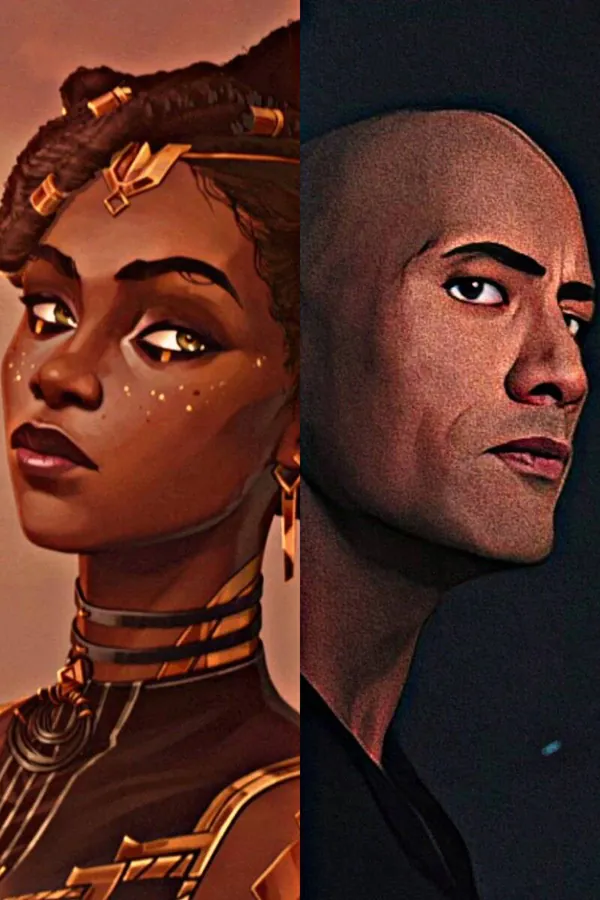
2025 - October 5th 2025: Jabari ya Nyota
October 6th 2025 - May 18th 2026: Anthonie Engelbrecht
May 19th 2026 - present : Nadira Bakari
*Lore by Hjørdis Jensen & Caradoc Browne.
*Updated by Anthonie Engelbrecht & Nadira Bakari
*Updated by Anthonie Engelbrecht & Nadira Bakari
This is the "Game Master" account. Please do not owl this account, unless specified. This account is not moderated actively and therefore, you may not receive a response.
Contact a Head of House or the Headmaster if you need anything.
Uagadou

- 2024: Omolara Osoba & Moses Passaris - deceased
Reducio
2024 - 2025: Évodie Ndoto Masudi
Name: Omolara Osoba
Age: 40
Nationality: Congolese
Blood status: Half-blood
Name: Moses Passaris
Age: 66
Nationality: Ugandan
Blood status: Pureblood
Due to its size and the complexity of the role, there are always two heads of the school and through co-operation, they simultaneously handle the entire administration of the school. As such, the chosen pair require the ability to work incredibly well together and often, if one steps down, the other will too. As such, most former heads join the council of the wise for five years at least to guide the new pair. After this time, they must be voted in by the council through an unanimous vote to join permanently, if they choose to do so.
Moses and Omolara shared a deep bond through the latter's father. Thabo Osoba was previously elected as headmaster alongside his old time friend, Moses. But after a brutal animal attack, his position was left vacant. Omolara rose up to honour her father's name and presented herself as a candidate. After some debate and a vote of confidence from Moses himself, the Council of the Wise agreed to let her serve as headmistress alongside her father's friend.
Moses was the son of two wizards that tended one of the farms on Uagadou's premises. While he descended from immigrants through his father's bloodline, his mother claimed her family had tended these lands for generations. Tracing all the way back to Uagadou's foundation. Ultimately, none of this was proven, but it did offer her son Moses firmer ground to stand on as he rose through Uagadou's community. He has travelled a lot in his time beyond the school, which has given him a broader perspective on what can be good for the school.
As his counterpart, serves Omolara. More than twenty years younger than her colleague, she believes Uagadou's schooling system has become outdated. While they make do with the many teachers joining them from across the continent, Omolara believes their luck will one day run dry. Efficiency is key, and while the students' freedom and sense of community is important, she thinks they are beginning to lack discipline. People's sense of duty is waning under the easy years of peace and quiet the school has known more recently.
With a difference as clear as night and day, the two headmasters still respect one another's views and truly believe both their actions are necessary to make Uagadou survive the tides of time.
2025 - October 5th 2025: Jabari ya Nyota
October 6th 2025 - May 18th 2026: Anthonie Engelbrecht
May 19th 2026 - present : Nadira Bakari
This is the "Game Master" account. Please do not owl this account, unless specified. This account is not moderated actively and therefore, you may not receive a response.
Contact a Head of House or the Headmaster if you need anything.