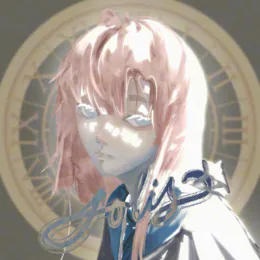
Solis Frostwood || First Year || Ravenclaw
✦ ──────── ❧ ──────── ✦
𝕾𝖔𝖑𝖎𝖘 𝕱𝖗𝖔𝖘𝖙𝖜𝖔𝖔𝖉
✧ First Year · 2026 · Hogwarts School of Witchcraft and Wizardry ✧
❝ Interesting. ❞
✦ ──────── ❧ ──────── ✦
𝕾𝖔𝖑𝖎𝖘 𝕱𝖗𝖔𝖘𝖙𝖜𝖔𝖔𝖉
✧ First Year · 2026 · Hogwarts School of Witchcraft and Wizardry ✧
❝ Interesting. ❞
✦ ──────── ❧ ──────── ✦
···
━━━━━━━━━━ ✦ ━━━━━━━━━━
I. THE PARTICULARS
━━━━━━━━━━ ✦ ━━━━━━━━━━
━━━━━━━━━━ ✦ ━━━━━━━━━━
FULL NAME
Solis Frostwood
PRONOUNS
She / They
BIRTHDAY
15 March 2015
AGE
11
WAND
29.1 cm · Chestnut · Thunderbird tail feather
BLOOD STATUS
Pure-blood (unknown to the family; see History)
SPECIES
Human
PATRONUS
N/A
SCHOOL YEAR
2026 · First Year
HOUSE
Ravenclaw
━━━━━━━━━━ ✦ ━━━━━━━━━━
II. APPEARANCE
━━━━━━━━━━ ✦ ━━━━━━━━━━
━━━━━━━━━━ ✦ ━━━━━━━━━━
▨ Grey eyes ▧ · ▨ Shoulder-length light, peachy, auburn hair ▧ · ▨ Medium-pale skin ▧ · ~145 cm · Wiry frame, spindly limbs stronger than they look, quick and springy
━━━━━━━━━━ ✦ ━━━━━━━━━━
III. TEMPERAMENT
━━━━━━━━━━ ✦ ━━━━━━━━━━
━━━━━━━━━━ ✦ ━━━━━━━━━━
Insanely curious, Solis is often sidetracked by almost anything interesting. However, she tends to investigate rather than rush in headlong, and (sometimes) wonders what will happen if she tries something slightly inadvisable. She is generally cheerful even if she’s not particularly optimistic.
Solis does not deliberately disrespect rules, but is not particularly respectful either. She has trouble treating a rule as important just because someone says it is; she likes to ask why and, if it doesn’t make sense, will keep asking.
STRENGTHS - Independent judgement · Fairness · Moral courage · Willingness to question assumptions
FAULTS - Contrarianism · Distrust · Analysis paralysis · Arrogance · Difficulty cooperating
Reducio
Solis has an ‘obsession’ with ‘justice’ which will gradually manifest as she grows older and her reasoning skills mature. However, during her formative years, it exists an undercurrent that affects how she reacts to different events. (See Further Explanations for more details)
In simpler terms, she has a fear of accidentally harming others or being complicit in it that affects how willing she is to hastily label an action as “good” or “bad” (or somewhere in between). It is partly a procedural fairness thing, where evidence and full knowledge of both sides are of the utmost importance. Sometimes she will get really irritated that people just trust everything at face value and then act like sheep. This is also one of the reasons why she doesn’t automatically respect rules; she needs to have sufficient reason to believe that a rule is justified before obeying it.
INTERESTS & HABITS
Reading, sketching, exploring and occasional ‘trespassing’. Investigating whatever subject has captured her attention this month. Such enthusiasms may last no more than three months before another curiosity takes their place. Has an unfortunate tendency to treat danger as an invitation to investigate.
Also eating poisonous plants; somehow she hasn’t dropped dead yet and nobody knows why. Probably magic. She likes eating nightshade sandwiches. Please do not sample her lunch.
━━━━━━━━━━ ✦ ━━━━━━━━━━
IV. BEFORE HOGWARTS
━━━━━━━━━━ ✦ ━━━━━━━━━━
━━━━━━━━━━ ✦ ━━━━━━━━━━
Solis is an only child who grew up in a household where centuries-old magical manuscripts were considerably more common than expensive furniture, and where the question of whether something was dangerous generally led to further investigation rather than immediate disposal.
Her mother, Aurelia Frostwood, is a pureblood witch who came from a long line of scholars, researchers, experimentalists, and the occasional Dark witch/wizard. Her father, in contrast, is a ‘Muggle-born’ who was familiar with Muggle life, having grown up unaware that his parents were, in fact, Squibs from pureblood families who had been kicked out and disowned. By ancestry, Solis is therefore pure-blood; however, though the family have their suspicions, they do not yet have proof of her paternal grandparents’ origins.
Her childhood was otherwise ordinary. Solis went to a Muggle school prior to Hogwarts, and led a relatively normal mixed magical-Muggle life. She ran around fields, read whatever caught her attention, and often returned home with something peculiar in her pockets. Between her parents, Solis became familiar with both the Muggle and the magical worlds (e.g., Diagon Alley), though she had little exposure or understanding of wizarding politics.
A MATTER OF APPETITE
One distinctly abnormal feature of her childhood was her unfortunate habit of ingesting poisonous plants. Following an early incident involving aconite and belladonna, which left her parents terrified and resulted in an emergency visit to St Mungo’s, it was discovered that Solis has an unusual tolerance to certain toxins, hypothesised to be linked to her magic.
Her mother subsequently became rather interested in studying the phenomenon, while her father watched on with increasing concern and exasperation. Over time, the family have gotten used to Solis’s ‘special’ palate, and poisonous meals even occasionally grace the dinner table. Visitors were warned not to eat from Solis’s plate.
ɴᴏ, ꜱʜᴇ ɪꜱ ɴᴏᴛ ɪᴍᴍᴜɴᴇ ᴛᴏ ᴍᴀɢɪᴄᴀʟ ᴘᴏɪꜱᴏɴꜱ, ᴊᴜꜱᴛ ɴᴀᴛᴜʀᴀʟʟʏ ᴏᴄᴄᴜʀʀɪɴɢ ᴏɴᴇ (ᴇ.ɢ. ᴘʟᴀɴᴛꜱ), ᴀɴᴅ ᴇᴠᴇɴ ᴛʜᴇɴ ɪꜱ ꜱᴜʙᴊᴇᴄᴛ ᴛᴏ ʜᴏᴡ ᴍᴀɢɪᴄᴀʟ ᴛʜᴇʏ ᴀʀᴇ (ɪ.ᴇ. ɴᴏ ꜱʜᴇ ɪꜱ ɴᴏᴛ ɪᴍᴍᴜɴᴇ ᴛᴏ ꜱᴏᴍᴇᴛʜɪɴɢ ʟɪᴋᴇ ʙᴀꜱɪʟɪꜱᴋ ᴠᴇɴᴏᴍ.)
━━━━━━━━━━ ✦ ━━━━━━━━━━
V. FIRST INSTANCE OF MAGIC
Age six · A Muggle school classroom
━━━━━━━━━━ ✦ ━━━━━━━━━━
Age six · A Muggle school classroom
━━━━━━━━━━ ✦ ━━━━━━━━━━
At 6, Solis made every container in her (Muggle school) classroom fly open: bags, pockets and pencil cases unzipped, and their contents flew out. The MoM went and Obliviated the Muggles afterwards (Accidental Magic Reversal Squad, Muggle Excuse Team, etc.).
The incident that preceded this began when a packet of lollies disappeared from a kid’s bag, and someone found a wrapper under another kid’s chair. As such, everyone thought that they had eaten them, but they defended themselves and said that they didn’t steal it. However, that did absolutely nothing, especially when the teacher told them to stop lying without actually checking for evidence. Solis got increasingly upset after everyone ignored her questions about how they knew without proof. She blurted out, “But you haven’t even looked!” Then all the containers flew open all at once and the stolen lollies fell out of a different kid’s pocket.
━━━━━━━━━━ ✦ ━━━━━━━━━━
VI. THE FROSTWOOD FAMILY
On names, scholarship, and questionable research decisions
━━━━━━━━━━ ✦ ━━━━━━━━━━
On names, scholarship, and questionable research decisions
━━━━━━━━━━ ✦ ━━━━━━━━━━
FAMILY ORIGINS & NAMES
Reducio
Solis inherited her mother’s last name.
Frostwood is an old magical family that has roots in the broader Mediterranean, and has been established in the UK for roughly six to seven centuries. The family’s ancestry before Britain is too old and mixed to reduce cleanly to one modern origin. Surviving traditions and records point broadly towards Greek, Italic and Celtic roots, probably intermixed over a very long period.
Frostwood is an Anglicised surname, not the family’s original name. The oldest verified record of their ancestral family name is Hylaios (Ancient Greek: Ὑλαῖος), meaning roughly “of the wood” / “of the forest.” It derives from the same root as hylē (ὕλη), “wood, timber, material,” a word that later also acquired the philosophical sense of matter or the substance from which something is made. Culturally, their original surname is closer to “metal-wood” than “winter forest.” However, somewhere over centuries of translation errors, heraldry, metaphor and family reinterpretation, metal = cold = frost became embedded in their British name. The family’s older Greek tradition was historically associated with Athena and Hephaestus. They both represent the family’s values: wisdom, disciplined craft, strategy, technical skill, research, and the intelligence behind making.
REPUTATION & DISPOSITION
Reducio
The Frostwoods are mostly Ravenclaws, and have a reputation for being overly comfortable studying dangerous or even Dark magic. Their recurring ‘flaw’ is less “ooo evil” and more “huh I wonder what would happen if I poked what I shouldn’t poke”; namely, unregulated curiosity without much situational awareness or care for bystanders. This has led to their ‘history’ of Dark witches and wizards; however, the difference is intent: their goal was never to set out to harm others; the harm was simply an unfortunate side effect of reckless curiosity pushed too far.
WEALTH, MANUSCRIPTS, AND THE GRINGOTTS VAULT
Reducio
They are not considered poor, but are not extremely rich either. They have a very peculiar concept of what counts as expensive: ordinary luxury goods are judged harshly by their usefulness, where items such as high-end brooms are considered ‘an expensive stick that can fly faster than another stick’ and as such outrageously overpriced. A collection of rare Transfiguration manuscripts costing the equivalent of a small apartment, however, may be purchased almost without hesitation, due to their appetite for knowledge itself. (A family of researchers, really.)
Their Gringotts vault contains shelves, boxes, manuscripts, letters, research journals, failed spell designs, obsolete magical techniques, unpublished correspondence, translations, grimoires, and centuries of accumulated notes; some documents may be the only surviving copies of works thought lost. Scholars, collectors, Unspeakables, curse-breakers, Dark witches and wizards, and other researchers would pay fortunes, or considerably worse, for access to even individual pages. The family nevertheless treats much of it with such mundane familiarity that it will most likely give some Unspeakable an aneurysm; something academically priceless may have been sitting in an uncatalogued box for two hundred years because nobody has got around to that shelf yet.
MAGICAL INHERITANCE
Reducio
Frostwoods have a recurring tendency toward unusually strong magical ability, especially in difficult, obscure, or dangerous branches of magic. This does not manifest identically in every generation; instead, the underlying inheritance manifests as different specialised talents, such as an affinity towards Ancient Magic (see Hogwarts Legacy), exceptional Transfiguration, curse work, Dark Arts, Seer abilities (of different strengths) and so on. The actual expression of said inheritance varies according to the individual.
Solis has inherited a special talent: Seer. This will not be elaborated on until it is found out in-universe.
✦ ──────── ❧ ──────── ✦
Knowledge is worth seeking. Whether it ought to be touched is another question entirely.
✦ ──────── ❧ ──────── ✦
Knowledge is worth seeking. Whether it ought to be touched is another question entirely.
✦ ──────── ❧ ──────── ✦
···
━━━━━━━━━━ ✦ ━━━━━━━━━━
VII. FURTHER EXPLANATIONS
━━━━━━━━━━ ✦ ━━━━━━━━━━
━━━━━━━━━━ ✦ ━━━━━━━━━━
Reducio
[OOC warning]
(Disclaimer: The following is something Solis would write if she was older and had the words to explain herself.)
Being level-headed or obsessed with 'justice' does not automatically mean 'following the rules'. My obsession with justice is one of the reasons I don’t automatically respect rules.
Firstly, we need to separate three things:
{Level-headedness =/= Rule-following =/= Sense of justice}
These are very separate things and should not be collapsed into one single variable. Level-headedness does not equal compliance; it normally means something closer to "not acting rashly under emotional pressure".
Second, Rules and Justice are separate concepts. Rules are norms imposed or maintained by an institution; Justice is judgement exercised through individual agency. A Rule being authoritative does not automatically mean it should be obeyed. A moral person is not necessarily an institutionally compliant person. In fact, a study done by Weston & Turiel (1980) proposed a psychological framework called Social Domain Theory, where they gave 60 children aged 4 to 11 scenarios in which different schools had different rules (e.g., one action may be prohibited in one school but not in another), and they found that children did NOT simply infer that an action permitted by authority was necessarily acceptable. Their judgements depended on the type of act; physical harm was treated very differently from conventional matters despite authorities changing the rules. Moreover, this is not a single isolated study either; a meta-analysis done by Yoo & Smetana (2022) in the field of Social Domain Theory found that children can consistently distinguish moral transgressions from conventional ones, and that they treated moral transgressions as wrong regardless of whether authorities had made a rule against them.
For me (Solis), to decide that a Rule should be obeyed, I need to have sufficient reason to believe that the Rule is justified. It is not the same as being rebellious: someone who is deliberately rebellious may think {Authority says not to do X -> desire to do X}, while I am more inclined to think {Authority says X -> evaluate X}. My definition of fair judgement is more {Fair judgement = f(evidence, reliability, intent, context, burden of proof)} (inspired by procedural justice; Blader & Tyler, 2003), rather than {Fair judgement = f(whatever my friend/teacher/group says happened)}. That is also why, when I was younger, I would clash with some of my peers who operated more through loyalty; their reasoning might look more like {A is my friend, thus P(A is right) > P(B is right)} (P is probability), and my reasoning would be more A's testimony = E1, B's = E2, etc., and only then would I estimate {P(H|E1, E2, ..., En)} (an application of Bayes’ theorem; Bayes, 1763).
Finally, to address my argument that {Authority says X =/= X is morally justified}, legitimacy, as defined within legitimacy research, is roughly 'whether an authority is perceived as having a rightful claim to authority' (Sunshine & Tyler, 2003); they described legitimacy as one route to compliance, without equating compliance with morality itself. There is actually a paper that directly studies the circumstances in which people's moral convictions constrain their willingness to defer to legitimate authorities, titled "Limits on legitimacy: moral and religious convictions as constraints on deference to authority" (Skitka et al., 2009). Consequently, moral convictions can indeed make people more resistant to pressures to obey authority, laws and rules, or to conform to the majority, etc.
References:
Bayes, T. (1763). LII. An essay towards solving a problem in the doctrine of chances. By the late Rev. Mr. Bayes, F. R. S. Communicated by Mr. Price, in a letter to John Canton, A. M. F. R. S. Philosophical Transactions of the Royal Society of London, (53), 370–418. https://doi.org/10.1098/rstl.1763.0053
Blader, S. L., & Tyler, T. R. (2003). A four-component model of procedural justice: Defining the meaning of a “fair” process. Personality and Social Psychology Bulletin, 29(6), 747–758. https://doi.org/10.1177/0146167203029006007
Skitka, L. J., Bauman, C. W., & Lytle, B. L. (2009). Limits on legitimacy: Moral and religious convictions as constraints on deference to authority. Journal of Personality and Social Psychology, 97(4), 567–578. https://doi.org/10.1037/a0015998
Sunshine, J., & Tyler, T. R. (2003). The role of procedural justice and legitimacy in shaping public support for policing. Law & Society Review, 37(3), 513–547. https://doi.org/10.1111/1540-5893.3703002
Weston, D. R., & Turiel, E. (1980). Act–rule relations: Children’s concepts of social rules. Developmental Psychology, 16(5), 417–424. https://doi.org/10.1037/0012-1649.16.5.417
Yoo, H. N., & Smetana, J. G. (2022). Distinctions between moral and conventional judgments from early to middle childhood: A meta-analysis of social domain theory research. Developmental Psychology, 58(5), 874–889. https://doi.org/10.1037/dev0001330
Last edited by Solis Frostwood on 13 Oct 2026, 22:49, edited 7 times in total.
(there is a bitter triumph in crashing when you should be soaring.)
Solis Frostwood || First Year || Ravenclaw
NOTES
Two main storylines currently planned:
Two main storylines currently planned:
- Investigating Father's family.
- How her slowly developing (placeholder, waiting for approval) abilities feed into her personality over the years and how she changes from the knowledge of said ability.
Last edited by Solis Frostwood on 13 Oct 2026, 20:51, edited 2 times in total.
(there is a bitter triumph in crashing when you should be soaring.)
Solis Frostwood || First Year || Ravenclaw
STATISTICS
STAMINA · 4
EVASION · 6
STRENGTH · 3
WISDOM · 6
ARCANE · 6
ACCURACY · 5
TOTAL · 30
ABILITIES
placeholder.

(there is a bitter triumph in crashing when you should be soaring.)