
Castelobruxo
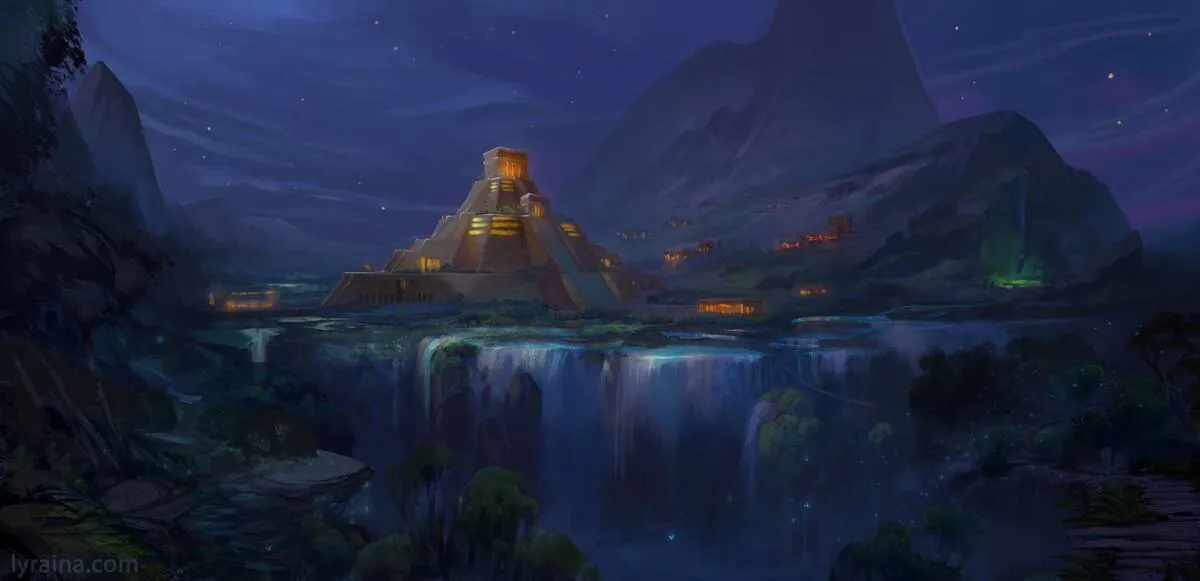
Image credit to Johanna Rupprecht
Castelobruxo is located in the Amazon rainforest, off of a tributary river of the Amazon itself. The exact location is unknown to all but faculty, in part this is due to the actions of the caipora native to the grounds and the surrounding jungle. These trickster spirits emerge at night and deliberately obscure the natural environment around the school, so that those traveling near the grounds are disoriented, with natural landmarks seemingly shifting and plotted courses becoming untenable and entirely different from how they stood at the time of explorers’ departure. The few muggle adventure-seekers who have been able to stumble across the school grounds find themselves utterly incapable of ever relocating the same patch of the rainforest, and in some cases, never manage to return to civilization.
The primary school building takes the form of a Mesoamerican pyramid, seemingly made entirely out of gold. Surrounding this structure are a number of farms and lodging houses. The former of which has been sown with all matter of crops, both magical and mundane, from the continent and from abroad. During the wet season, the fields bloom with colour and vibrancy the equivalent to the shimmering gold of the pyramid itself. As to the surrounding lodgements, they have been constructed in all matter and a variety of traditions, including but not limited to buildings of such a similar style to the golden Mayan pyramid that they appear almost a natural extension, elaborate houses of stone and thatch as one may have expected in the Horizon of the Inca Empire, and colonial Portugueses estates. To muggle eyes, all appear as if in a state of ruin and disrepair. However, such an enchantment only serves as a final defense. For in addition to the actions of the caipora, the entirety of the school is hidden behind a colossal waterfall, and without crossing the threshold of this great body of water the rainforest appears virgin and untouched for miles. Regardless, the scant few muggles who did manage to cross the threshold to bear witness to the school have enshrined it in myth under an assortment of names, such as the legendary El Dorado, or Guimarães’s Lost City of Z.
The pyramid serves as the centre point of the entirety of the school, and much of the classwork is undertaken within its depths, as well as being home to the gathering hall and ballroom. However, meals are typically taken in the lodging-houses, with house-elves assigned to cook for that particular group of students. These elves are often assisted by the students themselves, particularly when they are seeking to garner further points for the school ranking. Only during feast days and other such celebrations is the Gathering Hall, located within the base of the ziggurat, utilized. Alternatively, they may feast in a nearby open-air pavilion within the grounds when weather allows and during special occasions. At other times, when it's not in use for special ceremonies, students can use this space as a place to relax, sunbathe, study, or bond over shared snacks.
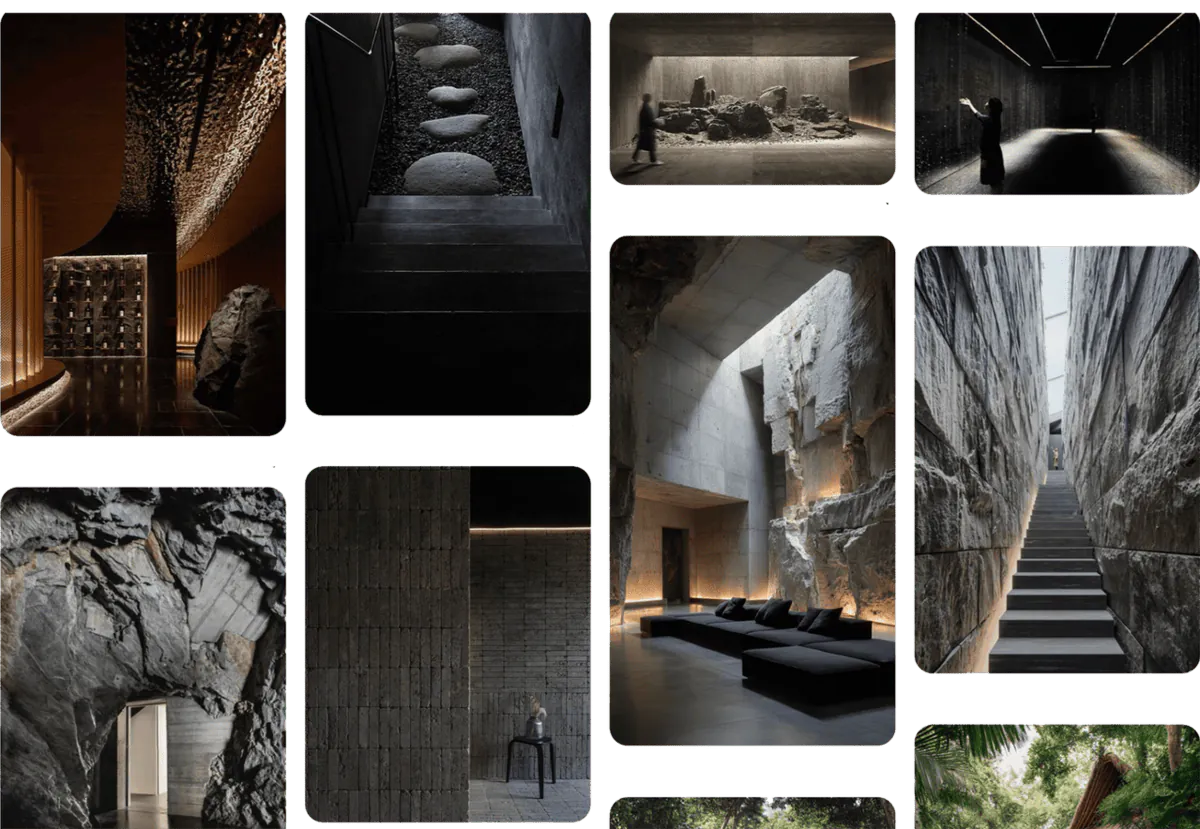
The interior of the pyramid is built as maze-like corridors, where the ceilings are high, and walls, floors and stairs are made of basalt stone to combat humidity. Though much of the pyramid’s interior is enclosed in shadow, the architects had deliberately carved vast open-air sections into the structure. Panoramic openings overlooked the rainforest canopy and allowed warm air to escape upward through the pyramid, preventing the interior from becoming stifling during the wet season. During periods of rainfall, water can often be heard running through narrow drainage channels carved directly into the stone, while the sound of distant voices and footsteps echo through the corridors. Compared to the student population, the school itself is vast in scale, causing many of its halls and corridors to remain quiet even during the busiest hours of the day. The pyramid’s immense interior, combined with the spread of classrooms, creates a calm and almost serene atmosphere.
When you reach the core of the pyramid, the enclosed corridors open up into an open-sky courtyard, where the rain is allowed to fall and gather in pools. Moss, vines, and flowering plants cling to the damp stone walls surrounding the courtyard, while bridges and terraces overlook the open space from above. During heavy storms, rain descends through the center of the pyramid in great sheets, transforming the courtyard into a deafening curtain of water.
Other noteworthy parts of the school building include the astronomy classroom and observatory at its zenith and the various walled gardens that adorn its outer steps. The Trophy Room, also known as the Wall of Fame, is treated less as a register of student achievements and more as a mythical phenomenon. The central feature is a vast wall covered in carved glyphs, depicting the notable accomplishments of every student who has attended Castelobruxo in sequences of magical imagery, persisting and appearing long after they have left the school. These glyphs are not carved or decided by staff, making the appearance of new inscriptions a ceremonial and often anticipated event. While not all glyphs are celebratory in nature, nor is everyone granted a place on the wall, they form a continuous historical record of the school’s past, preserved for decades, if not centuries. The exact mechanism behind the glyphs’ appearance is unknown, though many attribute it to lingering ancient Wayal magic upon which the school is built. They are, however, said to appear when a person accomplishes something meaningful or makes a life-changing decision.
The lodging-houses are scattered across the grounds in a sort of miniature society. The cabins varies in sizes and design depending on year group that live there, though all are built using dark, sturdy hardwoods, set atop basalt foundations, with large panoramic sliding-door windows overlooking the surrounding grounds and rainforest. The spacious terraces serve as gathering points for unofficial student gatherings, with some students decorating them according to their own interests and tastes. Tree swings and hammocks are more rule than exception. The student houses have the capacity to host up to ten people, with a shared living space equipped with the necessities: bathroom, lounge-area and a dining area where the elves serve daily meals. There is a smaller sized kitchen for those who wishes to cook for themselves, though the usage varies depending on interest.
While not a conscious effort on the institution’s part, natural, crystalline pools have formed from the small river streams running alongside the buildings. Houses with these pools directly outside their doors are in especially high demand, giving parts of the grounds an almost resort-like atmosphere.
The grounds themselves are vibrant with life, a natural result of basing itself in the world’s largest rainforest, and these areas of greenery are interrupted only by the flowering of various tropical plants. Additionally, the school's agricultural departments raise flocks of llamas, alpacas, and guinea pigs, and these animals can often be seen in the distance as students make their way between classes. Much of the school grounds are open-air, with the various sporting fields seemingly taking up as much space as the buildings themselves. Of note is Castelobruxo’s rather unique dueling arena, being entirely outdoors and unenclosed, it is not unheard of for matches to continue even under torrential tropical rain. As a result of the campus’s size and horizontal as opposed to vertical approach to construction, each and every part of the school is connected by long and intersecting cobblestone pathways, illuminated by glowing flowers come nightfall.
Lore by Elaine Pendrast, Tuesday Jeremiah Irons, Magdalena Wickham-Deakin & Camille De Varenne

This is the "Game Master" account. Please do not owl this account, unless specified. This account is not moderated actively and therefore, you may not receive a response.
Contact a Head of House or the Headmaster if you need anything.