
Quintessence: A Quest
A Nine step journey in Charms, Ancient Runes, Alchemy and detailing the search for the "fifth essence”.
Contents:
Introduction: p1
Chapter one: p2
Chapter two: p3
Chapter three: p4
Chapter four: p5
Chapter five: p6
Chapter six: p7
Chapter seven: p7
Chapter Eight:p8
Chapter Nine: p10
Author: p11
Bear notes
Introduction: Alchemy, A Brief Description
Alchemy lies in the quest for a mysterious substance known as the Quintessence, the Great Work from the Medieval Latin quinta essentia or “fifth essence” this substance is believed to possess many seemingly miraculous properties, being capable of granting longevity to the alchemist, transforming base metals to gold, curing all diseases or being the core of all beings upon this planet. Alchemists believe that the seed of this Quintessence may be found in all matter, but that it is more easily extracted from certain base substances. It is unsure if such a substance is existence but the closes there has been to understanding it is the way Ancient Runes and Charms have worked together for centuries. It’s fine line between the two subjects is recognised to be the closes we would understand to the fifth essence. An agonising three thousand years have the search for the reasons and potential power of this Quintessence had made craze of the most stable wizards and witches.
The alchemist works in partnership with Nature, to accelerate these processes which otherwise would take millennia to reach fruition, and draw those natural forces into the experiment through the principle of correspondence. The rush into this have left the struggles of other ideas and comes close to the Non magicals’ big search for “The meaning of life”.
In laboratory alchemy, the experiments of transformation occur simultaneously in both the material being manipulated and in the alchemist's soul (or magical core as many believe). In this way, alchemy prefigures the work of ceremonial initiation in the modern lodge system. While alchemy is tentatively considered to have its origins in Ancient Egypt, and later Greece, the study of alchemy as both a physical and spiritual science is best documented in China, India and Medieval Europe. This book focuses on the Medieval lineage, which also pervades the forms of initiation within the Golden Dawn system.
As I write this, I must warn of the difficulty of grasping the concept of this first try and remind all students studying it will face many challenges and ultimately will cry as much as I have while making this book. I hope that this will unlock the mysteries of the Universe perhaps in the future a bright student may read this and have the stars very much shine in their eyes. However, if you understand a word in this, a reminder that many who have been renown in the quest to understand Quintessence have forgotten how to read*.
*A real problem that is documented in History for centuries. Not knowing to read was the potential downfall of these wizards and Witches.
Last edited by Arthur Kirkstone on 5 Sep 2019, 02:16, edited 1 time in total.
A.Kirkstone
Quintessence: A Quest
Chapter one: Essence of Quintessence?
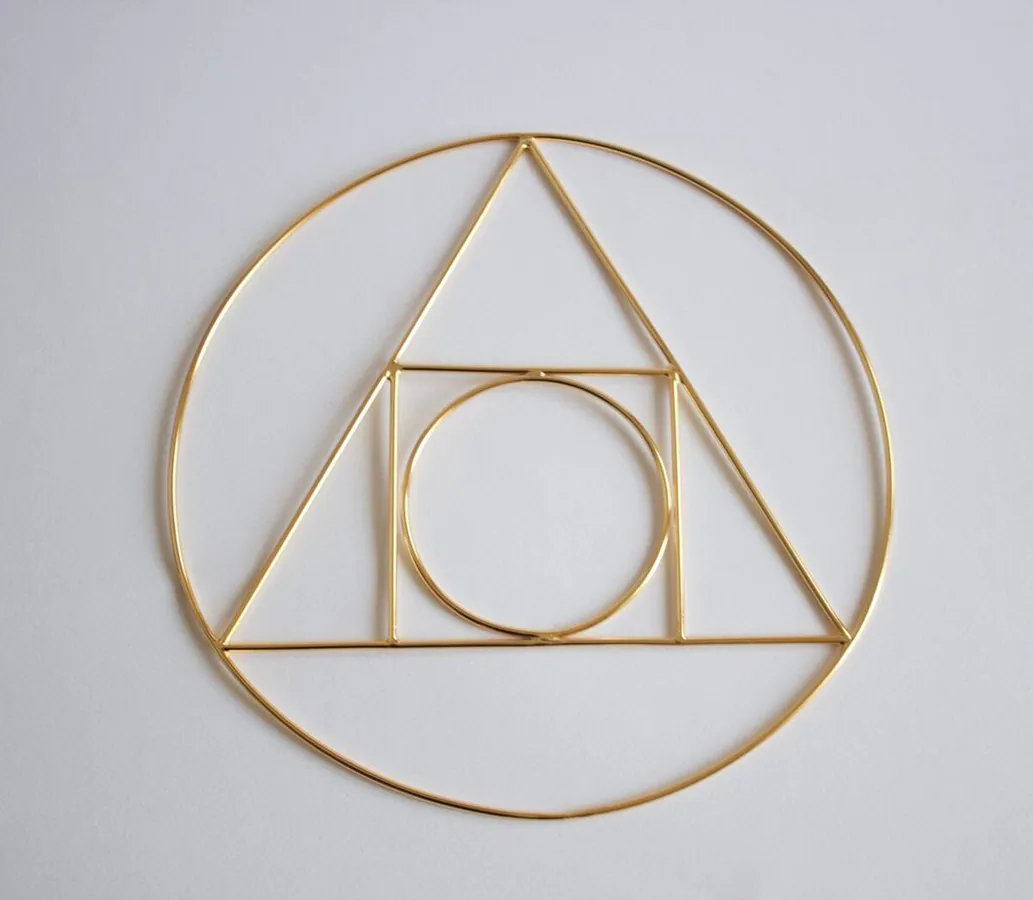
Muggles have lead themselves to believe, in physics, quintessence is a hypothetical form of dark energy, more precisely a scalar field, postulated as an explanation of the observation of an accelerating rate of expansion of the universe. Rather a mystery on how the formulate such ideas, the first example of this scenario was proposed by Ratra and Peebles (1988). The concept was expanded to more general types of time-varying dark energy and the term "quintessence" was first introduced in a paper by Robert R. Caldwell, Rahul Dave and Paul Steinhardt. It has been proposed by some ‘muggle physicists’ to be a fifth fundamental force.
Quintessence differs from the cosmological constant explanation of dark energy in that it is dynamic; that is, it changes over time, unlike the cosmological constant which, by definition, does not change. Quintessence can be either attractive or repulsive depending on the ratio of its kinetic and potential energy. Those working with this postulate believe that quintessence became repulsive about ten billion years ago, about 3.5 billion years after the Big Bang. The Big Bang a theory many students discover about in their astronomy class as a sideways track to what could have been the start of the Universe.
According to ancient and medieval science, aether also spelled æther or ether and also called quintessence, is the material that fills the region of the universe above the terrestrial sphere. The concept of aether was used in several theories to explain several natural phenomena, such as the traveling of light and gravity. In the late 19th century, physicists postulated that aether permeated all throughout space, providing a medium through which light could travel in a vacuum, but evidence for the presence of such a medium was not found in the Michelson–Morley experiment, and this result has been interpreted as meaning that no such luminiferous aether exists.
Quintessence stemmed from the medieval elemental system, which consisted of the four classical elements, and aether, or quintessence, in addition to two chemical elements representing metals: sulphur, "the stone which burns", which characterized the principle of combustibility, and mercury, which contained the idealized principle of metallic properties. This elemental system spread rapidly throughout all of Europe and became popular with alchemists, especially in medicinal alchemy. Medicinal alchemy then sought to isolate quintessence and incorporate it within medicine and elixirs. Due to quintessence's pure and heavenly quality, it was thought that through consumption one may rid oneself of any impurities or illnesses.
In The book of Quintessence, a 15th-century English translation of a continental text, quintessence was used as a medicine for many of man's illnesses. A process given for the creation of quintessence is distillation of alcohol seven times. Over the years, the term quintessence has become synonymous with elixirs, medicinal alchemy, and the philosopher's stone itself.
A.Kirkstone
Quintessence: A Quest
Chapter Two: On how the philosopher stone is?
He ran through the list of places it could be in his mind, checking off the ones he had already searched. As he gazed around the apartment. It now had the look of a place that had been burgled. Then it occurred to him that you often find things as you tidy up, and he set about the task with a sort of meticulousness that was quite uncharacteristic of him. As he sifted and sorted his eyes were constantly on the look-out for any gleam of silver that might be part of the picture frame he was looking for. By the time his wife got home he was in something of a short-temper, having turned up nothing but a few old coins and a box of paper-clips.
Why spin straw into gold when it already is that shade of the sun? Why take something warm and make it so cold? If this is alchemy, then you can keep those cold palaces for your cold ego, to house those bones that lost their soul. The sun spun this straw from mud and rain, grew a seed into a fine strand of such beauty. And so, you see, blind wizard, nature is my alchemy.
A muscle twitched involuntarily at the corner of his right eye; his mouth formed a rigid grimace. With arms folded tightly across his broad chest he tapped his foot furiously and all the while stared out of the grimy window. This fitfully sunny morning would either see the dawn of his new life or snap his dreams in two.
The search for the Philosopher’s stone was a wild one, crazed wizards went wild trying to make the essences that would make such a bland combination. These substances, reduced to a primal form called the First Matter, are then subjected to gentle heating until the Stone emerges from this chaotic mass. The Emerald Tablet of Hermes, a short text composed of a number of enigmatic verses ascribed to the God Hermes, is said to form the essential core of alchemical philosophy. Through it we learn that the process of alchemy is essentially transformational.
The philosopher's stone, more properly philosophers' stone or stone of the philosophers is a legendary alchemical substance capable of turning base metals such as mercury into goldor silver. It is also called the elixir of life, useful for rejuvenation and for achieving immortality; for many centuries, it was the most sought goal in alchemy. The philosophers' stone was the central symbol of the mystical terminology of alchemy, symbolizing perfection at its finest, enlightenment, and heavenly bliss. Efforts to discover the philosophers' stone were known as the Magnum Opus.
From the beginning of the text comes the motto of the alchemists: As above, so below. It is a metaphor for recreating heaven on earth via the secrets of the ancients, who certainly knew far better than we how to do it.
From the Emerald Tablet:
Truth! Certainty! That in which there is no doubt!
That which is above is from that which is below, and that which is below is from that which is above, working the miracles of one.
As all things were from one.
Its father is the Sun and its mother the Moon.
The Earth carried it in her belly, and the Wind nourished it in her belly,
as Earth which shall become Fire.
Feed the Earth from that which is subtle, with the greatest power.
It ascends from the earth to the heaven and becomes ruler over that which is above and that which is below.
And I have already explained the meaning of the whole of this in two of these books of mine.
First mentioned by Zosimos the Theban in the third century BC, the concept of the Philosopher's Stone is truly ancient.
One of the oldest manifestations of the Stone is as old as civilization itself. The Sumerian Water of Life, now known as alcohol or aqua vitae, was also called "the living water" or "water with spirits" and was used in alchemy as a distillation agent. It was mentioned in The Epic of Gilgamesh and featured prominently in the myth of the goddess Inanna's rebirth after her sister Eriskegal, the wife of the god of death, murdered her in the Underworld.
The Benben Stone of Egyptian legend was also called "the stone that fell from heaven" (lapsit ex caelis). It was the symbol of the sun, pyramidal in shape, and resided in the Temple of the Sun in Heliopolis, the center of religion and astronomy in ancient Egypt.
The Benben Stone was rumored to have the secrets of life inscribed on it. The Latin translation of the Philosopher's Stone/Elixir of Life is ex lapis elixir, which is eerily similar to the name that Wolfram von Esenbach gives to the Holy Grail in his Arthurian romance Parzival (lapsit exillis).
In fact, Wolfram goes out of his way to describe the Grail as a stone, and his choice of words does not seem coincidental. The term lapsit exillis could also be translated as lapsit ex caelis: the "stone that fell from heaven' which implies that both the Stone and the Grail can be traced back at least to ancient Egypt, although it is probably far older than that.
Some of the Stone's other manifestations include:
1· Kaba'a, Islam
2· Lia Fail, Ireland/Stone of Destiny, Scotland
3· Keridwen's Cauldron of Immortality, Ireland
4· The Holy Grail, European
5· Jacob's Stone, Biblical
6· Bran's Cauldron of Rebirth, Wales
The Stone was viewed as a magical substance that could immediately perfect any substance or situation. The Philosopher's Stone has been associated with the many other mystical and religious examples and phenomena, including the Salt of the World, the Astral Body, the Elixir, and even Jesus Christ. The Elixir of the alchemists has essentially the same ability to perfect any substance. As the universal panacea, the Elixir cures diseases and restores youth.
If the creation of the Philosopher's Stone was difficult, the creation of the Elixir of Life was next to impossible. The Elixir of Life must contain the four elements (fire, earth, air and water) plus the three principles of animal, vegetable and prima materia . To work with these ingredients many thought it was necessary to use crocodile livers, human skeletons, mandrake roots, and gall bladders of antelopes as well as other bizarre ingredients.
The prima materia or tan is thought to be the mineral cinnabar, or mercury sulfide, also known as Dragons Blood. We learned not so recently in that Albus Dumbledore was the partner of Nicolas Flamel, who possessed "the only known Philosopher's Stone." As we shall see, Flamel was one of alchemy's premier students, and that Dumbledore was his partner. Dumbledore was then familiar with the knowledge of the alchemists, their goals and objectives, and the attitude necessary to succeed in their quest. Credits to Dumbledore were given with the discovery of the twelve uses of Dragons Blood, which is a very crucial ingredient in the construction of the Philosopher's Stone. Long used by the ancients as a drug of longevity, cinnabar has been mined since ancient times and is highly toxic due to its mercury content.
Dragon's Blood is also the name of a plant, Dracaena draco, which is native to the Canary Islands, and another plant, D. cinnabari, which is found only on the island of Socotra off the south coast of Arabia. The dried resin from these plants was thought to have magical properties due to their bright red color. Dragon's Blood is now used in a variety of industrial applications”as a varnish and in photoengraving among others. It is still used in India for ceremonial purposes. Although it has many more than twelve uses, none of them is oven cleaner!
Cinnabar, also called vermillion, combined the two important substances in alchemy: mercury and sulphur. According to Paracelsus:
As we know, the Philosopher's Stone and the Elixir of Life were the primary goals of the alchemists.
The Philosopher's Stone was the substance that could turn inexpensive lead into gold and create a universal panacea that would make humans immortal “the Elixir of Life"! In addition, making the Philosopher's Stone was understood to confer a type of initiation upon the student, and this initiation is the proper culmination of the Great Work. The Philosopher's Stone is a symbol for the journey to enlightenment by breaking down and recombining elements within us.
Although there were traditionally seven stages to the completion of the Philosopher's Stone, other authors put the number higher. According to the Ripley Scroll, there were 12 steps involved in making the Philosopher's Stone. Basil Valentine wrote The Twelve Keys. The difference in the systems is that the traditional seven-step system dates back to The Emerald Tablet, while the 12-step system deals more with astrological archetypes.
Last edited by Arthur Kirkstone on 5 Sep 2019, 01:55, edited 4 times in total.
A.Kirkstone
Quintessence: A Quest
Chapter Three The Elements
Ripley Croll wrote about the four known elements: fire, earth, air and water:
“You must make Water of the Earth, and Earth of the Air, and Air of the Fire, and Fire of the Earth."
The alchemists believed that all four elements were interdependent on each other, and that any process would yield the four elements. This idea goes back to the philosophers, specifically Empedocles of Agrigent (440 B.C.), who considered that there were four elements -- earth, water, air, and fire. Aristotle added the so-called Fifth Element, "the ether." (alt: aether) These elements were regarded, not as different kinds of matter, but rather as different forms of the one original matter, whereby it manifested different properties.
It was thought that this was due the four primary properties of dryness, moistness, warmth, and coldness, with each element having two of these properties: fire was equated with hot and dry, hot and wet to air, wet and cold to water, and dry and cold to earth. Thus, moist and cold bodies (most liquids) were called "waters". Also, since these elements were not regarded as different kinds of matter, the alchemists thought transmutation was possible. In fact, it is possible, but it took the development of nuclear fission to make the alchemists' dreams a reality.
These elements are also what people believe are the foundations of the four kingdoms of Earth and how every kingdom lives without one of these elements due to how they do not need them. According to historical documents, the four Houses of Hogwarts are used to represent these four elements as to the Kingdoms which the founders last names may have derived from.
Gryffindor is Fire, Ravenclaw is Air, Hufflepuff is Earth and Slytherin is Water. But what about Aristotle's Fifth Element, the ether?
A.Kirkstone
Quintessence: A Quest
Chapter 4 Reality of Magical cores
It is said that in everything we see it made out of stardust, that our souls crafted itself into a bright star that glows with pride of its human completion. The light and dark of our minds fashioned into a fortune telling prophecy of where were going to go or what were going to do. Many refuses to believe or understand the glorious idea of magical cores for several centuries because of the value it includes with the ‘non magical’ folks.
A magical core is believed to belong to every human that was born, through the idea of creation being far more to do with the Universe than anything else. However, there is a problem with that, the non-magical (or Muggles) have no sign of having such a core. A magical core can enhance the Wizard or Witch as they grow and learn new magic or break down using cursed magic. Muggles have no use for this, as they live without the need of magic. So how a core should exist is impossible.
Unless, as rumours go by of certain Muggle heroes having magical potential, it worth to think that Muggles succeeded in inventing things we have not as much as we created our world which they have not truly understood. Perhaps the idea, stems from another one which had been ignored since Merlin came on to the table of History. The idea that of the aether being responsible for being the core rather than the fantastical idea of a glowing magical orb inside our bodies. The aether is activated if the human is magical, and that is where magical cores would be more reasonable name for the end result. For the muggles the core does not work for any magical purposes rather for their dreams and fascination of whatever they are fascinated with. Those successful like Alfred the Great, King Arthur, Qin Shihuang, Galileo or Aristotle and many more influential that brought out that Muggles have found their own ways in life. It surly not a coincidence they have made it this far without something driving them and perhaps in their own stars they create they have a more curious idea of a core – a soul.
In terms of the magical folk however, a magical core is believed to update almost like a stats score. If you study Charms your whole life, your magical core is developed to expand and grow more in terms of Charms so you can succeed in more spells.
A.Kirkstone
Quintessence: A Quest
Chapter 5 Understanding WANDS, BROOMS AND STAFFS
Wand, brooms and staffs all have properties to woods that make them magical, rather like a human with a core for all of them but their focus is to give a channel of focus from the person’s ‘magical core’ to produce something in more detail. Since wandless magic requires the elements around the person to direct and many people struggle to tell of theses elements in a short time, they require a wider channel of focus.
Wands and Staff have the core of what will suit their owner’s core, their needs and help to channel the magic. The way this is done for example with Charms: A person would know all about the pronoun citation and movement to produce a spell, however with their arm movement they may not be swift enough to move the focus of the magic through their body, so with a wand it gives them a little more length to swiftly move the wand rather than their whole arm. This is why wand making is such a divine profession, when the early Wizards were using staffs, they would need a bigger force to push the magic through then staff and often if the had no practise would be knocking things over all the time. That’s why older spells require shorter movements as the staff would be difficult to wave around so directs the magic downwards through the length. Much now that Staffs have went well out of fashion merely two hundred years ago since their durability was far better than wands because they can channel much more but without overpowering.
Brooms may surprise you but they contain a spell to help with its stable form, protective charms and runic comfort. It is well known that they are easily tampered with and that can cause extreme problems to players of Quidditch so they require protection. With all the use of magic charms and often runes it could potentially be another way for a person to channel their magic through and improve their speed, durability or springiness. This has been a researched topic by many but there is just no clear finding s as no one truly knows still what to look for in finding the aether.
These objects are said to hold the ways of using aether, with knowledge of it’s use could be focused through an object causing more outstanding displays of magic. Perhaps greater chance for more Tornado wins, if they realise their obvious potential.
A.Kirkstone
Quintessence: A Quest
Chapter six The Universe
Every moment is a new one waiting to happen and ones that are happening. Space is a wondrous reality. With each beat of our dissipating hearts, passages to untouched places are paved. We’re not bound by this world nor are we bound by fear. Nothing binds us to anything but the very idea of things being linear. The sceptic conception of things. A spaceship and a black hole, disassembly or comprehensive discovery? Einstein is not me nor am I him but it doesn’t take a genius to speculate on the possibilities of the great spacious sea that is our universe…just as an artist.
Earth feels like a sandbox full of fire trucks and rubber ducks. Here is where we operate as we do and expand as we are. But out there, in the vastness of the dark region of infinite potential, we could succeed beyond the bounds of any boundary. Let us not be the leaf atop the water but the penny at the bottom of the pool. Curiosity always seeks the penny.
Now if you have not taken muggle studies, this may confuse you far more than runes, However, to magicalise it, the Universe has always been questioned for being far too magical for it’s liking, however it is always the unknown that places everyone on edge to find a suitable solution. The Universe is said to open doors into other universes which contain the use of aether at a potential unimaginable to us. Spells to reverse even death. Intelligence to make you wiser. Guidance from creatures of purest form able to exist because such a fifth essence exists out there in a Universe- perhaps even our own.
The universe is four-dimensional—three for space, one for time.
The universe has nine, or ten or eleven dimensions.
The universe is three-dimensional.
The universe is flat.
Matter curves spacetime.
The universe is infinite.
The universe is 84 billion light-years wide.
The universe is a bubble, or an onion.
Or a hall of mirrors, shaped like soccer ball.
The Universe is a mystery even we wizards will have to wait for the answer from, perhaps the real reason we do not understand the idea of Quintessence.
Chapter seven Names
User can create, shape and manipulate Aether, a powerful and unique "Celestial Element" that flows through the Universe. There have been many claims/theories made by alchemists, natural philosophers, and very early modern physicists that confirm Aether's power. One claim is that it was the pure essence that the Mythological gods lived and breathed in the same way humans did with air. Another claim is that Aether is the force used by God himself to create the Universe. However, although it can partake in the nature of either substances, Aether is neither of these things.
Names, common simple names Harry, Peter, Steve or highly creative names Beatrice, Nathaniel or Jacqueline.
Have been believed to carry Celestial elements to provide as a charm in hope of delivering a charm over the person who held the name from birth. If you look at names in History, they all eventually come to a point when they suddenly become a use in the world having meanings and stories to those names. This includes what they are meant to do, protect, enhance or allow a higher intellect.
Despite its title as "Life-Force", Aether encompasses more than the essence of living things. Users of this power will realize that Aether exists in Elemental, Cosmic, and Spiritual forces there are at least three levels of both matter and energy each with Aether at the middle. The first level of matter comprises the common forms of matter like solid/liquids/gases. The second level consists of matter that is at a higher level, and subtle. The third level is comprised of the most subtle, and tenuous forms of matter that scientists don't even know about. The third level consists of energy that is unrecognizable by human beings, and available only to beings of the Spiritual Plane. This form of energy can be considered as "the divine power" with the users being considered "gods".
Every moment is a new one waiting to happen and ones that are happening. Space is a wondrous reality. With each beat of our dissipating hearts, passages to untouched places are paved. We’re not bound by this world nor are we bound by fear. Nothing binds us to anything but the very idea of things being linear. The sceptic conception of things. A spaceship and a black hole, disassembly or comprehensive discovery? Einstein is not me nor am I him but it doesn’t take a genius to speculate on the possibilities of the great spacious sea that is our universe…just as an artist.
Earth feels like a sandbox full of fire trucks and rubber ducks. Here is where we operate as we do and expand as we are. But out there, in the vastness of the dark region of infinite potential, we could succeed beyond the bounds of any boundary. Let us not be the leaf atop the water but the penny at the bottom of the pool. Curiosity always seeks the penny.
Now if you have not taken muggle studies, this may confuse you far more than runes, However, to magicalise it, the Universe has always been questioned for being far too magical for it’s liking, however it is always the unknown that places everyone on edge to find a suitable solution. The Universe is said to open doors into other universes which contain the use of aether at a potential unimaginable to us. Spells to reverse even death. Intelligence to make you wiser. Guidance from creatures of purest form able to exist because such a fifth essence exists out there in a Universe- perhaps even our own.
The universe is four-dimensional—three for space, one for time.
The universe has nine, or ten or eleven dimensions.
The universe is three-dimensional.
The universe is flat.
Matter curves spacetime.
The universe is infinite.
The universe is 84 billion light-years wide.
The universe is a bubble, or an onion.
Or a hall of mirrors, shaped like soccer ball.
The Universe is a mystery even we wizards will have to wait for the answer from, perhaps the real reason we do not understand the idea of Quintessence.
Chapter seven Names
User can create, shape and manipulate Aether, a powerful and unique "Celestial Element" that flows through the Universe. There have been many claims/theories made by alchemists, natural philosophers, and very early modern physicists that confirm Aether's power. One claim is that it was the pure essence that the Mythological gods lived and breathed in the same way humans did with air. Another claim is that Aether is the force used by God himself to create the Universe. However, although it can partake in the nature of either substances, Aether is neither of these things.
Names, common simple names Harry, Peter, Steve or highly creative names Beatrice, Nathaniel or Jacqueline.
Have been believed to carry Celestial elements to provide as a charm in hope of delivering a charm over the person who held the name from birth. If you look at names in History, they all eventually come to a point when they suddenly become a use in the world having meanings and stories to those names. This includes what they are meant to do, protect, enhance or allow a higher intellect.
Despite its title as "Life-Force", Aether encompasses more than the essence of living things. Users of this power will realize that Aether exists in Elemental, Cosmic, and Spiritual forces there are at least three levels of both matter and energy each with Aether at the middle. The first level of matter comprises the common forms of matter like solid/liquids/gases. The second level consists of matter that is at a higher level, and subtle. The third level is comprised of the most subtle, and tenuous forms of matter that scientists don't even know about. The third level consists of energy that is unrecognizable by human beings, and available only to beings of the Spiritual Plane. This form of energy can be considered as "the divine power" with the users being considered "gods".
A.Kirkstone
Quintessence: A Quest
Eight Found in the room: Runes
Runes are symbols representing various sound values, belonging to a runic alphabet. The runes themselves can be used both as an alphabet or as stand-in for whole words (as logograms). I myself find them mysteriously in use of conducting thoughts for charms through the written form and manifest them into the beauty that they create within the deeper thoughts of the Universe.
The Aether is thought to have a formula once, where a little story was told. To understand, must follow the instructions of the story.
As once the glorious sun sets upon the kingdoms of a land, all with conflict and none with love. They thread to try and find reasoning behind their existence. One could live with all the elements but fire, the other kingdom needed to not swim so no water and the other two without air or without Earth to guide them. They did not know what the importance on one missing, however an idea was to create a fifth kingdom, inscriptions were written into the runes the way to entre this kingdom. It was said to be centred at a forest of apple trees and a river of pure gold running through, you will find the aether resting as a purest creature. Many believed this story to be fake but runes have indeed been found containing incredible source of magic which have been allowed to be published only a year ago.
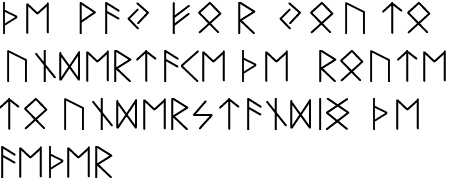
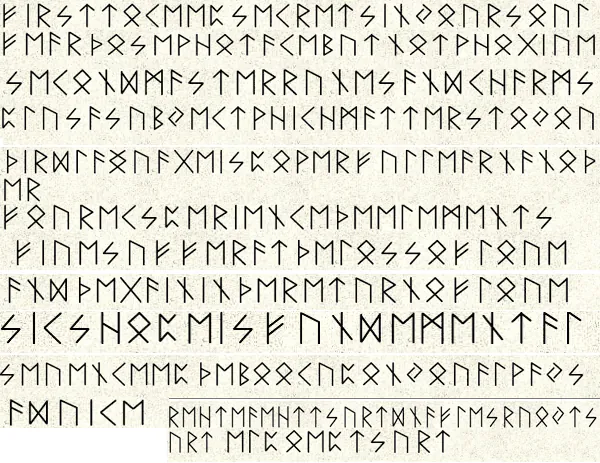
To understand either be a third year runes student, sixth year Charms student or have someone adult who is an expert translate. The way for you to undertake the route to the Aether :
First to keep secrets in your soul, fear those who take but not who give
Second Master Runes, Charms and a subject which matters
Third Language is powerful, learn another
Four Experience the elements
Five Suffer at the loss of Love and discover the gain in the return of Love
Six Hope is fundemental and so give it to another
Seven Keep the book upon you always
Advice rehtea eht tsurt dna flesruoy tsurt, elpoep tsurt
Second Master Runes, Charms and a subject which matters
Third Language is powerful, learn another
Four Experience the elements
Five Suffer at the loss of Love and discover the gain in the return of Love
Six Hope is fundemental and so give it to another
Seven Keep the book upon you always
Advice rehtea eht tsurt dna flesruoy tsurt, elpoep tsurt
A.Kirkstone
Quintessence: A Quest
Chapter Nine Where The thread of Time exists
Time There is general agreement among philosophers that time is continuous (i.e. we do not experience it as stopping and starting, or darting about at random), and that it has an intrinsic direction or order (i.e. we all agree that events progress from past to present to future). There is also a more or less general agreement that is it objective, and not subjective or dependent on its being consciously experienced, which is borne out by the almost universal agreement on the time order of so many events, both psychological and physical, and the fact that so many different physical processes bear consistent time relations to each other (e.g. the rotation of the Earth, the frequency of oscillation of a pendulum, etc). However, even given that, many differing opinions and approaches to what time actually is have been put forward over the centuries. Although, It is a general interest amongst the wizarding community that perhaps time is something that is run by the fifth essence so to have that energy must be incredible.
Overall, this concludes my research, time, alchemy, charms, runes- The Universe itself all play a strange part with each other plus it brings out our own physical thoughts. As a historian I count the questions, the deep questions I have faced but I have always desired for one question answered and this book has given only a glimmer of one. If this energy, this fifth essence exists, when would we be worthy enough to know it’s true secrets?
Most of you I hope reading are young still, for I believe you have some hope of discovering the ideas. I’ll leave you this short story of Quintessence with a voice of a friend of mine.
‘There it is... The silly old universe. You know, no one would understand it anyway, all of it is too much. Except… Except for children. Children can hear it sometimes, if their hearts are in the right place, and the stars are too. They can read something adults can’t. Perhaps when they realise, they can, they will find the answers, but by that time they would be far too old…’
A.Kirkstone
Quintessence: A Quest
Authors
Sage Bragham
Sage Bragham was born in Scotland and attended Hogwarts School of Witchcraft and Wizardry during his formative years. Sorted into Ravenclaw House, he was a said to be a good student, and took a particular interest in more theoretical studies, such as History of Magic and the Study of Ancient Runes, both of which he would later specialise in as an adult.
In adulthood, Sage became an accomplished magical historian and specialising in the examination of magical artefacts and the interpretation of runes. Eventually, he found employment at the British Ministry of Magic, where he was hired by the Ministry's research wing and, due to his deep knowledge on magical creatures, was assigned to the Beast Division in the Department for the Regulation and Control of Magical Creatures. Eventually, he was transferred to the Department of Magical Artefacts, eventually raising to the position of its Head Curator.
An avid Quidditch fan, he was a strong supporter of the English team Tutshill Tornados, owning a souvenir programme signed by no less a person than the famed seeker Roderick Plumpton himself. He wrote this book in his apparent spare time, his record of examinations of magical artefacts lead to his fond research on the subject as a get away from all the pressures as a magical historian and with the help of charms expert Fortinbras. He made this specifically in thought of students, in the hope he could understand the complexity of the aethur himself, however this barley worked as it is only optional reading for those slowly finishing education or for those with a keen interest (and a lot of beverages to keep them through the mind-boggling information).
Fortinbras: Co-Author
Charms Master at Hogwarts School of Witchcraft and Wizardry, who taught at some point in her teaching career Runes as well, she came to believe (correctly) that the fabled Cursed Vaults were real and wrote her fears and suspicions about them in a folio that she left behind in her old classroom. She is an intelligent witch with a keen interest in Runes and Charms, this book she gave advice on the uses of Charms that qualify into the idea that treads Runes and Charms. Sage and herself have connections through Hogwarts and have got to know each other through the creation of this short book that is full of the most upheaving information that even they do not know answers to.
Reducio
Bear notes:
Introduction Mostly original but a book helped me understand alchemy
Chapter one Books A lot of research and books to
Chapter two help A lot of research and books to help
Chapter three Online research but I figured out the Houses one while writing this.
Chapter four I know- so cheesy but I reckon in the best rps this can be considered interesting.
Chapter five I think as I think.
Chapter six I think Babylon 5 has some responsibility in my thinking
Chapter seven My wonderful imagination
Chapter Eight This is not a translation but a transliteration of each group of letters as there is no easy way to perform a real translation from English into a true runic based language. I used a simple selection of runes and processed them through online converters. So, there is a proper translation under for Rps and not needing to work it out.
Chapter Nine I had a dream on this - Alan Dindo – Image on Creative Commons- He is an artist based in Rome and one I have found interesting as an emerging one.
Chapter Ten My own info
Author Both information is used by Wiki, however not at all copied word by word, Since the book has little information, I decided to give a bit of a twist on the Authors
Introduction Mostly original but a book helped me understand alchemy
Chapter one Books A lot of research and books to
Chapter two help A lot of research and books to help
Chapter three Online research but I figured out the Houses one while writing this.
Chapter four I know- so cheesy but I reckon in the best rps this can be considered interesting.
Chapter five I think as I think.
Chapter six I think Babylon 5 has some responsibility in my thinking
Chapter seven My wonderful imagination
Chapter Eight This is not a translation but a transliteration of each group of letters as there is no easy way to perform a real translation from English into a true runic based language. I used a simple selection of runes and processed them through online converters. So, there is a proper translation under for Rps and not needing to work it out.
Chapter Nine I had a dream on this - Alan Dindo – Image on Creative Commons- He is an artist based in Rome and one I have found interesting as an emerging one.
Chapter Ten My own info
Author Both information is used by Wiki, however not at all copied word by word, Since the book has little information, I decided to give a bit of a twist on the Authors
A.Kirkstone