
Ilvermorny School of Witchcraft and Wizardry
Founders:
- Isolt Sayre (1603 - 1703)
- James Steward (unknown)
- William (unknown - present)
- Chadwick Boot (1618 - unknown)
- Webster Boot (1620 - unknown)
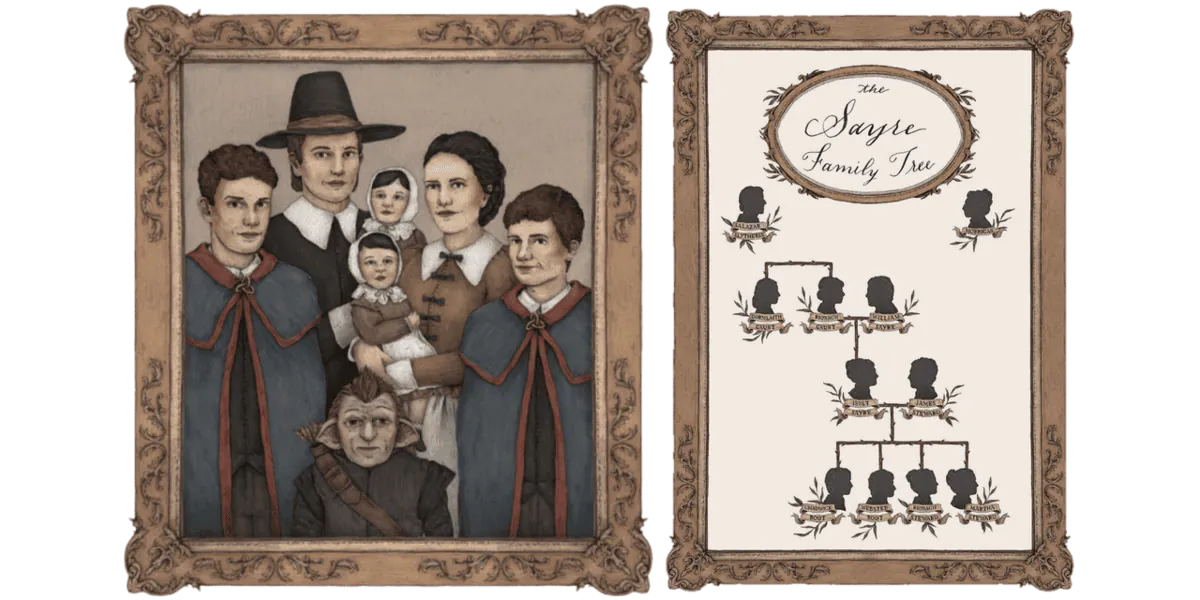
Isolt Sayre was born in the year, 1603. She was the offspring of two pure-blood wizarding families. Her father, William Sayre, was a direct descendant of the famous Irish witch Morrigan. Growing up in Coomloughra, Ireland, Isolt had a peaceful childhood amongst her loving parents. Sadly, in 1608, when Isolt was five years of age, a fire took both her parents' lives. This left Isolt in the care of her vicious aunt: Gormlaith Gaunt. Who lived in the neighbouring valley of Coomcallee. More commonly known amongst wizards as "Hags’ Glen".
After twelve years of being raised in isolation and under the influence of her aunt's dark magic. Isolt managed to escape after learning the truth behind her parents' deaths. It had been her aunt who set up the entire event and in retaliation, Isolt escaped with her life and her aunt's wand. Soon enough, she managed to secure passage across the Atlantic in 1620. Under the alias of a boy named Elias Story, she boarded the Mayflower and ventured forth to America. Leaving her old life and her puritan aunt behind.
Arriving amongst the first European settlers at the time, Isolde wasted no time in isolating herself once again from public view. She deeply believed her aunt would come and find her, wherever she had fled to. After she convinced the other settlers that young 'Elias' had died during one of the harsh winters, Isolt set out to live in the wilds on her own. On one of her travels there, she witnessed a struggle between a Hidebehind and a Pukwudgie. The young woman was able to save the Pukwudgie with a spell and promptly was told he owed her a debt of life. William, as she named the Pukwudgie after her father since he refused to give his real name, felt humiliated to owe such a large debt to a young foolish girl. Soon enough, though, the pair became close friends and William showed her all around the wilds, teaching her of magical creatures and the landscapes. In their many travels, they eventually came across a family with two young boys. The young men, Chadwick and Webster Boot, had survived a lethal encounter with the same Hidebehind that had attacked William years ago, but their parents gave their lives in their protection. Isolt took both of them in and had a surprise encounter as she returned to bury the parents.
James Steward was an ordinary stonemason with no affiliation to magic whatsoever. While Isolt meant to obliviate him after healing both him (who had made the mistake to wave a wand as a no-maj) and the Boot boys, she found joy in the fact she was able to converse with another adult. James stayed for a while, helping Isolt build a proper home, which she dubbed 'Ilvermorny' after her old family home in Ireland. She never ended up obliviating James and the pair eventually fell in love with one another. Having two daughters of their own, whilst still taking care of their two adopted sons, the Boot boys.
Soon enough, as the Boot boys began to grow and needed magical schooling, Isolt and James began teaching the young blossoming wizards. After a while, they were teaching dozens of children from neighbouring communities as well as a handful of young Native American witches and wizards, as well. Inspired by what Gormlaith had told Isolt about Hogwarts, she and her family decided to establish four houses to sort these children in.
While Isolt's girls were still little and Chadwick and Webster Boot were teenagers, Gormlaith Gaunt located her niece after hearing news of this new school, conveniently named Ilvermorny. Gormlaith hunted Isolt and her family down, seeking her revenge as well as retrieving her old wand. After a brief skirmish, Isolt's aunt was eventually defeated. Struck by a poison arrow, with a life debt fullfilled, by William the Pukwudgie. Now at peace once more, Ilvermorny continued to grow and flourish after Gormlaith’s defeat, and Isolt and her husband James both lived to be over a hundred years old.
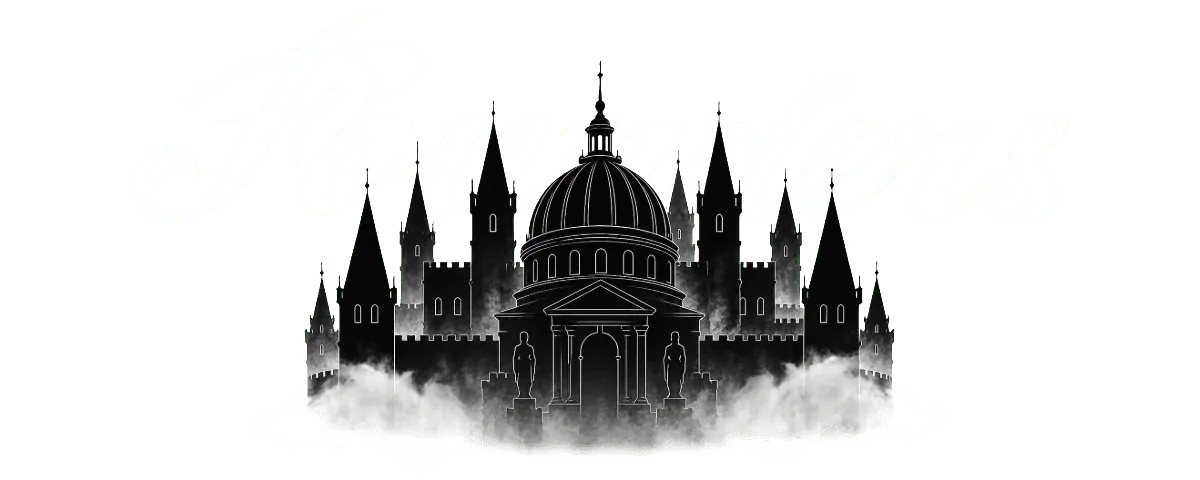
Ilvermorny started out as a simple home for Isolt and her family. As they began teaching their adoptive sons, eventually Isolt and James accepted other magical children to come study in their home. As soon as there was a need for more housing, they began expanding their house and eventually their grounds. Over decades, Ilvermorny had become a full-fledged school, with its reputation on every American wizard's lips. It succeeded in becoming America's number one school on the subject of magic, and is considered to be Hogwarts' little sister by many. Though not every wizard or witch will take that as a compliment.
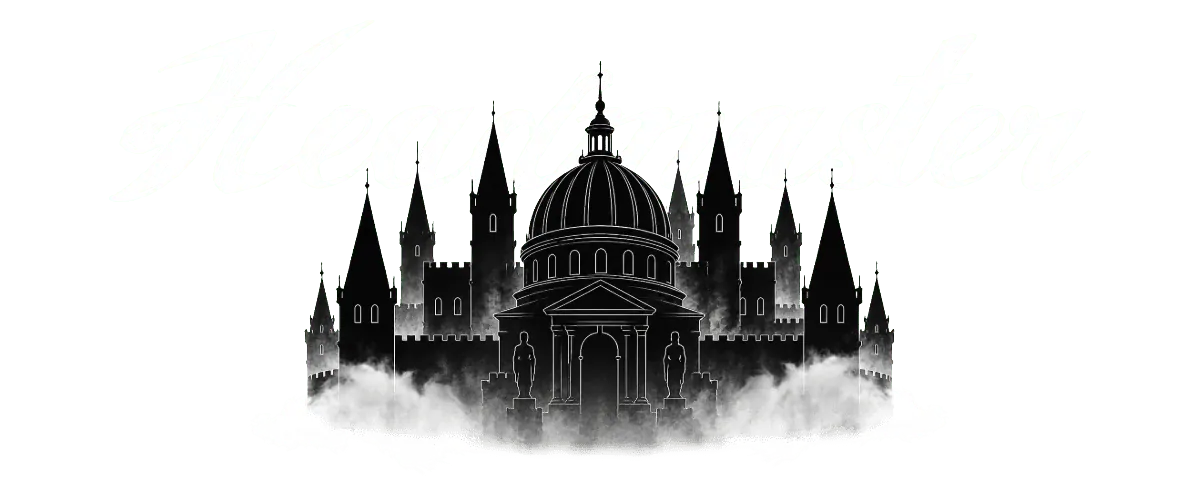
Due to the many stages of expansion over the decades and centuries even, Ilvermorny castle is a bit of an eclectic mix in architecture. Oddly enough, this has actually worked to its advantage due to many settlers from the past coming from elsewhere in the world and making a new home in this new land. Various immigrants helped influence the many shapes and sizes that make Ilvermorny's silhouette so unique.
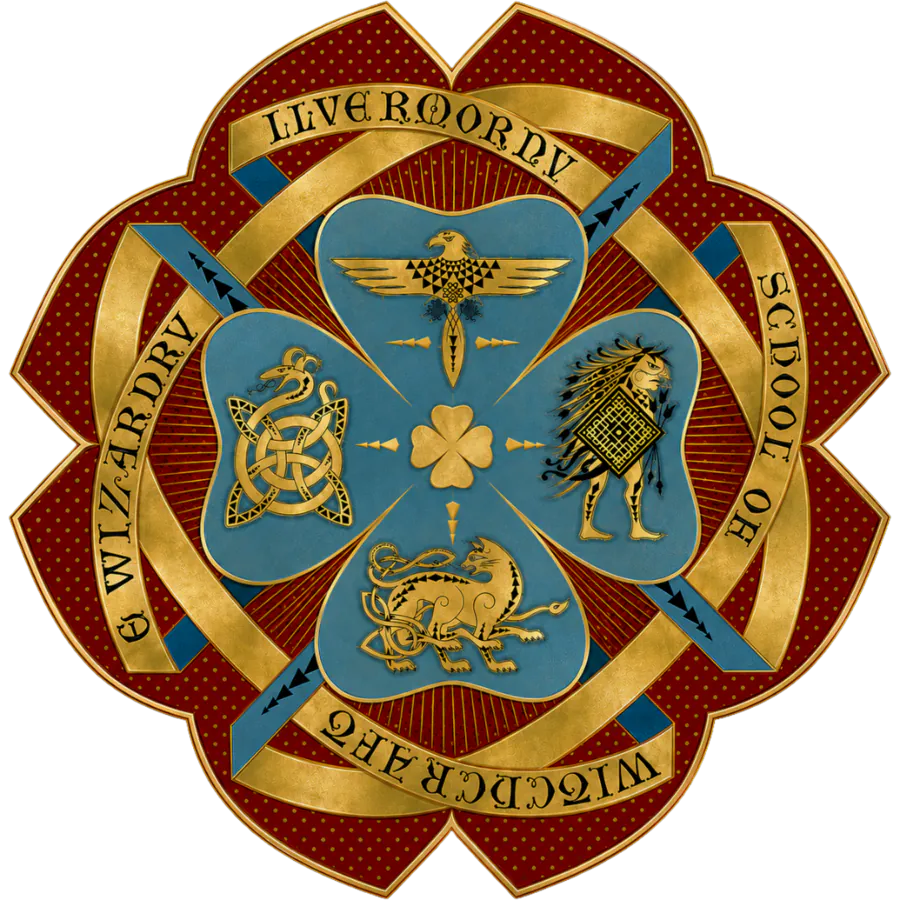
With more and more students streaming in, Isolt decided to have her own four houses to sort these different individuals in. She, her husband James and their two sons each chose a creature to represent their house. Chadwick chose the mighty thunderbird whilst Webster opted for the Wampus. Isolt chose to honour a dear friend, the Horned Serpent whom she still had regular conversations. James had a hard time finding something he felt fitting. After some debate, he proudly picked a Pukwudgie, like William, to represent his house.
Aside from their eclectic housing, Ilvermorny has its own way of handling wands. They in fact provide them within the school itself. Coming from a time when wand makers were not likely to make the trip west and overseas, there were frighteningly few who would be able to provide usable wands for Ilvermorny's first students. Isolt and James had made their sons' wands and would continue to craft wands until they could teach others to be their successors in the field. Regardless, Ilvermorny made sure to keep providing them to anyone attending the school. So none of them would be left without.
Due to Isolt's (at the time) unique approach to teaching magic and providing for everyone instead of the select few of the right blood. She built up her school with a reputation of the least elitist and most democratic of all the other famous schools spread across the globe. Even to this day, Ilvermorny stays true to Isolt's dream. And though things such as Rappaport's Law might have been counterproductive to this ideal, Ilvermorny will not waver. Along with a reputation, there was eventually a need for a uniform. Isolt kept things simple by opting for the colour blue just because she always wished she had been sorted in Ravenclaw house at Hogwarts. Cranberry was added as a secondary colour due to James's love for cranberry pie.
The train station connecting Mount Greylock and New York City was something that was added two centuries after the first house was built. Previously, news of Ilvermorny would simply be passed in conversation. You had to get lucky to catch news of this magical place. Eventually, Isolt managed to once again mimic Hogwarts' procedures and have owl sent out to bring magical children their respective invitations. With more invitations going out, there were more students coming in. At some point, Ilvermorny had a troublesome year keeping its location hidden with a large stream of students marching on to Mount Greylock. This is when it began construction in the 19th century to connect the school with New York City. With the invitations, students would have found a Gordian knot and been ordered to bring it with them. Once in New York, they be able to access a secret platform that would send them to school via train, in a little over five hours, they'd arrive at their destination.
Traditions
Ilvermorny has a couple of traditions that help to bring the community together and remind them of how the school started. Within their opening ceremony welcoming old and new students they actually do a land acknowledgment of the Native people that once occupied the land that they’re now on. They had an influence on the school at its start, and the school continues to honor them as much as they can. In the later half of the year they have the biggest event of the year which is, a school-wide field day. This is one of the only events that they are separated by house to compete. There is an opening ceremony that mimics the Olympics, with various clubs performing on the first day. The next week there are limited classes, and there are many competitions that take place. While there are various activities that take place otherwise, the competitions are broken into four parts, representative of the houses.
ReducioThe MindThe Body
- Arithmancy Achievement Tournament
- Duelling Competition
The Soul
- Transfiguration Tournament
- Quodpot
The Heart
- Excellence in Runes Cup
- Xylomancy Reading
Other Activities
- Excellence in Potions Cup
- Care of Creatures Competition
- Sports (soccer, flag football, baseball, basketball)
- Escaping a Maze
- An Art Tent (tie-dye, painting, drawing, chalk on a designated wall on the stone castle, face painting)
- Bubble Blowing Area
- Obstacle Course
- Water Balloon Toss
- Scavenger Hunt
Clubs
Due to the school's unique position and the melting stew that is its student population. It has grown to develop numerous clubs both public and very secretive that encompass the varied beliefs, religions, ideologies, and common goals of the many unique students and culture that make up the institution. Many of these clubs were started in the first few centuries of the school's founding with some of the more influential and secretive ones being founded within the last century and a half.
Along with clubs, Ilvermorny is a bit unique with its sports culture. There are many sports clubs at the school along with their main Quodpot team and Quidditch team respectively. Along with the magical sports there are many muggle incorporated sports as its believed that a good wizard should know at least a little about the muggle world. The school also holds to the doctrine that a healthy body equates to a healthy mind and sports clubs help facilitate this nicely.

Chadwick Boot,
Webster Boot,
Rionach Steward,
Seraphina Picquery,
Porpentina Goldstein,
Queenie Goldstein

Like Hogwarts, children are accepted into the school once they turn 11 years of age. School starts between the end of August and the first days of September. After receiving their acceptance letter the prospective student is to gather their necessary schooling supplies and fly to New York City. Children all over North America are accepted into the school.
Obscured and kept well-hidden from prying muggle eyes by numerous heavy magics and enchantments is a secret platform. In order to access this secret platform students will need to keep their acceptance letter and the Gordian knot pendant that will grant them access to the platform and school itself. Where all students will take an underground train to Ilvermorny. Disembarking all first years will be greeted by a small group of Pukwudgies who will lead them up through the lower parts of the school and into the entrance hall where they will be sorted.
There are four houses at Ilvermorny: Horned Serpent, Wampus, Thunderbird and Pukwudgie. When a student starts their education at Ilvermorny, they step onto a Gordian Knot on the floor in the center of the entrance hall with large wooden statues of the mascots for the four houses facing them. The carved statues react if they want the student in their house. The older students watch in silence from a circular balcony on a floor above them as the new students are sorted. The carvings react in different ways: the crystal in the Horned Serpent carving's forehead glows, the Wampus carving roars, the Thunderbird carving beats its wings, and the Pukwudgie carving raises its arrow.
However, sometimes more than one carving will try to select the same student, so the student is then able to choose the house they prefer. This happens very rarely. Sometimes — as rare as once a decade or even a generation as in the case of one student — a student will be selected by every house.
Since the repeal of Rappaport’s law some students choose to pick their wands from one of many wand stores across North America. However, many students attending Ilvermorny choose to take part in the famous tradition where after the sorting ceremony is completed. Students are led into the wand hall, where a Pukwudgie (the creature) will take a student’s hand to one of many tables inside the hall.
They will then go to one of the shelves that line the entire perimeter of the hall and choose a wand they feel fits the young wizard. They’ll ask the student to try some things with the wand and if it does nothing or there is an undesirable effect from it. The Pukwudgie will take the wand and bring the student a new one, repeating this process until the right wand has chosen the student. At which point the Pukwudgie takes the student back to the group of first years and picks another to repeat the whole process.
Due to the history of the school and its diverse background students at Ilvermorny have a unique opportunity to take a vast array of courses. The first four years students take a number of core classes like Transfiguration, Herbology, Charms, Defense Against the Dark Arts, and several others.
Additionally, because of the school’s location, and very diverse student population many of whom are bilingual. There are several language classes offered that students can take as an extra elective. Parseltongue is one of these counted languages as it is more common at Ilvermorny, given the school’s history and frowned upon less. As a result, several hybrid courses are offered for those students interested.Going along with those language classes are other more, unique classes that go into the more intricate and finer details of magic in relation to varying religious practices, beliefs, ideologies, etc. These classes are pretty popular among the younger students and are offered as solely elective classes or ones a student could take for extra credit.
For the entirety of their 5th year students are prepping for their ADAPTs, or Absurdly Difficult Advanced Placement Test. These sets of exams which have a number of focuses are the single most important exams of a student’s career. As many future employers and potential internships weigh ADAPTs heavily on a student’s acceptance. These exams also determine which of the advanced classes at Ilvermorny a person is able to take.
For example, if someone wants to focus on being a healer then they would take a number of ADAPTs related to that focus. At the beginning of their 5th year students meet with their counselors, usually their HOH to discuss what career path they would like to go down. Based on that meeting and sometimes sets of meetings a student will study to make the required set of grades on several ADAPTs. In addition, ADAPTs help students get the necessary internships for specific jobs as most internships base their decisions heavily upon the score of someone’s ADAPTs.
When students graduate, they already have the necessary experience to enter a wide spectrum of jobs and in some cases their internships will turn into a full-time apprenticeship or job after graduation. Armed with diverse knowledge and the resolve to succeed it is no surprise that all who graduate from Ilvermorny are a formidable Bunch.
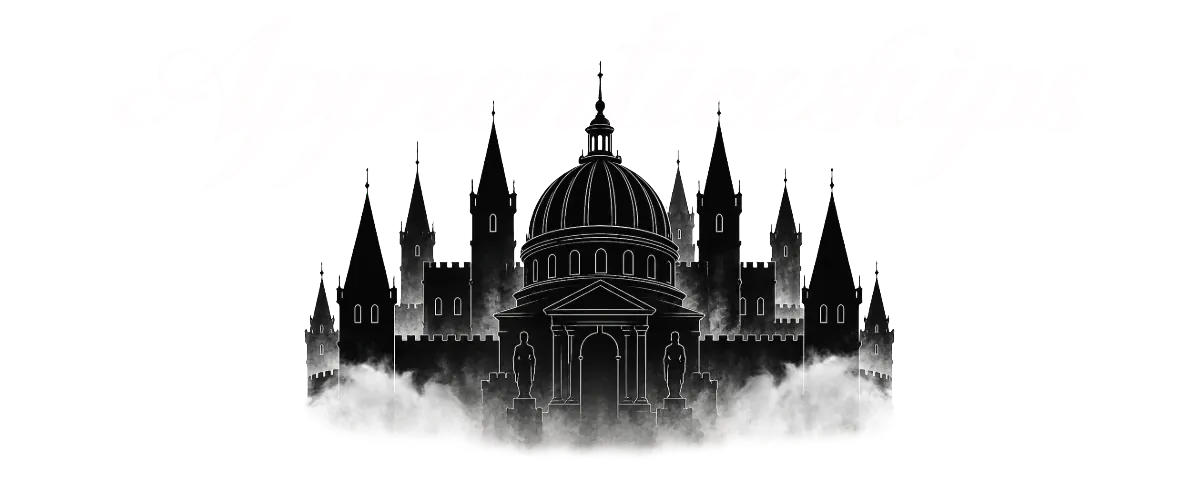 APPRENTICES OF THE MIND & SOUL
— favoured by Horned Serpents and Thunderbirds
WANDMAKING
Ilvermorny stands to this day as a pillar of the development of wizarding society in North America. With the arrival of its founders, it brought various key crafts that now form the indisputable heart of the institution's legacy. Most notably ingrained in Ilvermorny tradition, wandmaking remains a trade boasted by the school's Wand Forge and extensive collection of in-house magical apparatus. From the very first wands whittled by Isolt Sayre and James Steward, harnessing a sliver of the Horned Serpent's horns, Ilvermorny's wandcarving traditions are now revered across the globe.
The lush, biodiverse habitat of Mount Greylock shelters a vast array of magical beasts, each species able to provide mighty cores for Ilvermorny's wandmakers. With a joint effort amongst the Magizoology staff and the smiths down at the Forge, these beasts are tended to, pampered and protected from poaching, while cores are obtained freely and humanely. These furs and feathers are not only used at the esteemed school, but are also shipped to various wandmakers worldwide who wish to challenge themselves with potent American beasts and their magical properties.
Students who elect to take on extra study at the Wand Forge, apprenticing under Ilvermorny's in-house smiths, will be able to RP mastering both proper creature care and wood carving. Participants will attend additional sessions on top of their ordinary classes, partnering with the Ecology students at times. These apprentices can RP learning and attending to the needs of the magical wildlife of Mount Greylock, as well as caring for their environment. This of course entails learning how to responsibly and respectfully harvest core materials without disturbing our beastly counterparts. Additionally, sessions spent under the guidance of Ilvermorny's Head Wandsmith will equip students with the skills to safely harness cores, imbue woods with their magical properties and safely encase and engrave them. Apprentices may RP entering the school's elusive Wand Forge, forbidden to all others.
Wandmaking students may also RP acquiring the following abilities through this course (still following the average rules on ability acquisition): Wandmaker, Advanced Casting, Prodigal COMC Learner, Restricted COMC.
ILVERMORNY-KOLDOVSTORETZ WANDMAKING INTERNSHIP
Koldovstoretz, the wizarding school spanning across Eurasia, harbours a similarly bold reputation. With its Wand Wood Grove making up a significant portion of the world's exports in wand woods, wandmakers flock for a chance to carve with the school's quality materials. Students who get the opportunity to shadow the wandmakers of Ilvermorny or tend to the Groves of Koldovstoretz are rumoured to be set for the rest of their careers in wandmaking.
Students who take on this challenge will be also eligible for the Koldovstoretz Exchange Programme, where students from each school may choose to travel to their sister institution for the Spring Semester (January-June). During this time, exchange students will explore the discipline of wandmaking in a new cultural light, now with an in-depth knowledge of both wand woods and cores. Students may participate in this programme a total of two times during their seven-year tenure. This allows a user to RP at Koldovstoretz from January to June of the year they apply for the exchange programme. Exchange students will not be able to RP in their home school during the spring semester.
MAGICAL POLITICS & LAW
Once a playground for some of M.A.C.U.S.A.'s most renowned members, Ilvermorny prides itself on raising the leaders of the future. Generations of alumni have gone onto alter the political landscape as we know it, from passing and repealing legislation, directing law enforcement, to representing North America on the world stage. Recognising the academy's profound influence over these positions, so too must we acknowledge the responsibility that accompanies it. As such, the introduction of the new Magical Politics and Legal Studies Course was established to ensure students are not only prepared for the greatness, but dedicated service to the wizarding community.
Students enrolled in this course may RP attending additional lectures and participate in mock trials and debates on key legislative decisions with the school's Politics Professor. Apprentices of Politics may receive an exclusive invitation to a field trip of M.A.C.U.S.A. facilitated by Headmaster Piecyk. These students may also present assemblies to the rest of the school population on issues of school governance, and form a de facto student government, liaising with the Headmaster on the needs of the student population.
Politics students may also RP acquiring the following abilities through this course (still following the average rules on ability acquisition): Charmer, Fearless, Foulplay, Impartial, Prodigal History of Magic Learner, Restricted History of Magic.APPRENTICES OF THE BODY & HEART
— favoured by Pukwudgies and Wampus Cats
HEALING & MAGICAL ETHICS
Personally overseen by Headmaster Piecyk, the addition of the school's new Healing Course appears to be a particular passion-project of his. Believing staunchly that, before entering the big bad world, students should be well equipped to deal with medical disasters, Piecyk collated an intensive but rewarding course to nail down all the essentials. From magical to mundane maladies, to using potion treatments and proper spells, apprentices of this course will emerge with a strong stomach and thick skin. To accompany their medical learning, Piecyk supplements their studies with an understanding of the philosophical questions of magic; 'How can magic coexist with freewill?' , 'To what extent can we consent to being subjected to spells?', 'Does everything need to be healed with magic?'. Those with inquisitive minds and altruistic intentions will thrive under the tutelage of Arkady.
Students of this course will be able to RP attending practical lessons and lectures on magical healing, as well as being in charge of maintaining potions stores and student-led Apothecary. This involves harvesting ingredients from the gardens, restocking the student shop and brewing potions for responsible use. Apprentice Healers may also RP shadowing the school nurse and dealing with minor injuries of their fellow pupils. Those feeling a bit braver may also explore RPing on weekends at the local town's Apothecary and Medical Ward, another area exclusive to them.
Healer students may also RP acquiring the following abilities through this course (still following the average rules on ability acquisition): Restricted Potions, Potion Mastery, Prodigal Potions Learner, Healing Sage, Rapid Reviver, Paragon of Health, Death Defiance.
ECOLOGY & CONSERVATION
Caring for Mount Greylock is part and parcel to being a student at Ilvermorny. The students enjoy the ability to venture into the woodland areas, knowing they will be kept safe by staff and the Ecology Apprentices. The school survives off of the bounty of natural resources provided by the mountainside, as well as enjoying the beauty of its endemic plant species, magical and mundane beasts. In order to enjoy these privileges, the school instills in its students at a young age a sense of duty and stewardship, giving back to the mountain and its inhabitants whenever possible.
Students of Ecology & Conservation may RP attending classes and lectures on how to properly tend to the native flora and fauna of Mount Greylock. These students are tasked with tending to the school's gardens and surrounding forest areas, as well as seeing to injured wildlife that stumble upon Ilvermorny's front doorstep. The stables also fall under the jurisdiction of these apprentices, who often partner with the apprentices of wandmaking to harvest cores safely and feed the local beasts. Think of these students as novice park rangers, with free reign over more restricted areas such as the Wawatesi Forest.
Ecology students may also RP acquiring the following abilities through this course (still following the average rules on ability acquisition): Beast Master, Non-Human Enthusiast, Prodigal Herbology Learner, Prodigal COMC Learner, Restricted Herbology, Restricted COMC
 ARCHITECTURE
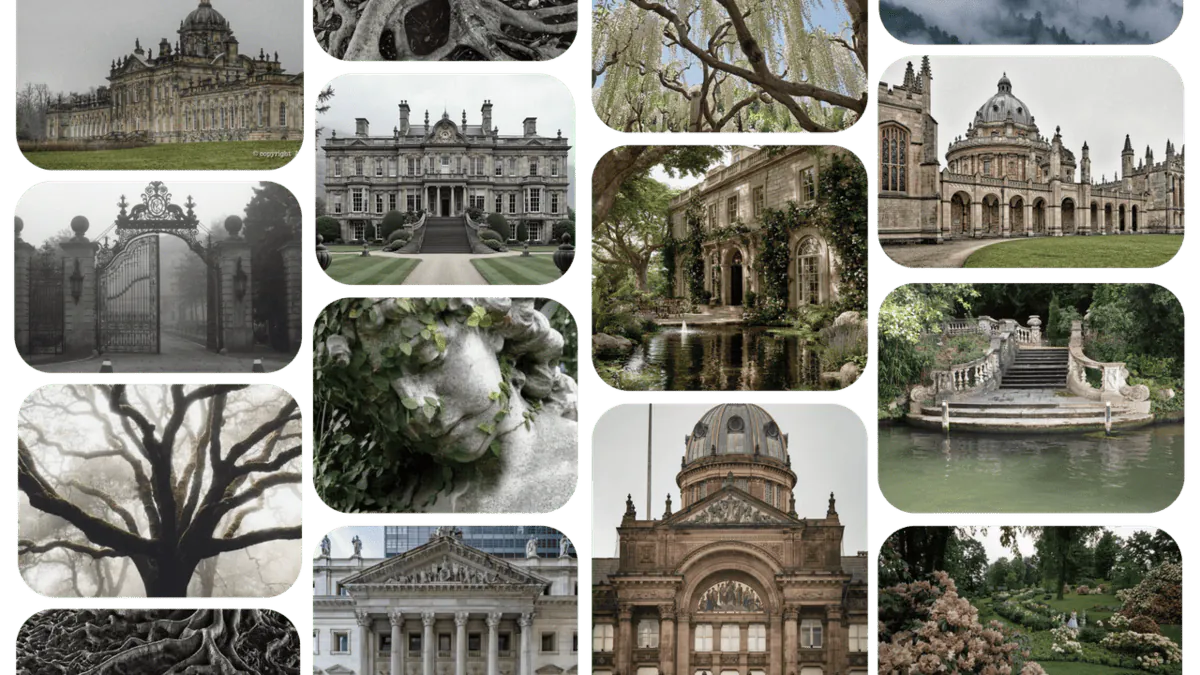
Ilvermorny castle is situated at the peak of Mount Greylock, Massachusetts, a misty mountainous region known for its rich history and dense wilderness. To unsuspecting No-Majs, the school is concealed in an impenetrable fog; attempts to enter it are futile, as No-Majs will find themselves wandering in circles until they are back where they started. Non-magical technology such as GPS devices will be of no help either, as they conveniently lose signal or go haywire upon breaking the mist.
Despite the castle’s dominating heights today, Ilvermorny Castle had the humblest of beginnings. Once Isolt Sayre and James Steward’s quaint little granite-stone cottage, the school developed over time to accommodate its growing student and staff population. The institution was born in 1627, expanding in size well into the late 1700s, resulting in an amalgamation of architectural styles. In a way, the school’s eclectic appearance symbolises the young beginnings of America and how it evolved as settlers and natives came together to influence the style of the building. The castle can hardly be called such a thing, as medieval castles were largely endemic to Europe. Instead, Ilvermorny took inspiration from Restoration style mansions and chateaus, soon incorporating the iconic Federal look American institutions are so well-known for. The dome building at the very centre of Ilvermorny features aspects of Greek Revival styles, with pristine marble columns holding up its roof. The school is truly a calico of sorts, incorporating red brick, granite, limestone and marble in a striking dance of colour across its towers and turrets.
Some of Ilvermorny’s most distinctive iconography greets you as you approach its iron gates. Firstly, an ornate Gordian Knot lays forged in gold upon the front door, creating its handles. To your left and right, you will also be welcomed by enormous marble statues of Sayre and Steward, lovingly decorated with ribbons and flowers from students paying their respects. The buildings themselves are covered in protective creeping ivy, an ode to an old Appalachian superstition, as well as the scent of burning lavender and rosemary. Above the door, eagle-eyed students will spot a horseshoe hammered into the wall.
The grandeur of the school is enriched by the trees, shrubbery and flowers that decorate its perimeter. Often you will find evergreen mayflowers showering the lawns even outside of the spring-time, a symbol of the state of Massachusetts closely associated with Isolt Sayre herself. In the months of March to May, the gardens bloom with daffodils, tulips and Arnold Arboretum lilacs. In the summer, hydrangeas and dahlias appear in great numbers. Finally, in the fall, Ilvermorny is in peak dahlia season with chrysanthemums as far as the eye can see.
A particularly unique feature of the school is that amongst the ivy and unassuming mundane plants, magic takes root in the very bricks and foundations of the castle. The Snakewood tree, infamous as the offspring of a wand once belonging to Salazar Slytherin and Isolt Sayre, sits in a special grove, nestled in a quad amongst the school buildings. Its roots spread deep into the ground, engulfing the mountainside and the castle upon it. In a few places, you may find roots breaking through walls and weaving itself amongst tiles. Around these areas, some report experiencing strange influences on their spellcasting – some say the roots subdue the effect of spells, while others claim it has explosive effects on spell output. Possibly the most common occurrence around these ‘leylines’ of sorts is hearing faint whispers of conversations past. Love confessions, arguments and lessons can be retold by these wicked little branches; I advise being careful what you say around them.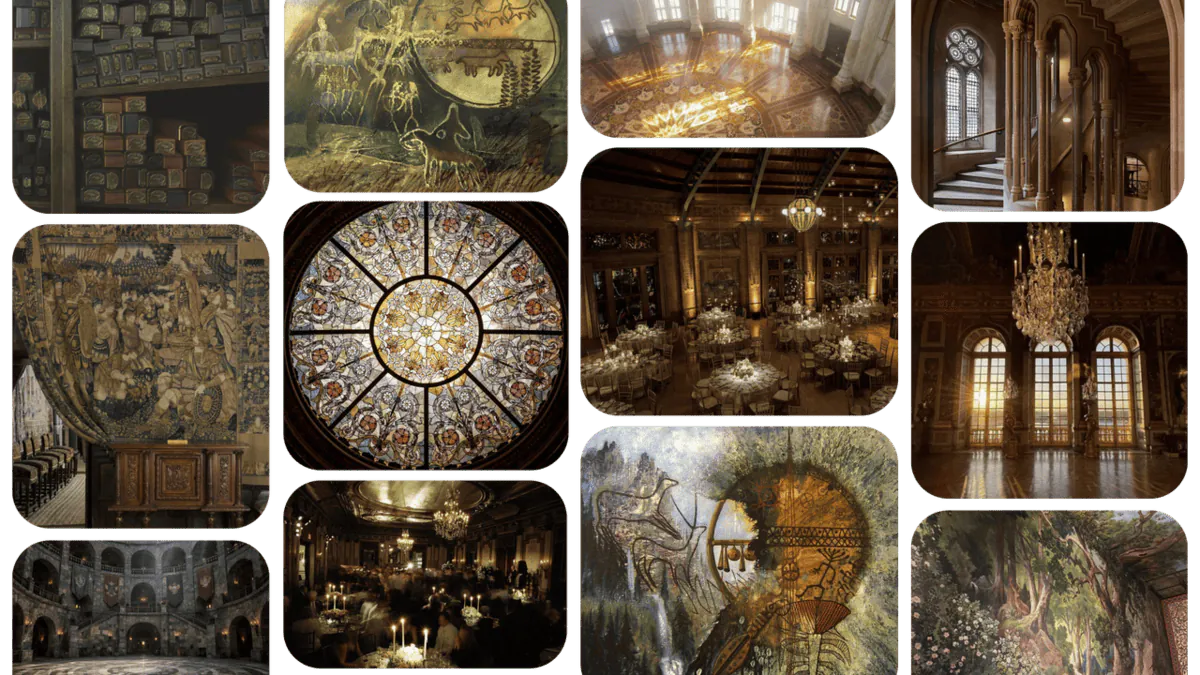 HALLS
HALLS
Upon entry, you will step foot into the Grand Chamber, a circular hallway with its distinctive dome-shaped ceiling. The panels of the roof can be charmed out of the way, revealing an intricate stained-glass cupola skylight to view the stars above. Whilst looking, you will also find a wooden viewing gallery in the upper perimeter of the Chamber, where curious students often frequent to peer at visitors down below. It is in this imposing room that the school’s prized Gordian Knot Ceremony takes place. From an aerial view, you would notice the mosaic tile floor also forms a knot of this kind, noted in Greek mythology to represent a seemingly impossible problem solved through a decisive or creative solution. Four wooden statues of each of the house mascots stand boldly surveying those who enter the castle, as if assessing their worth. A Thunderbird, Wampus, Pukwudgie warrior and a Horned Serpent lay stationary, striking fearsome poses. On either side of these statues are two doors, leading to two more sacred areas of the school.
Through the door on the left, you will find the Dining Hall, where Ilvermorny students will attend for meals and assemblies. The walls feature a panoramic mural of the legend of Ilvermorny’s birth, in a beautiful hand-painted explosion of vibrance. The hall is occupied with a huge number of round wooden tables, each surrounded by six chairs and adorned with a vase of flowers, napkins, plates and cutleries. Students enjoy their meals crossing between tables to speak to friends, always intermingling and creating new connections regardless of house or year. The faculty are seated at the head of the hall around a crescent table on a slightly elevated stage. This area is often used for speeches delivered from a lectern, choral performances and even assemblies put on by the students themselves.
If you take the door on the right, you will instead find the Wand Hall. Its heaven-reaching walls and high ceilings are impressive enough – but what really steals the show are the shelves that cover the place wall-to-wall. Each little cubby contains stacks of boxes, neatly arranged and gilded in signature Ilvermorny red, blue and gold. These boxes contain wands, hand-forged in-house at the school. Besides this, the room lays empty, save for a podium on a small stage at the centre, and rows of chairs in layers of circles around it. Here, many Ilvermorny students would receive their very first wand at the Wand Choosing. Though it is now perfectly legal for budding wizards to own their own wands prior to their induction, it remains a beloved tradition from MACUSA’s stricter days to wait until arriving at school to receive your first.COMMON ROOMS & DORMS
If you take a detour from the Dining Hall, you will find a corridor decorated with more dancing murals, this time of the house mascots chasing and flying around one another until you reach two doors. Behind them are the common room areas for students of all ages. The door on the left bears the crest of a Pukwudgie, encircled by a Horned Serpent, while on the right, the door is emblazoned with a Wampus
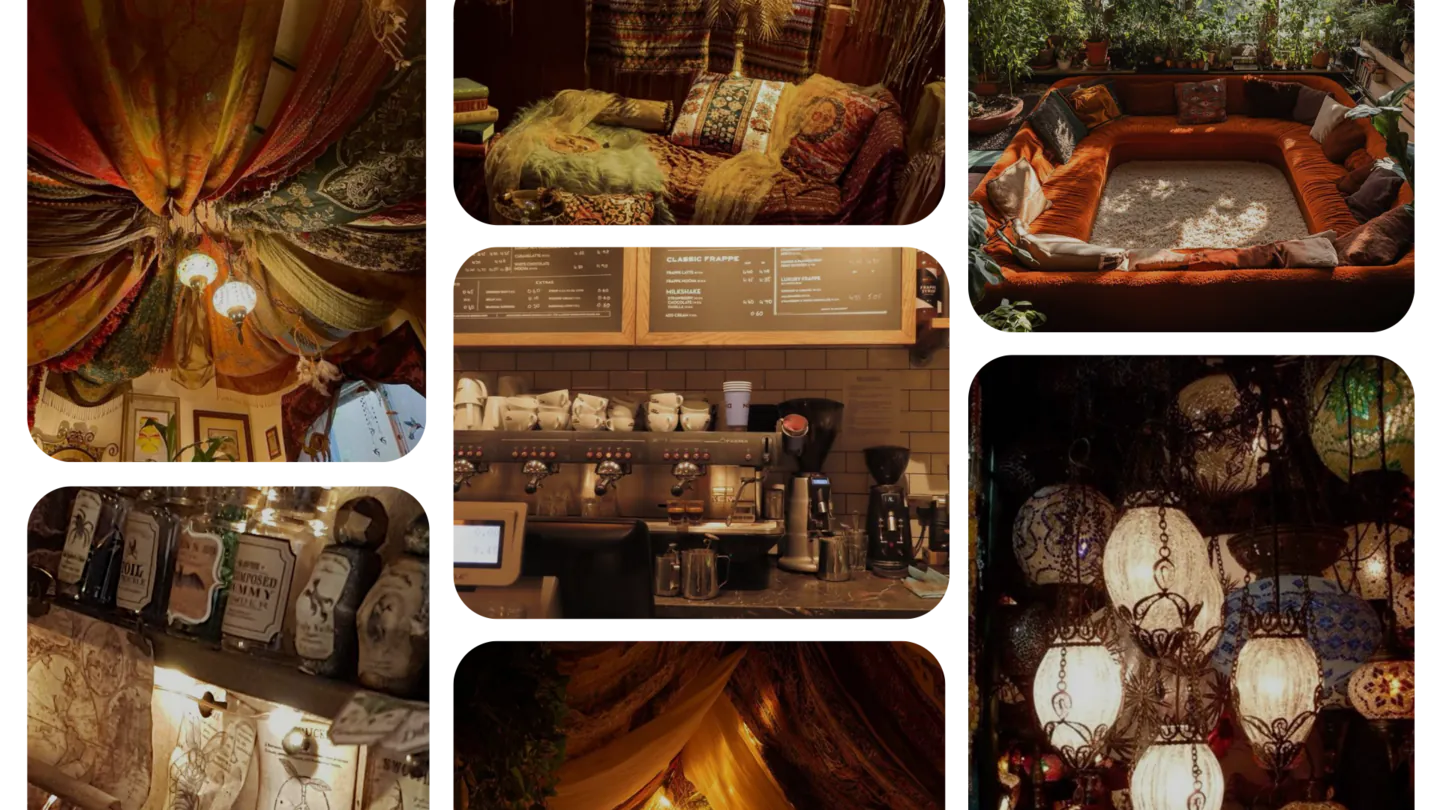
The Pukwudgie-Horned Serpent common room is an apt reflection of the houses’ ideals, offering a peaceful oasis for quiet conversation and relaxation. The centre of the room features a round conversation pit – the central circle being sunken into the floor with seating around the perimeter. The pit is filled with cushions and woven blankets, with a table at the centre for books, tea and snacks. The walls of the common room are decked out with bookshelves, filled with novels that tend to talk back. On these shelves, you can also find herbs, salves and potions, gathered by budding Pukwudgie healers; their candles and incense utilise some herbal magic, immediately soothing any who enter. In the corner of the room, you will find an enchanted bar with an interesting catch. Rather than serving alcoholic beverages, the station is enchanted to self-serve tea, juice, hot chocolate and coffee at the student’s request. Mugs float down from shelves on their own while an invisible hand of magic pours perfect latte foam art every time. The overall atmosphere of the room is hazy and comfortable, decorated in soft, warm colours. Draped from the ceiling, chiffon scarves form a tent-like roof in a burst of oranges and golds, while lanterns hang from above like stars floating down to grace the earth. At certain hours of the day, this room serves as a quiet area for students wanting to escape the hubbub of the rest of the castle. Students are usually very respectful of this rule; even the rowdiest of kids will find themselves wandering into the conversation pit for a moment of reprieve. During exam season, the room is especially popular, flooded with students of all houses helping one another out.
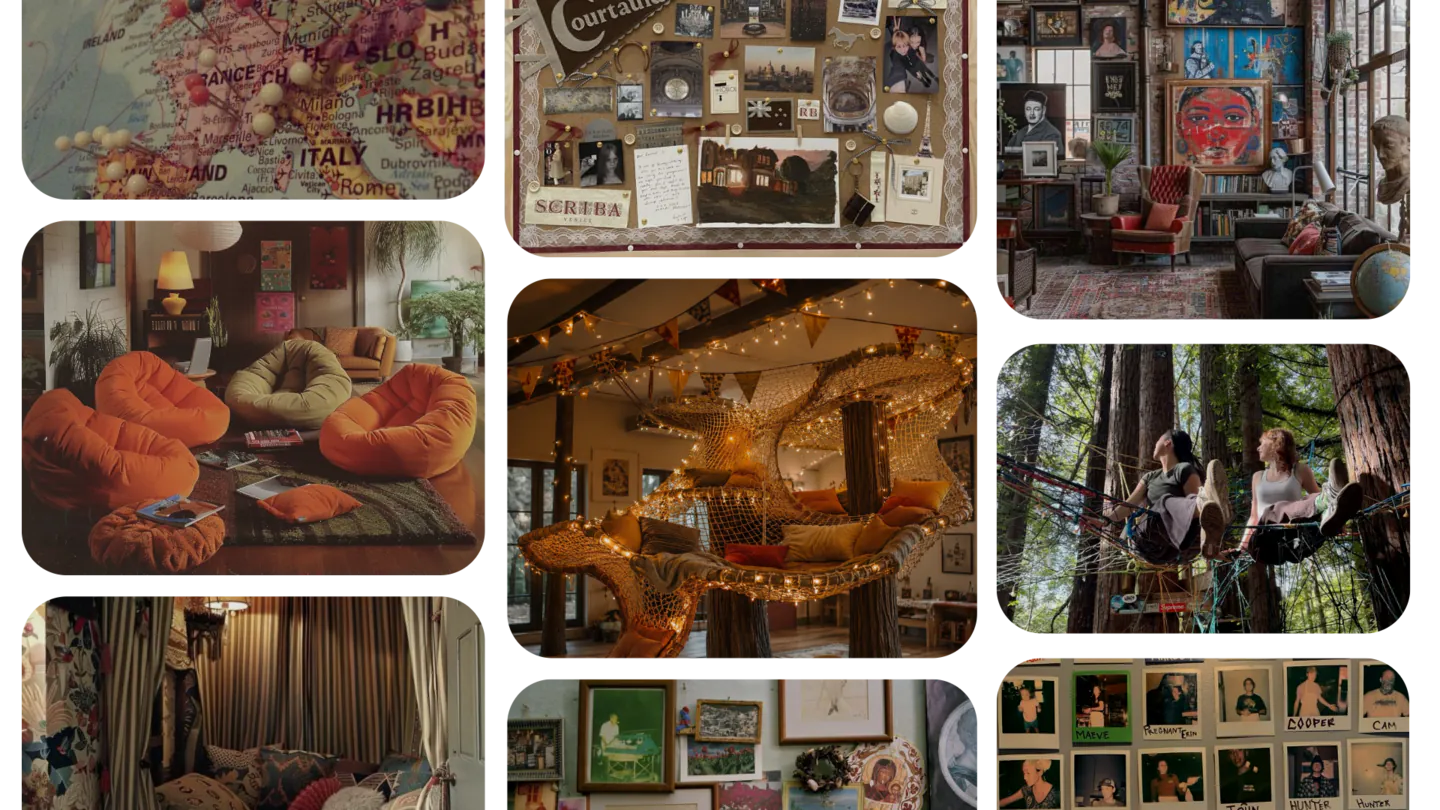
If, however, you are looking for a more social space, the door on the right holds what you seek. The Thunderbird-Wampus common room contrasts its sister-room with its bustling atmosphere and ceaseless conversation. Here, you will find students preparing for sports matches, intensely playing boardgames and lost in rapt debate. The centre of the room features an enchanted bonfire – it does not give off heat except in the cold winter months, but instead can be used to illustrate stories as they are told. The embers and flames love to add dramatic effect to idle chatter, changing colour and flourishing at the right moments. Dotted around the fireplace are a wide mismatched array of pillows, armchairs and beanbags, strewn haphazardly around as students tend to rearrange them when gathering with friends. For students with more adventurous spirits, keeping both feet on the ground can be a challenge. If you look up, you will find a rope net forming a second floor to the common room, strewn with blankets, hammocks and plush toys. To reach it, one must climb up a one of the rope ladders - or for the less athletic, find a magical solution. It is best to keep your wits about you in this area, as the students enjoy using the net as a jungle gym (or rather a trampoline). As for the walls, the Thunderbird-Wampus common room is home to an enormous collection of polaroids and framed photos, lovingly displayed across all four walls. The younger students tend to marvel at it during their first few days, excitedly pointing out famous witches and wizards who came before them. Students also enjoy the lofty storm windows, offering the best view of the mountainside. Finally, opposite the entrance, a large corkboard takes up a great portion of the wall. On it are numerous posters and pamphlets for events going on around school, the occasional plea to help someone find their missing belongings, tallies of which house is currently leading the Cup and class timetables. This room is the social epicentre of the school in many, many ways.
From these common rooms are the girls and boys dorms, which were separated by house. These were off limits to other houses as well as the opposite sex. Those that attempt to enter the wrong dorm are greeted with an invisible barrier that sounds an airhorn when breached. The dorm rooms themselves are fonts of unlimited creativity; students are encouraged to decorate them however they like. The only requirement is that they must share their dorm with at least one other student – a simple provision to encourage some healthy socialisation amongst housemates.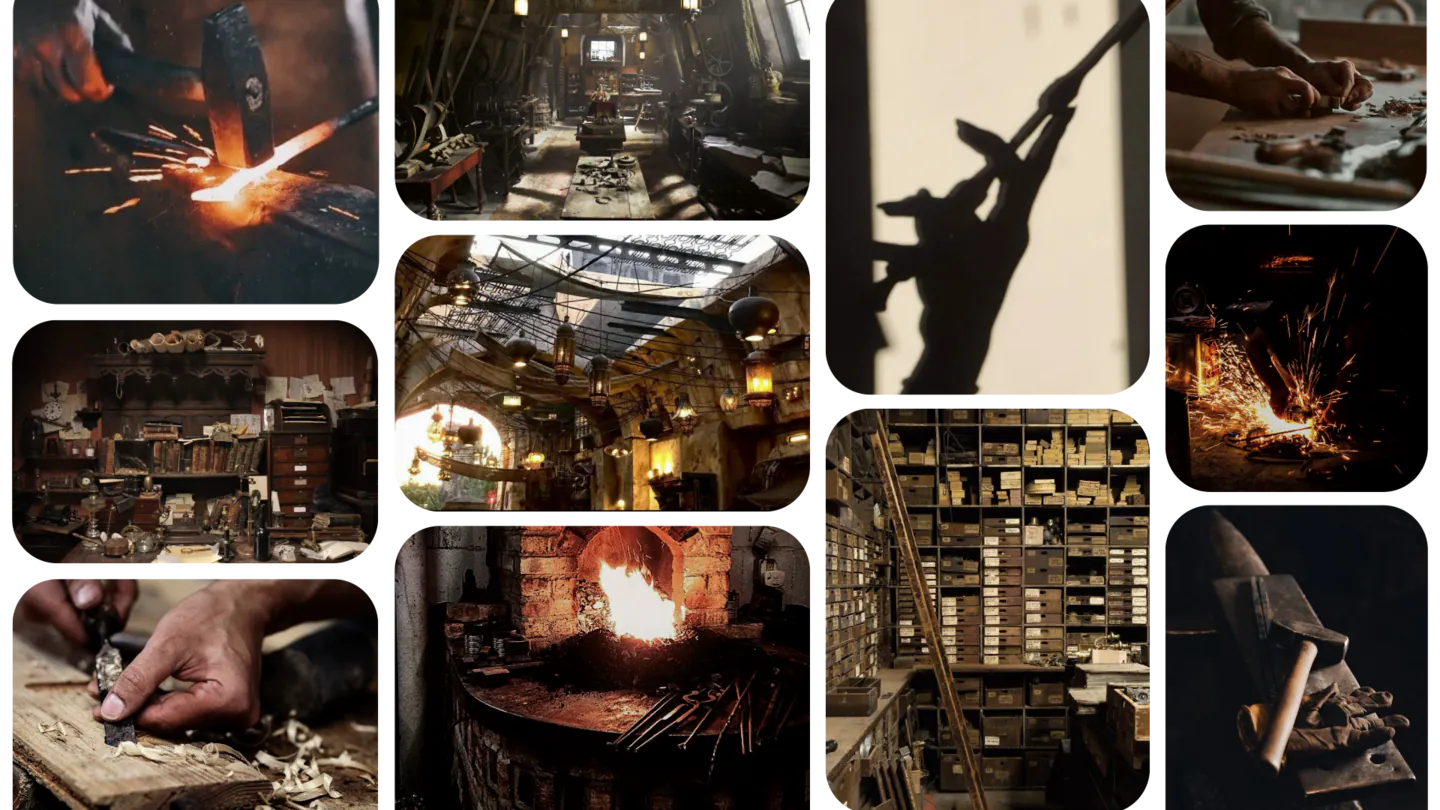 WAND FORGE
Taking a few steps back, let’s return to the Wand Hall. Off of this ceremonious building is a winding corridor that seems to stretch for miles. Many students and professors will take this route to their respective classrooms, never bothering to make it all the way to its dead-end. However, at the finish-line, you will find an imposing wood and cast-iron door, shut with an elaborate lattice of locking mechanisms. The iron unfurls like ferns over the entrance, and when opened with the correct passcode, they shrivel away as if shying from the light. Attempting to break in is futile, as the security system in place is truly impeccable; rumours spread as to what happens if you were to attempt it. Some say a chute opens up beneath your feet straight to the Headmaster’s Office. Others wager your prying hands are in for a worse punishment. As the doors open, you will immediately be hit with the smell of pine and a wave of heat. Inexplicably, the atmosphere seems denser, as if magic weighs heavier in the air here. This is Ilvermorny’s coveted Wand Forge, where esteemed craftsmen work tirelessly to whittle and imbue wands to bestow upon new students.
The workspace looks like an old blacksmithery, with staff wearing thick dragon-hide gloves and goggles, picking up volatile cores with safety utensils. The work they do is deeply fascinating to many of the students who wonder how the school possibly stocks the Wand Hall. Annually, a lucky select few students are permitted to shadow the wandmakers as they prepare for a new intake of first years. Some say that work experience in this forgery would have you set for life in the business of wandmaking. After all, the North American craft was born in Ilvermorny, by Sayre and Steward themselves. As Isolt Sayre travelled from Ireland, to England, to the States, magical society had not developed far enough to have established wand shops, apothecaries and more. The resourceful woman set up shop in her very own school and, with the help of her partner, they made wands for their children and their students ever since. Ilvermorny and Koldovstoretz together hold this esteemed reputation for artisan wandmaking, even entering into friendly business with one another. The forests of Russia are ideal for felling timber, while North America is home to a slew of unique and powerful magical creatures. The schools have recently been in conversation regarding an exchange programme for those students wishing to embrace this tradition and refine their skills abroad.
This unique history comes with some lovely school traditions. One’s wand is often regarded as an extension of oneself, and so many Ilvermornians choose to carve into their wands, embellishing them to better represent their owners. Older students may have important dates or tallies of achievements scored into their wands, while first years will receive theirs, pristine and untouched.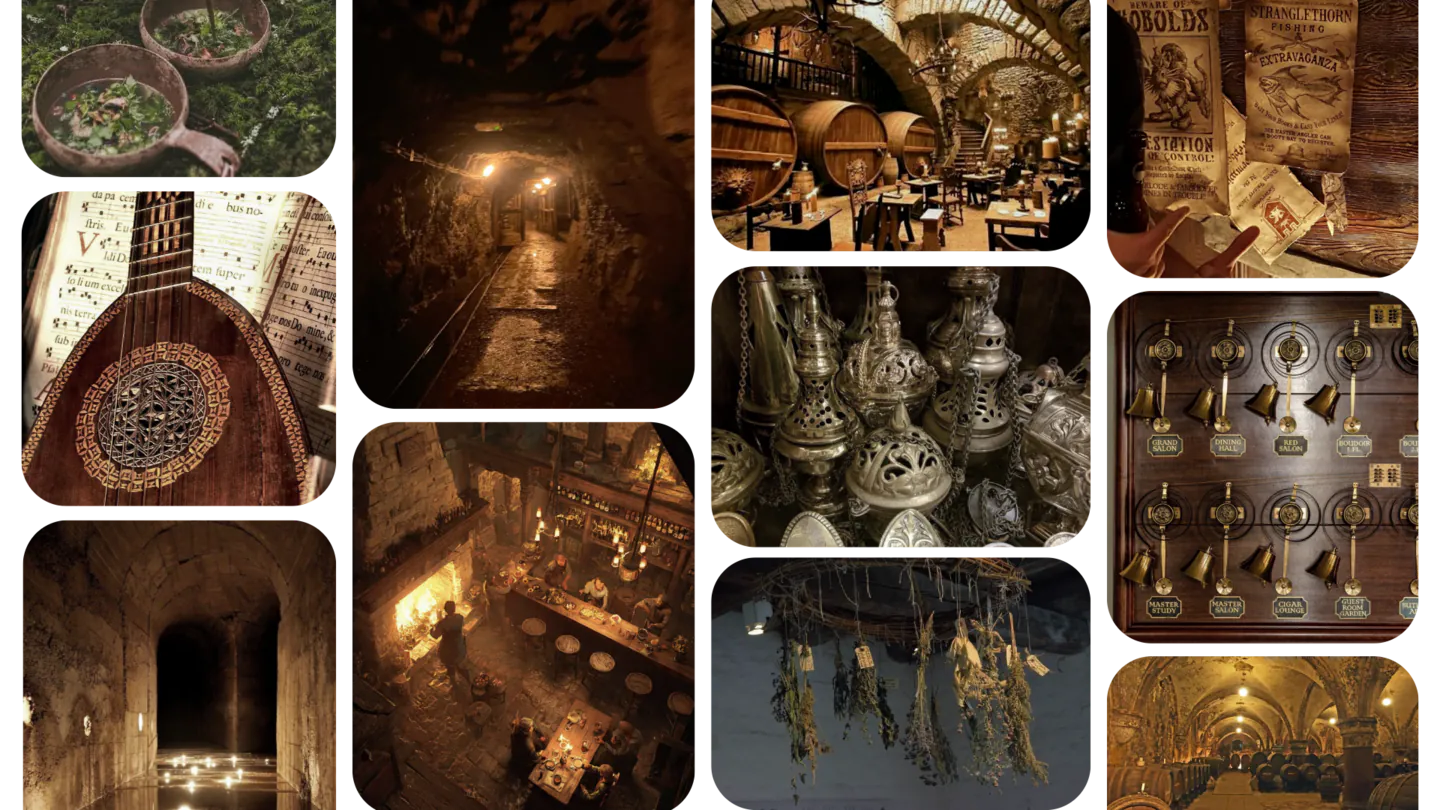 PUKWUDGIE TAVERN & NETWORKS
The Pukwudgies employed at Ilvermorny are a curious bunch. Despite their grouchy and reluctant temperament, as well as their obvious disdain towards humans, they keep the castle running of their own free will. Every day, they dutifully return to their posts as security and general staff of the institution, stubbornly denying any sentimental connection to the place. During their breaks and at the end of the day, many seemingly vanish into thin air. Magizoological research states that wizards do not fully comprehend the full extent of the Pukwudgies’ powers, though they are extremely potent and powerful. In Native American folklore, they are said to wield the ability to appear and disappear at will, to grow and shrink in size, and even to transform into animals such as porcupines. Now, all of this is neither here nor there, but one thing I can tell you, is that these creatures use their powers to access a whole parallel side to Ilvermorny Castle.
The Pukwudgie Networks, colloquially so-called by students and staff alike, are an intricate tunnel space leading to almost every notable area of the school. Pukwudgies are able to travel from one end of the castle to the other in a few minutes, bypassing all of the foot traffic humans must tolerate. Though no such map exists, some say the entire network forms an image of a squirrel. These beings are known to pop up around the school in the most peculiar places, from behind paintings to falling out of fireplaces. Now, if a human were to find their way into these networks, they would be forced to crawl on their knees and forearms, given the small stature of the Pukwudgie staff. Admittedly, there is no way to enter them, besides bribing a security guard while in a particularly good mood, or with the clever use of very difficult magic – either shrinking down to Pukwdugie size, or managing to Apparate between walls. Let’s just say, no pesky first or second years will be making their way into these tunnels without a lot of studying.
All of these tunnels eventually lead back to one place – the Pukwudgie Tavern. This vast inn serves as the recreational staff quarters for the Pukwudgies, undisturbed by irksome human children (and adults.) There is only one entrance, which is near impossible to stumble upon by accident. Disguised as an abandoned storage cupboard, boarded up with decaying planks, the door only reveals itself when knocked upon correctly, accompanied with a Pukwudgie folksong. If approached by an unwelcome human, the tunnels will seem to loop endlessly, until leading the intruder back to the public toilets.
The room is dimly lit by iron lanterns and candles, with low ceilings and rustic hand-made furniture carved from wood and stone. The air carries a penetrating scent of rosemary, thyme and gunpowder, and the faint sound of students’ chatter can be heard metres above. The walls are decorated with woven tapestries and wards made from sticks, herbs and twine, hung side-by-side with practical well-loved tools. Here, the hearth has burned for centuries, maintained by the older staff. Above the mantel, there is a system of bells, each connected to the dozens of rooms in the castle. When something is amiss, or needs fixing, the bell will give a polite ring until answered.
During their down time, the Pukwudgies are a raucous lot. Ilvermorny students learn very early on in their education that they have their own grumpy way of communicating, whether it be insulting one another affectionately or refusing kindness despite secretly treasuring it. The taverns are an amalgamation of this – alive with bickering and complaining about the children, folk music and gambling that no human would dare partake in. Possibly the most enviable thing about this place was the food. Thick mountain stews, smoked fish, root vegetables and strong berry ciders were part and parcel to the Pukwudgies’ diet. It was not fancy, but it was certainly fulfilling.
Once in a blue moon, a young student may find themselves in need of help from the staff, wandering the halls aimlessly, hoping for help to find them. If the student is particularly young and particularly helpless, a Pukwudgie may take pity on them and lead them back to the Tavern, offering to fix what has been broken and fill up their little belly before sending them back to bed. After all, if you need anything done whatsoever, you are almost always better off asking one of these fortitudinous beings than a professor.
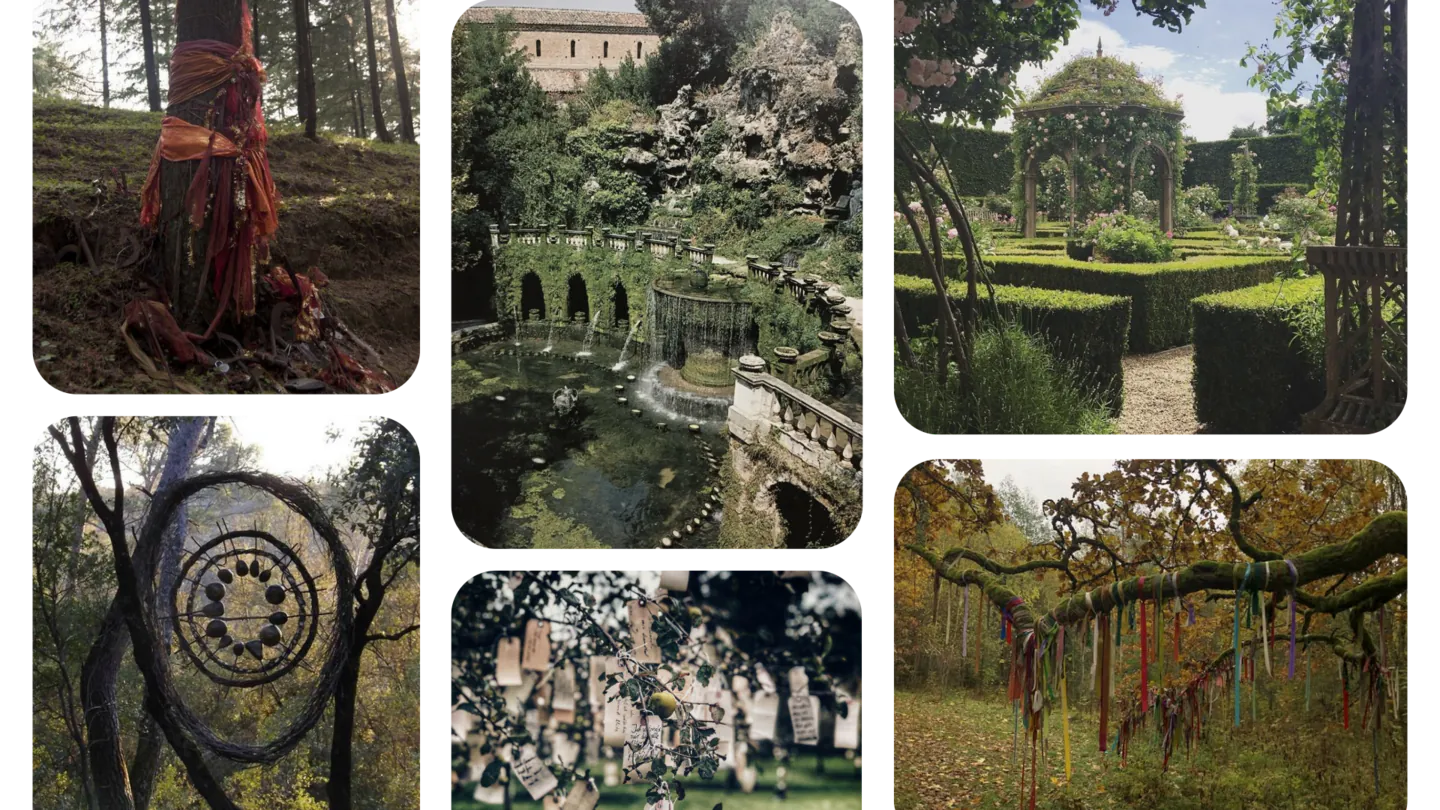 SNAKEWOOD GROVE
At the heart of the school in a garden quad nestled amongst buildings, the Snakewood Grove is a spacious oasis of greenery that holds some of Ilvermorny’s greatest stories. Legend has it that in her battle against Gormlaith Gaunt, Isolt Sayre buried her trusted wand at the centre of the gardens. The wand had once belonged to her mother, and eons before her, to Salazar Slytherin himself. From this wand, grew a spectacular Snakewood tree with potent magical properties. Its roots permeate the mountain itself, appearing interlaced with the bricks of the castle and even amongst the forest paths. They guide students home when lost, often surrounded by blossoming mayflower bushes, regardless of the season. Students warn newcomers of magical anomalies that occur in the presence of these ancient roots, from subduing or increasing magical outputs, to murmurs of voices from the past. Given the schools lack of ghosts and poltergeists, many conclude that it must be the tree playing tricks on its neighbours.
Beside this tree also stands the headstones of Isolt and James, laid to rest within the school they loved so dearly. Every year on the anniversary of her death and the creation of Ilvermorny there is a tradition of placing mayflowers on her final resting place, as well as decorating the enormous statues that greet you at the school’s front door. In fact, the tree itself is often seen decorated with multicoloured ribbons, crystals and scarves, hanging herbs and parchment paper with wishes inscribed upon them. Wind chimes and empty glass bottles dangle from its boughs, creating music and spots of colourful light when the elements hit them just right. It is believed that offerings to the tree will bring students good fortune for the coming year – a method of setting their intentions and welcoming goodness into their lives. First-year students are often led to the tree on their very first day to write their wishes for their time at Ilvermorny; many ask for close friends, academic success and fun, and often return at Graduation to retrieve their wishes, feeling fulfilled.
The garden surrounding the tree is, of course, as magnificent as its primary feature. Students, staff and Pukwudgies alike tend to the gardens in their free time, with benches, blankets and shade for recreational activities. Students sunbathing and throwing frisbees around was a common sight in the summery months, and in the winter, the place becomes coated in a delicate layer of snow, quickly disturbed by snowball tournaments and snowpeople. To the east-side of the quad, there is also an ornate stone water fountain, engraved with creatures of the forest and ancient warding symbols. In its depths, you can see iron Sprink coins covering the mosaics below.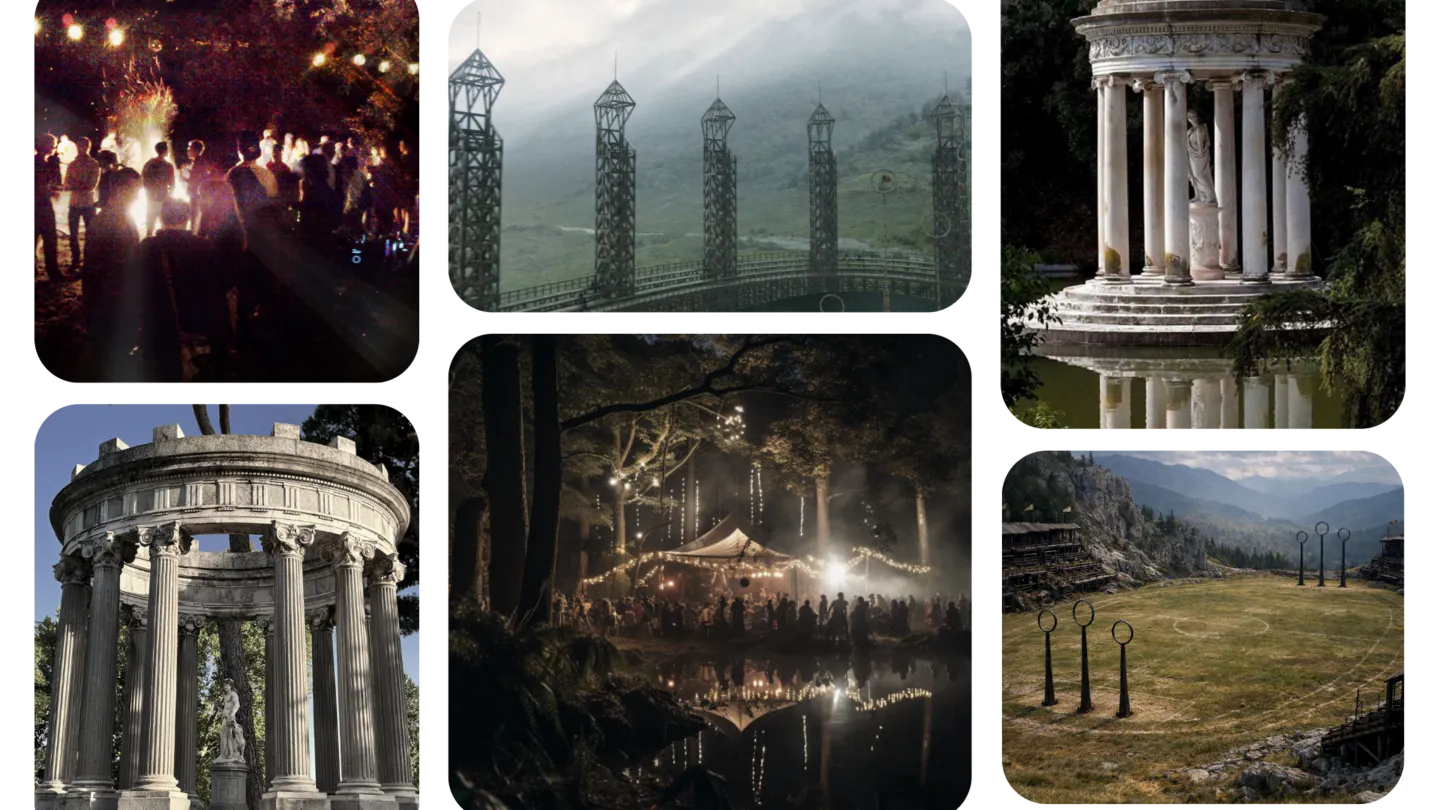 SPORTS PITCHES, BONFIRE GROUNDS & PAVILLION
Sports at Ilvermorny are vastly popular, with over half of the student population being involved or heavily invested in its teams and sports season. With such a riveting culture around competition, it is only natural that the school is home to some fearsome sports grounds. The majority of this greenspace can be found behind the castle. Easily, the two most popular sports are Quodpot and Quidditch, with two dedicated fields and spectating tents for each. These tents are 50ft high with tiered seating, making them ideal for keeping an eye on fleeting players on their broomsticks. Each tent has various viewing telescopes and are decorated in Ilvermorny’s signature red, blue and gold. Since the 1960s saw the repeal of Rappaport’s Law, Ilvermorny has also made a conscious effort to embrace No-Maj sporting culture. Though not nearly as big as the broom-sports pitches, students make frequent use of the school’s newer American football, basketball, baseball and ice hockey pitches (kept cool and frozen with Glacius charms).
Beside the sports grounds, is a beautifully ornate pavilion, where bands often play triumphant music at half-time. The pavilion also sees a lot of use across seasons for outdoor brunches and tea. Charmed to resist cold, wet and snowy weather, it remains cosy regardless of the elements. It also makes a wonderful spot to view the wildlife of the school nattering away.
Found beside this enormous green area, amongst a thicket of trees are the school’s bonfire grounds. Accompanied by the Minodeye Creek running past, this area features a large tent canopy and a bonfire pit. Decorated with fairy lights and fireflies, the tent features numerous pillows and beanbags for students to relax outside in the shade, while the bonfire pit is surrounded by benches in circled rows around it. Ilvermorny hosts termly bonfires here in the middle of the term, encouraging students and staff of all ages and all house denominations to sing, eat and chat. Pukwudgies particularly enjoy the opportunity to scare young students with faux ghost stories and cook delectable cuisines from the attendees’ home countries. Each bonfire ends with students, some eager and some more grudgingly, singing the school’s song, ‘O Ilvermorny Massachusetts’.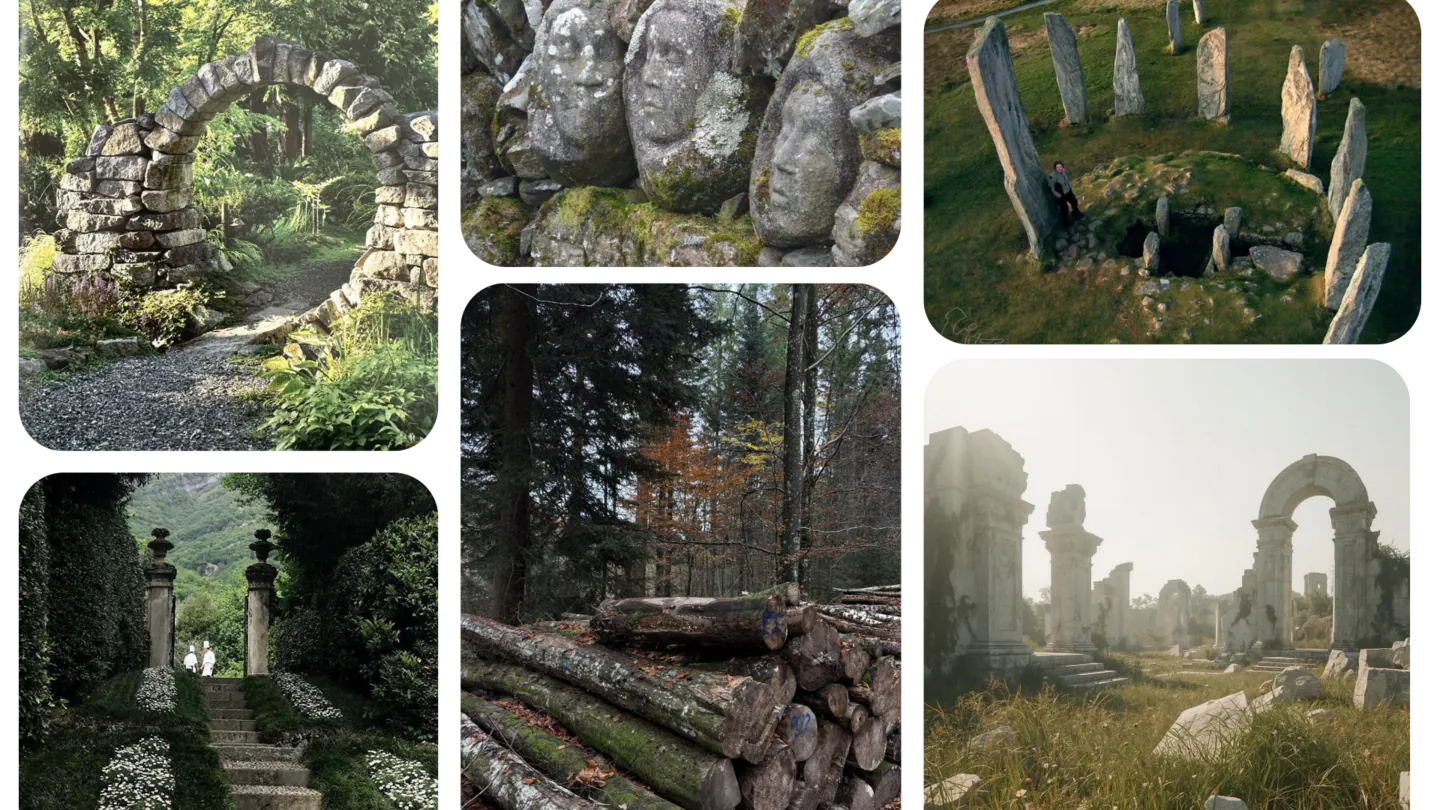 STONE & TIMBER YARD & DUELLING HENGE
Another sweet relic of James and Isolt's influence on the school, behind the castle you will find what was once James Sayre's stone-yard. Decorated with stone arches and cascading stairs, the area is used primarily for duelling. The ancient rocks have been rearranged into a narrow piste, surrounded by towering formations of rock, reminiscent of Stone Henge. Faint reminders of age old battles can be seen on the rocks' surface in the form of burn marks and gouges. When not being used as a stage for contests, the yard is often utilised to chop timber and collect materials for the Wand Forge.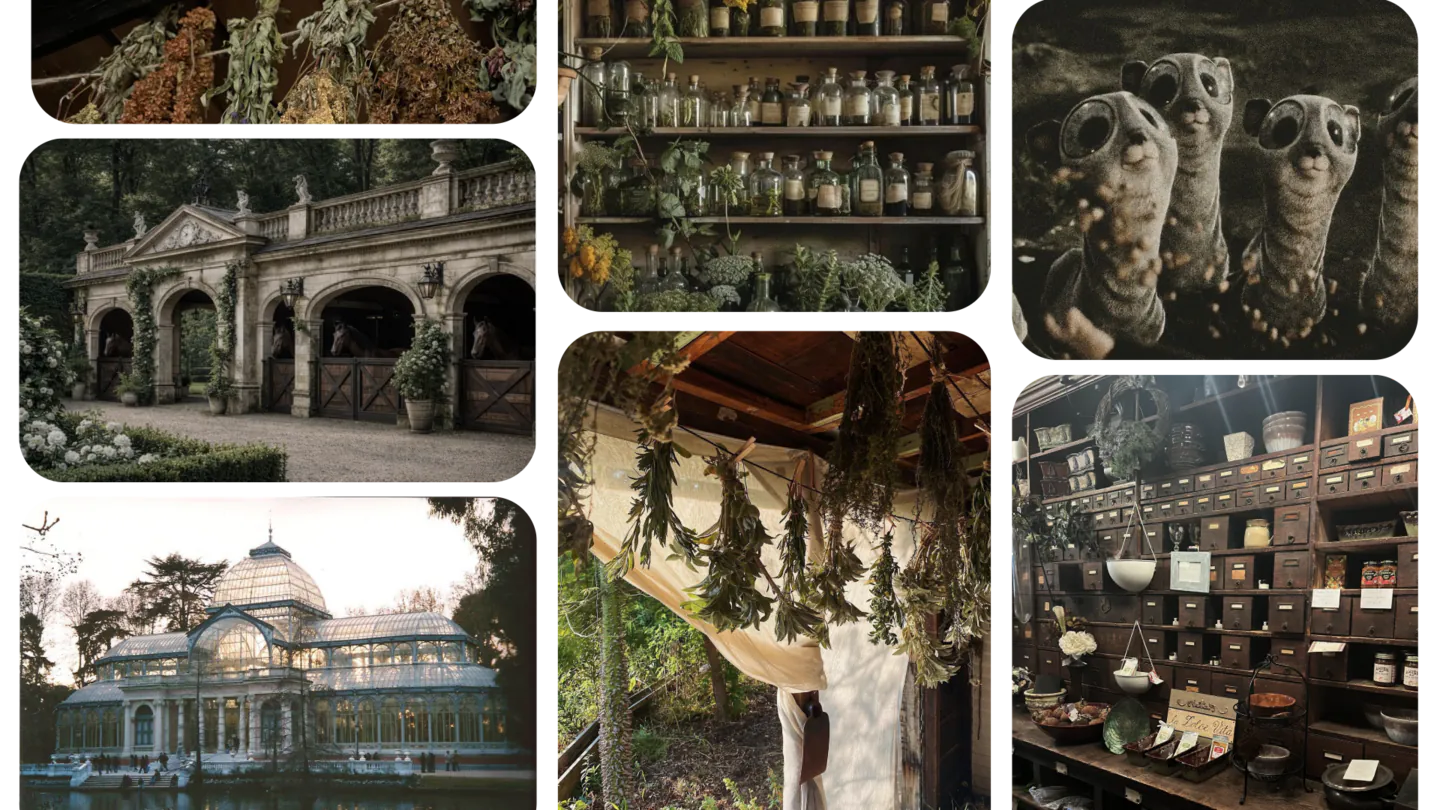 GREENHOUSE, STABLES & APOTHECARY
Ilvermorny prides itself on encouraging students to self-govern and help the school to run itself. Along with general chores, such as maintaining common areas and bedrooms, the students enjoy the duty of caring for the outdoor facilities. The oldest example of this tradition is the school's greenhouses and apothecary. When Ilvermorny's founders travelled from Europe and settled in Massachusetts, they established their own shops and resources from scratch. The towering greenhouses reflect the necessity for growing enough magical plants and herbs to sustain the entire school population. Students maintain the Potions and Infirmary stocks by harvesting these plants, also setting up a student-led apothecary, affectionately dubbed 'The Gordian Garden'. While meant to function as a real store, collecting money towards much-needed equipment and maintenance, it runs on a bartering system; some are known to trade favours in exchange for materials.
Beside the greenhouses, tucked away from the hubbub of the main school buildings, you will find the stables. North American is home to a slew of unique magical creatures, many of which feature as powerful cores to the wands made on site. The stable has some permanent residents, particularly creatures such as thestrals and pegasi needed to draw carriages, but it often functions more as a vet's office for creatures passing through. Students undertaking the Ecology Apprenticeship work as forest rangers part-time, caring for sick or injured creatures whenever they stumble close to the borders of the castle. Building a good rapport and trust with these beasts goes a long way, as their fur, claws or feathers can be used at the Wand Forge, freely given in a humane manner. WAWATESI FOREST
This dense boreal forest swallows the castle and its grounds, casting a blanket over most of the mountainside. The Wawatesi* Forest is home to a fearsome array of mundane and magical creatures, from wolves, lynxes and caribou to Hidebehinds, Snallygasters and Wampus Cats. Students are advised not to roam freely in the forest without sufficient magical knowledge or a forest ranger apprentice with them, but it is part of the school's philosophy that Ilvermornians should live symbiotically with the forest. The forest itself seems to appreciate this and, despite its cold, dark aura, offers protection to young witches and wizards. Fireflies, snakewood roots and mayflowers lead lost children back to the school grounds, while trees seem to move on their own accord, concealing students from danger. Whispers are often heard on the wind of old lullabies or soothing voices when sensing distress. Sprigs of herbs believed to have protective qualities, such as rosemary, emerge from the ground as if they had been there all along. Of course, don't mistake the forest's kindness for weakness; locals warn against pursuing shadows or mysteries deep amidst the boughs of the woods, as you will be sure to find something you'll wish you hadn't.
*Waawaatesi - Algonquian word for "Firefly"MINODEYE "SWEETHEARTS" CREEK
An old Appalachian wives' tale states that spirits cannot cross over moving bodies of water. Conveniently, the Minodeye** creek runs around the castle grounds, a large oxbow forming something of a protective barrier. The creek over time has garnered a rather romantic reputation, as students spend hot summer days playing in the shallow waters. Tire swings and stepping stones decorate the creek, with carvings of initials blessing the trees nearby and love-locks left on low-hanging branches. If you want to confess your feelings, or simply spend some quality time with your dearest friends, escape the confines of the school grounds and take a dip.
**Minodeye - Algonquian word for "Benevolent/Good-natured"MEEKHCHAUK CAVERNS
Before the days of Ilvermorny's birth, werewolves were elusive beasts that roamed free across the forest areas of Mount Greylock. They lived independently, unbothered though feared by native tribes that inhabited those same woodland areas. Treated as simply a part of the natural order of the mountain, indigenous communities kept close ranks and forbade werewolves from entering their towns, but altogether coexisted peacefully. As the first colonies settled in Massachusetts and made their way up the mountainside, they brought new Age ideals and culture. With them, so too came Europe's fear and disdain for werewolves, treating them as infectious, savage beings and culling their populations to make way for wizarding towns.
Over time, these ideals waned in popularity, being deemed barbaric under the modern light of day. While werewolves in their beast forms became fearsome and deadly, with little memory or understanding of right and wrong, their human forms remained innocent victims to their condition. In the late 70s, werewolf students began to be admitted to Ilvermorny, with the supervised usage of the Wolfsbane Potion. Then, werewolves were allowed to run free across the mountainside during their transformations, though this quickly proved dangerous for local communities, the mountain's ecosystem and the staff and students of Ilvermorny. With the influx of students, the number of werewolves across the mountain increased dramatically from near zero, to over a handful - a small difference with huge ramifications.
A solution was soon found with the uncovering of an elaborate cavern system beneath the mountains. Once closely guarded and hidden by local townsfolk to preserve the mountain's natural history, the school and its neighbours reached an agreement that the caverns should be utilised to protect these young werewolves and the people around them. Protection wards and enchantments were placed on the caves to both hide them from the eyes of No-Majs and protect the students that would reside there during the full moons.
These caverns, known as Meekhchauk*** Caverns, are a large system, which gives the students plenty of room to roam and have their own space while they undergo transformation. The network is extensive, but completely protected by runes and wards that are described to have an analgesic effect on the transforming students; by subduing the reckless nature of young werewolves, this prevents students from injuring themselves or other werewolves during full moons. Some note it also helps them sleep through their transformations. A clear stream runs through the main cave along with springs and various underground lakes, fit for bathing after long nights spent here. Moonlight bleeds into the caverns through skylights and holes in the walls. There are five known entrances to the caverns with differing accessibility for students' needs, allowing the wolf pups to get a taste of fresh air and light. However they cannot go far past the mouths of the caves due to the protective perimeter which repel them, a bit like a bouncy castle. Students are welcome to bring items for comfort, such as blankets and pillows, but there are food, drinks, blankets, extra clothes, and other such items stored in alcoves throughout the caves. They are also excused from class for the next day, should the full moon fall on a school day - catch-up sessions are organised by professors and student tutors if needed!
On full moon nights, at least two staff escort the students to the caves shortly before sundown, whenever that may fall, where they then give students their Wolfsbane doses. Once everyone is in the caves and accounted for, a staff member will activate the perimeter, which they will also deactivate the following morning before escorting students back. This perimeter covers all exits and ensures none of the transformed students can return to the school for the duration of their transformation, should things go awry.
Since the development of the Nightroot Elixir, the Potions staff at the school keep an ample supply, should anything go wrong. Vials are safely stored and hidden at access points to the caverns and staff leading students to the caves should also have some on their person, along with a first-aid kit. Proper werewolf treatment and care are a key part of the Ilvermorny Defence Against the Dark Arts and Potions course, with a special field day to the caverns during the daytime. Reflecting their less accepting past, this trip is accompanied with lessons on the history of werewolves in America and how to be respectful of peers and friends who might have the condition.
***Meekhchauk - Mohican word for "Wolf"
Artist: @tarowRow
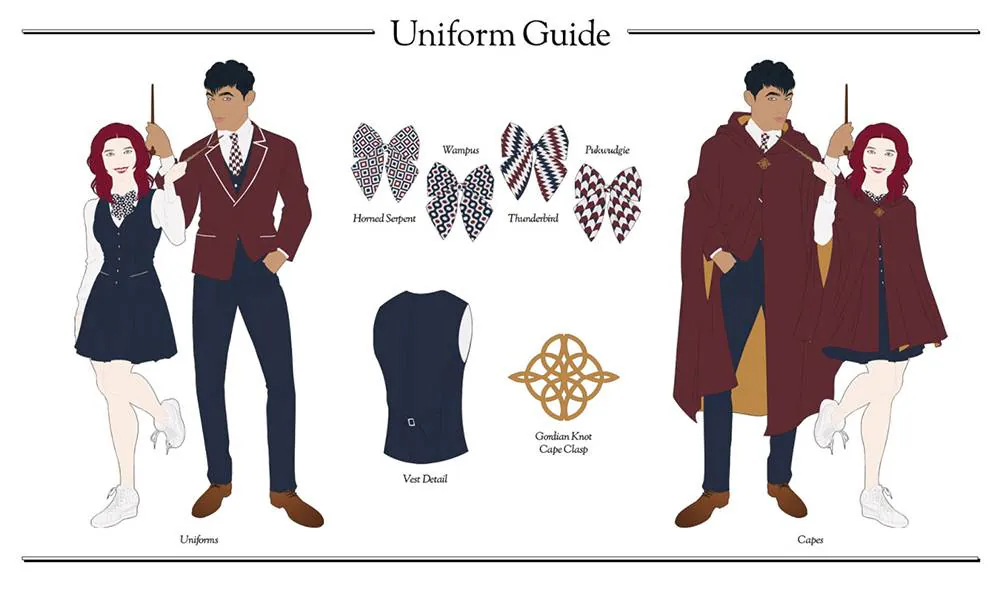
Blue and Cranberry are still the two primary colours used in Ilvermorny's uniforms. Though over the years, their dresscode has become a little bit stricter and more expansive. They can opt for trousers or skirts in a dark blue and wear vests in the same colour. On top of that they wear their traditonal Cranberyy coloured jackets. Their cloaks for rainy or colder weather sport the same colour. To hold their cloak in place, they use their Gordian Knots to tie the two ends together.
To make their houses stand out, each house has a different checkered pattern on their tie or bow. Funnily enough, shoewear has never been assigned. Students are allowed to wear any they like, which has allowed them to express themselves more openly thorugh them. Due to this, an Ilvermorny student will often start a conversation by noticing someone's shoes. Or... lack thereof...
*Lore by Valour Argentum, Quinn Healy, Robyn Finley & Caradoc Browne. Banners by Valour Argentum.
This is the "Game Master" account. Please do not owl this account, unless specified. This account is not moderated actively and therefore, you may not receive a response.
Contact a Head of House or the Headmaster if you need anything.
Ilvermorny School of Witchcraft and Wizardry
- 2024: Lazarus Plott - missing
Reducio
Name: Lazarus Plott
Age: 46 (born 4th of July, 1975)
Nationality: American
Blood status: Pureblood
Born in New York City, Manhattan. His parents, both wizards, graduated from Ilvermorny. He grew up surrounded by magic, his parents worked in the theater. The theater was a great place for his kind to hide, contact with muggles has been historically limited for his kind. While he was born after Rapport's Law was repealed, it shaped his early experiences and contact with muggles who were deemed dangerous to wizards. That was why the theater worked for them -- "eccentrics" are taken as normal in the theater. Spectacular magical events, taken as showmanship, his parents were effective in the theater.
When Lazarus came of age, he, like his parents went to Ilvermorny. It was the horned serpent that chose him. It fit him well, he did well academically and was fairly popular among his peers. He was bullied his earlier years, that was until he channeled his showmanship which inspired awe more than ridicule in his peers. Also, it was helpful in securing dates. It was his third year he developed a special "fog" he uses when he enters a room for particularly dramatic entrances that he uses casually. It is a combination of a few routinely available, non-caustic potions that have a bit of a mist-like effect. He is also a fan of the voice amplification charm.
When he graduated, he joined his parents in the theater. While he enjoyed the spectacle, he felt unfulfilled. He enjoyed the lights, the buzz and the crowds, but he was not speaking his words but rather the words others wrote for him. He decided that he wanted to be his own man. He originally took another showman role as a stage Magican where he mostly worked at children's birthdays. He enjoyed the experience and it was there that he decided to pursue a life of academia. It was the wonder in the children's eyes, the questions from the true muggles if magic was real. He wanted to tell them the truth but he knew better, even as a showman there was a fine line between the truth and the act and here that line was blurred.
He was mostly ignorant to the Wizarding War that went on in the United Kingdom. It was something he read about in the papers as well as the aftermath. During these youthful years, current events that did not directly affect him were not a great concern.
After his brief stint as "the greatest birthday magician alive" he applied for a staff position in Ilvermorny. He said he would take any role, he got a role as a groundskeeper. He was a terrible groundskeeper. It was a miracle, perhaps a sign of the divine that he was not fired. Eventually the then headmaster approached him, noting in his quarters the numerous potions he had in storage, some unique to Lazarus. Commended on his natural skill as a potioneer and offered him the post as the next Potions Professor as his predecessor was retiring the next year. Lazarus committed his spare time to his studies, preparing himself (and his curriculum) to be the best Potions Master he could be.
He did well as the Potions Master, serving as the Professor of Potions for 5 years.
He was eventually offered the role of Head of House for his former House, the Horned Serpent. He took the role, the House flourished and won the House cup twice in a row. This was before he was offered the role of Headmaster. That was this past year, a position he has taken with a great deal of honor. It is his hope that during his tenure he accomplishes great things.

2024 - 11 June 2025: Fabian Fleischer
12 June 2025 - November 2025: Alexandra Draymoor
November 2025 - 9 May 2026: Alan Dolus
10 May 2026 - present: Arkady Piecyk
This is the "Game Master" account. Please do not owl this account, unless specified. This account is not moderated actively and therefore, you may not receive a response.
Contact a Head of House or the Headmaster if you need anything.